
What Is a Cover Letter? (And What Hiring Managers Actually Read)
A cover letter is a short document you send alongside your resume when you apply for a job. It introduces you, explains why you want this role at this company, and points to the parts of your experience that matter most for the job you're applying to.
That's the definition. But most job seekers want a different answer to a slightly different question: what do hiring managers actually read — and does any of it change the outcome?
What a cover letter is for
A resume lists what you've done. A cover letter connects that list to a specific opening. It's your one chance to answer the question a recruiter is already asking: why this person, for this role?
A useful cover letter usually does three things:
- Names the role and the company. It's obviously written for this job, not recycled.
- Makes a case, briefly. It picks one or two relevant parts of your real experience and explains why they fit.
- Sounds like a person. Not a template, not a wall of buzzwords.
What hiring managers actually read
Recruiters and hiring managers are usually skimming. In practice, that means the parts that get read are the ones that are easy to find:
- The opening lines. If the first sentence is generic, attention drops fast.
- Anything that maps directly to the job description. Specific matches get noticed; vague praise doesn't.
- The closing ask. A clear, confident sign-off is easier to act on than a passive one.
What tends to get skipped: long paragraphs about your personal journey, adjectives without evidence, and anything that reads like it was sent to fifty other companies unchanged.
The mistake most people make
The biggest problem with cover letters isn't writing quality — it's volume. Most people are applying to many roles, and writing a genuinely tailored letter for each one takes time they don't have. So they either send the same letter everywhere, or they skip the letter entirely.
Both are understandable. Neither is ideal.
How Amploy fits in
Amploy is built for exactly this bottleneck. Its cover letter feature generates a first draft that references the role and your real experience, so you start from something specific instead of a blank page. You edit it for your own voice, then send it.
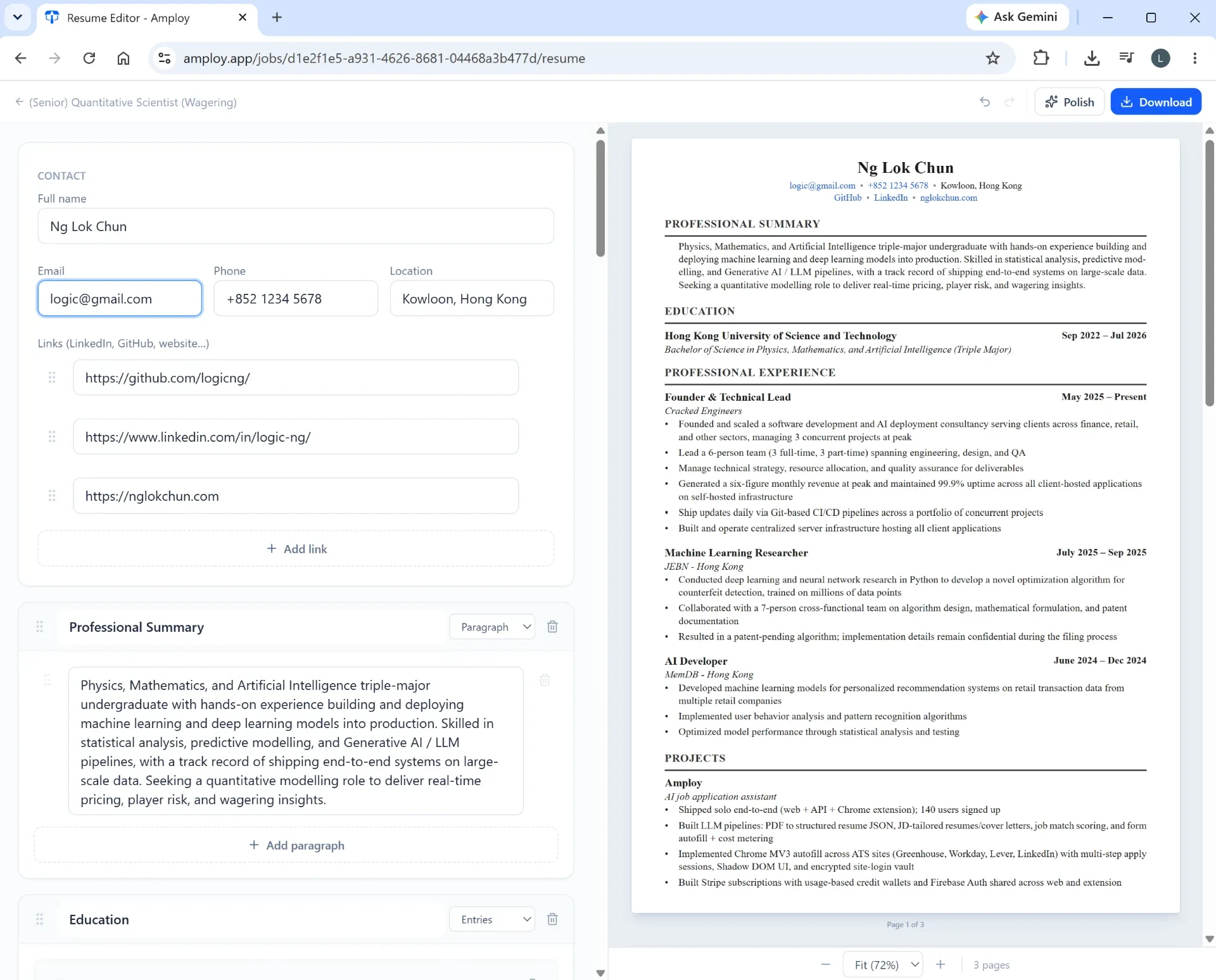
Because the draft is based on your actual profile, you're not inventing anything — you're rearranging and sharpening what's already true. That keeps the letter honest and keeps you moving.
The same principle applies across the rest of an application: Amploy autofills repetitive form fields from your profile, rewrites your resume to match each job description, and keeps a job tracker so you can see where every application stands — from Saved through Applied, Interview, and Offer, with the tailored resume and letter attached to each one.
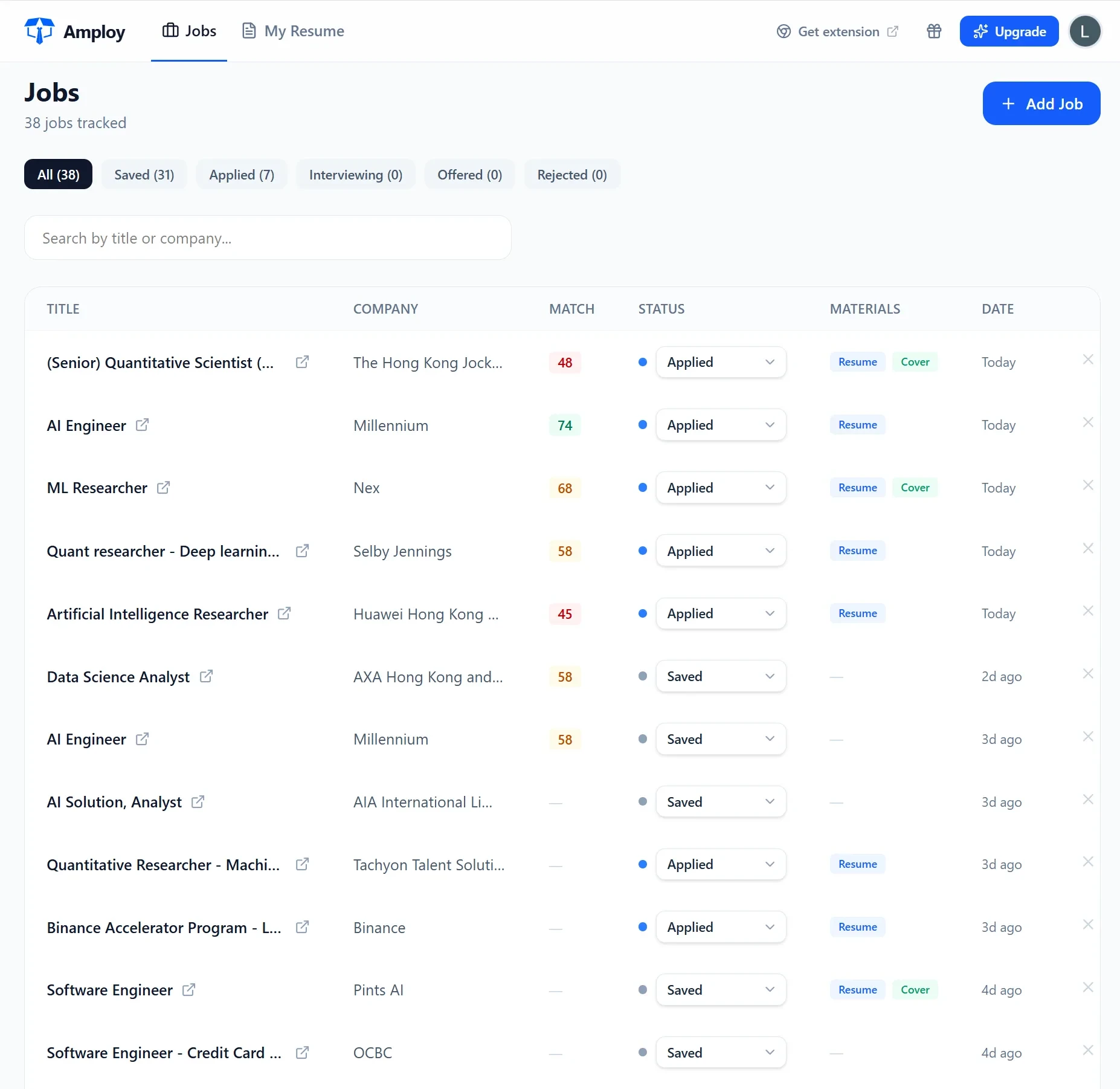
You can also store the logins for the sites you apply through, so you're not resetting a password every time you come back to check a status. The point of all of it is the same: cut the busywork so you can apply to more roles, faster, without burning out.
The short version
A cover letter is a short, tailored introduction that explains why you fit a specific role. Hiring managers skim them, so the opening, the job-specific matches, and the closing ask matter most. The trick isn't writing a perfect letter — it's making a specific one quick enough that you'll actually do it every time.