The Best Job Application Trackers in 2026 (Spreadsheet vs App)
Job hunting in 2026 is a volume game. Most listings you see will get hundreds of applicants, and a good chunk of rejections have nothing to do with you. The people who land interviews are usually the ones who apply more, faster, and stay organized while doing it.
That's where a job application tracker comes in. The question is which kind: a spreadsheet you build yourself, or a dedicated app? Here's an honest comparison, plus how to think about picking one.
Why tracking applications matters
If you're applying at any real volume, the details pile up fast: which roles you've applied to, which resume version went where, who you emailed, when to follow up. Without a system, applications slip through the cracks and follow-ups get missed.
A tracker solves two problems:
- Nothing gets lost. Every application has a status and a record.
- You can see your own pipeline. Which roles are still live, which went quiet, where you're getting traction.
Spreadsheet vs. app: the honest trade-offs
Both approaches work. They fail in different ways.
Spreadsheets
What they do well: Spreadsheets are free, infinitely flexible, and totally under your control. You can shape columns however you like, and a well-built sheet gives you a clean bird's-eye view of your search.
Where they break down: Updating a spreadsheet is manual work you have to remember to do. Copying a job title, company, and link by hand after every application gets old quickly — especially on days when you're firing off a dozen applications. The upkeep becomes a job of its own, and the moment you stop maintaining it, your tracker goes stale.
Dedicated apps
What they do well: A dedicated job application tracker keeps everything in one place and, ideally, cuts out the manual data entry. Because tracking lives right next to the tools you use to apply, there's far less friction between "applied" and "logged."
Where to be careful: Not every app keeps your process lightweight. Some add steps. The right one should reduce them.
What to look for in a tracker
Before comparing specific tools, it helps to know what actually makes tracking easier rather than just different.
- Low-friction logging. If recording an application takes more than a moment, you'll skip it.
- A clear status pipeline. You want to see where each application stands at a glance — from saved through to offer.
- Context kept together. Your tailored resume and cover letter should live alongside the application they belong to, so you're never guessing which version you sent.
- One place for everything. Fewer tools and tabs means fewer things to lose track of.
How Amploy approaches tracking
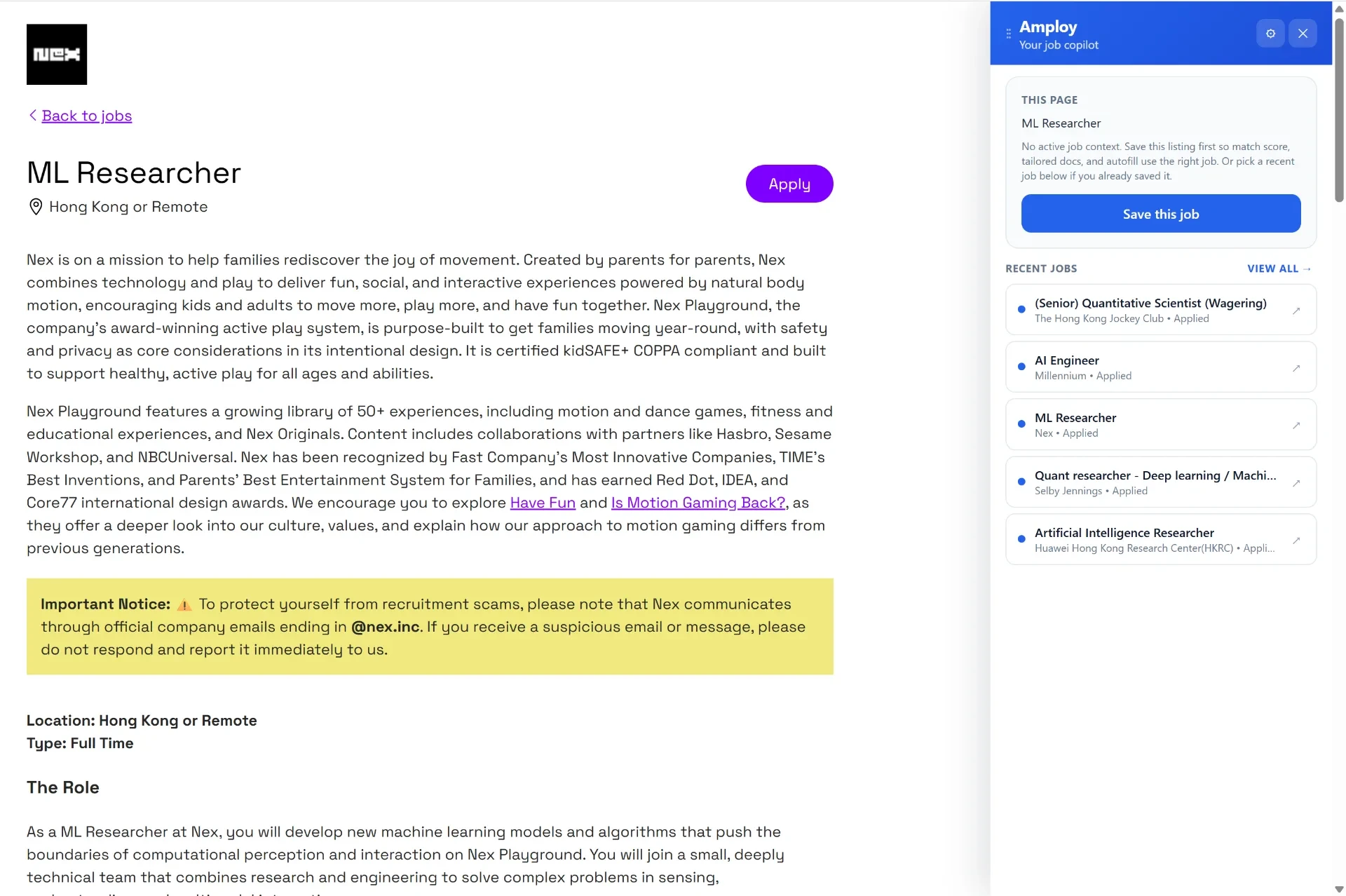
Amploy is a job-search productivity tool for exactly this problem: it automates the repetitive parts of applying so you can apply to more roles without burning out. Its promise is simple — stop wasting so much time applying to jobs.
The job tracker is part of that same flow. Each application moves through a status pipeline (Saved → Applied → Interview → Offer), and that status sits right next to the resume and cover letter you tailored for it.
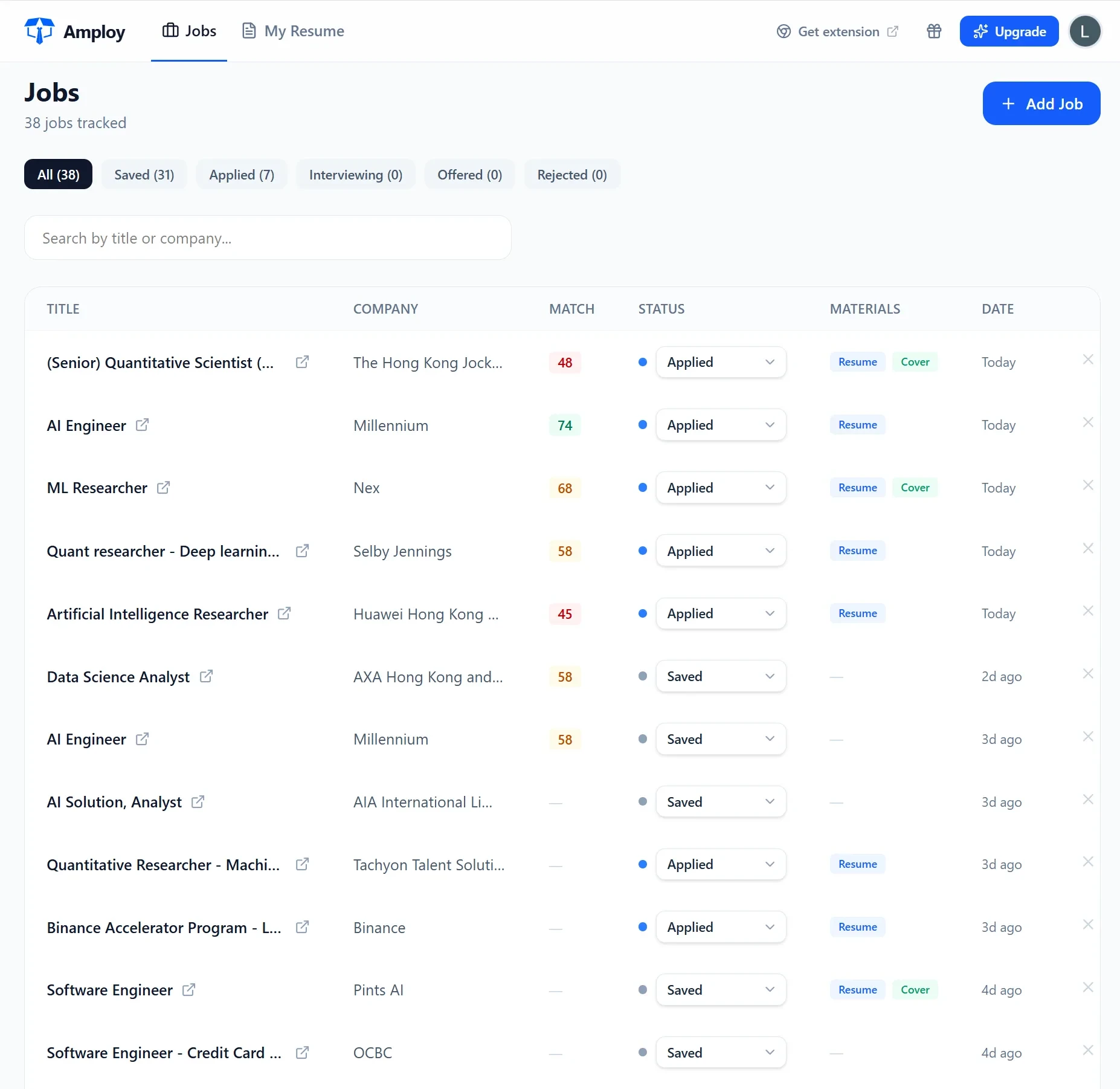
That placement matters. Because Amploy handles the tailoring — rewriting your real experience to match each job description, generating a cover letter draft that references the role and your actual experience for you to edit in your own voice — the tailored resume and letter are already attached to the role. When you update the status, you're updating the record for that exact application, not a row you typed into a sheet.
The same logic runs through the rest of the tool:
- Autofill fills your name, phone, work history, and essays from your profile in one click.
- A password saver stores the logins for application sites, so forgotten passwords don't stall you mid-apply.
None of this is about adding features for their own sake. It's about removing the steps between finding a role and recording that you applied, so you actually keep your tracker current.
How to choose
Start with how many applications you're sending per week.
- If you're applying casually — a handful of roles, carefully chosen — a well-built spreadsheet is probably enough. You have the time to keep it tidy.
- If you're applying at volume — many roles a week, tailored resumes every time — the manual upkeep of a spreadsheet becomes the bottleneck. This is where a dedicated tracker earns its place, ideally one that logs applications as part of the process rather than as an extra chore.
Either way, pick the option that keeps you honest. The tracker that gets updated is the only one that helps.
The bottom line
Spreadsheets and apps both work — until friction makes you stop updating them. If you're playing the numbers game, the goal is to spend your time applying, not bookkeeping. A tracker that lives right where you tailor and submit your applications is one less thing to manage, and one more reason your pipeline stays accurate.
If you want to log applications without the busywork, the Amploy job tracker is built to live right next to your tailored resumes and cover letters.