The Beginner's Guide to an AI Job Search That Doesn't Sound Robotic
Applying to jobs with AI has a reputation problem, and it's not entirely unfair. Recruiters can spot a copy-pasted cover letter from a mile away — the one that opens with "I am writing to express my strong interest" and never once mentions the company by name. That's not an AI problem. That's a how you use it problem.
The goal of an AI-assisted job search isn't to let a robot apply for you. It's to cut the repetitive hours so you can apply to more roles, faster, while keeping a human voice in the parts that actually get read. Here's how to do it well.
Start with the inputs, not the output
Every robotic-sounding application traces back to thin inputs. AI can only reflect what you give it. Before you generate anything, build a solid profile: your work history, the concrete things you did, the tools you used, the outcomes you can point to.
Vague inputs produce vague outputs. "Worked on marketing campaigns" becomes a cover letter that sounds like everyone else's. "Ran a six-week email campaign that doubled newsletter signups" gives the tool something specific to work with — and specificity is the thing that reads as human.
Tailor per role, but let the tool do the heavy lifting
The biggest time sink in a job search is rewriting the same resume and cover letter for every posting. Doing it by hand is why most people apply to a handful of roles a week. Skipping it is why most applications get ignored.
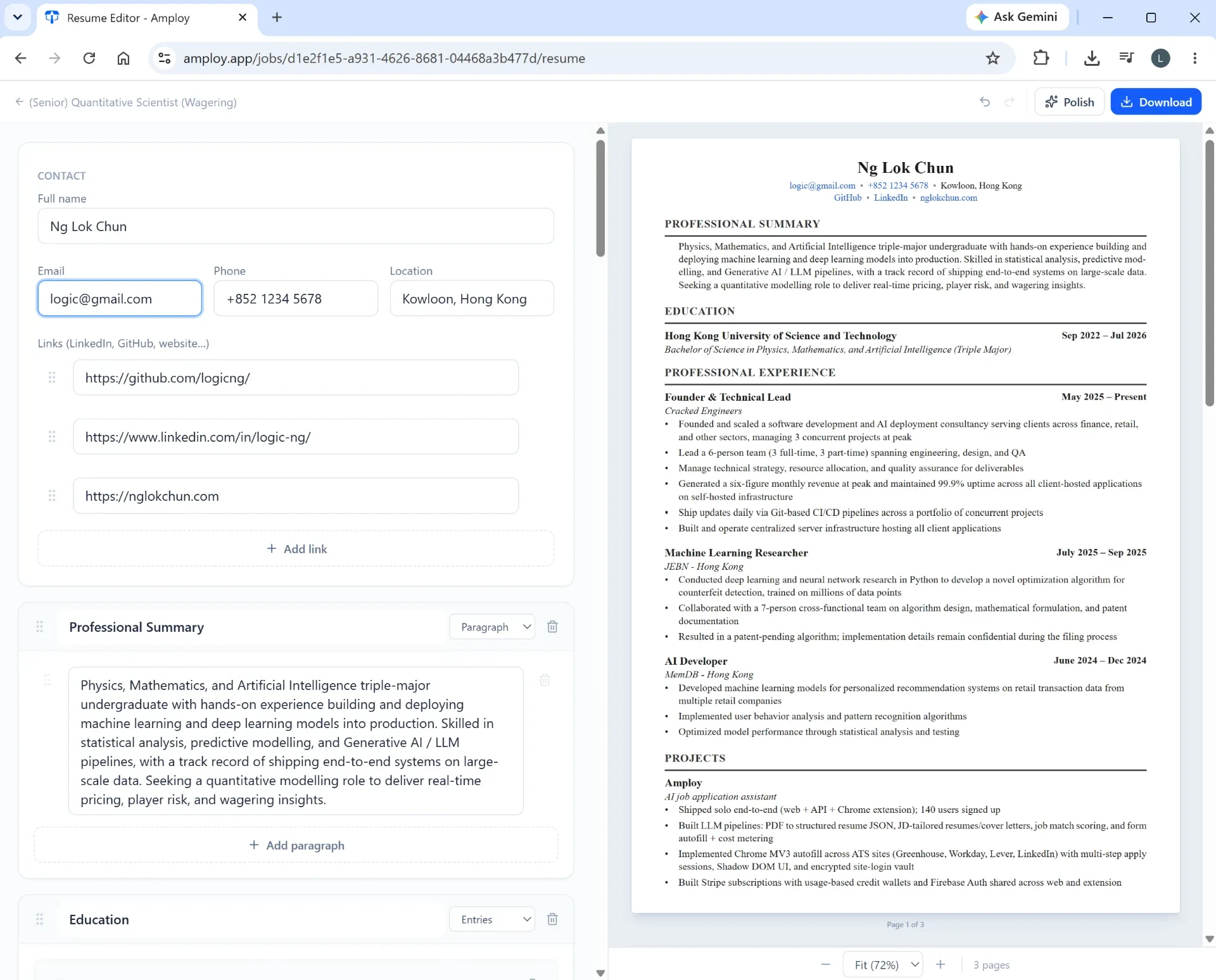
The middle path: use AI to rewrite your real experience to match each job description. Amploy's resume rewrite does exactly this — it reframes the experience you actually have against the language of the specific role, so the resume that lands on a recruiter's desk speaks to what they asked for. You're not inventing anything. You're translating.

Write the cover letter in two passes
Here's where most AI job searches go wrong: people send the first draft. Don't.
Pass one — generate. Use AI to produce a first draft that references the actual role and pulls from your real experience. This gets you past the blank page fast, and it gives you structure to react to.
Pass two — make it yours. Read it out loud. Cut the phrases you'd never say. Add one detail only you could know — a specific project, a reason you care about this company's work. Swap in your own opening line. The edit pass is short, but it's the difference between "AI wrote this" and "I wrote this, quickly."
Speed only helps if you can keep track
When a tailored resume and a custom cover letter take minutes instead of hours, you'll apply to more roles — which is the point. Most openings get hundreds of applicants, and the people who land interviews simply apply more, faster. Volume wins.
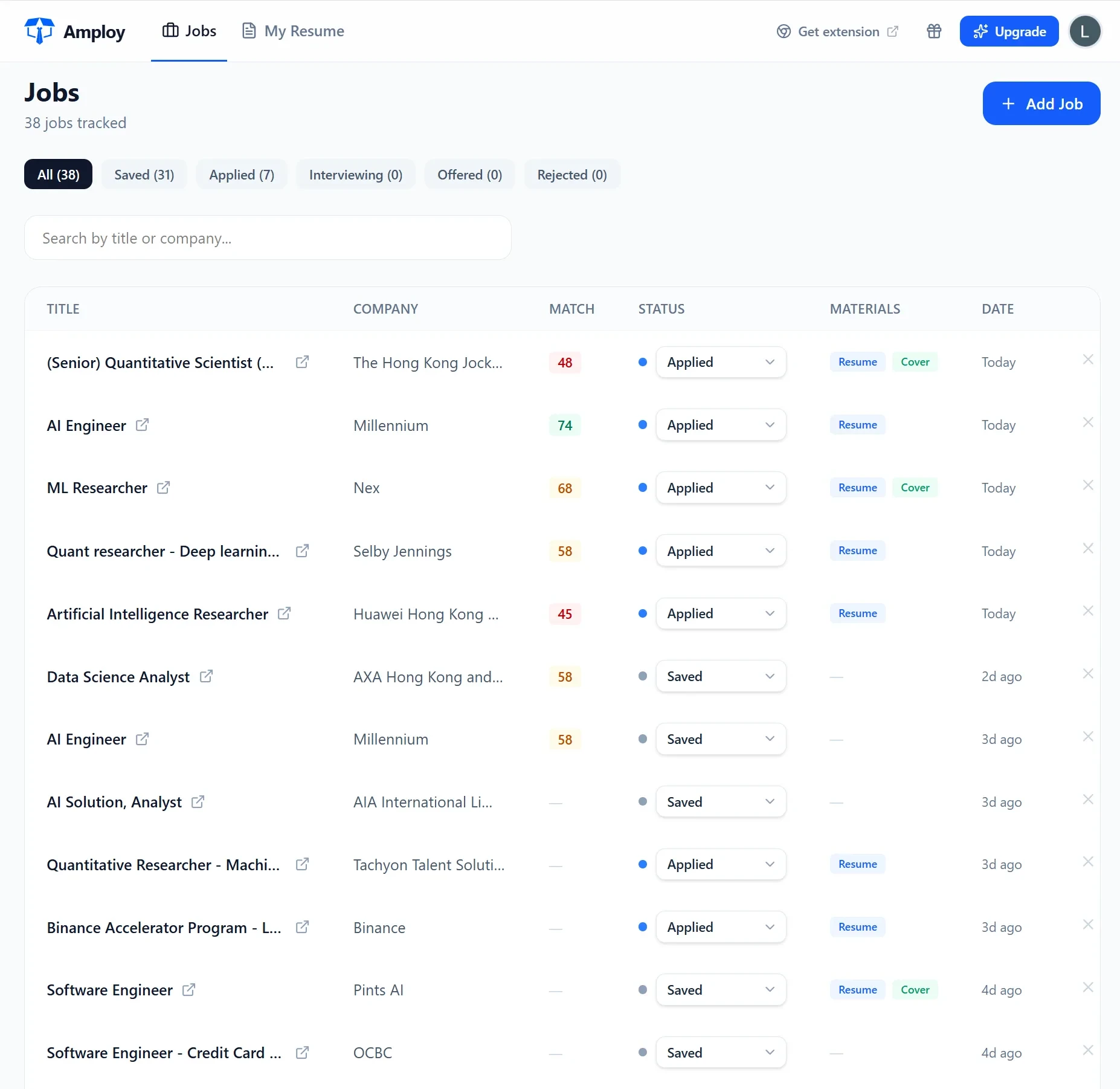
But volume creates a new problem: you lose track of what you sent where. Which resume did you send to that one company? Where are you in the process with the other? A job tracker that sits next to each tailored resume and letter keeps the pipeline visible — Saved, Applied, Interview, Offer — so you're not scrambling through your inbox.
Don't let the forms eat your time
The tailoring is the creative part. The forms are not. Name, phone, work history, that essay question you've already answered twelve times — this is the busywork that kills momentum and makes people quit a search early.
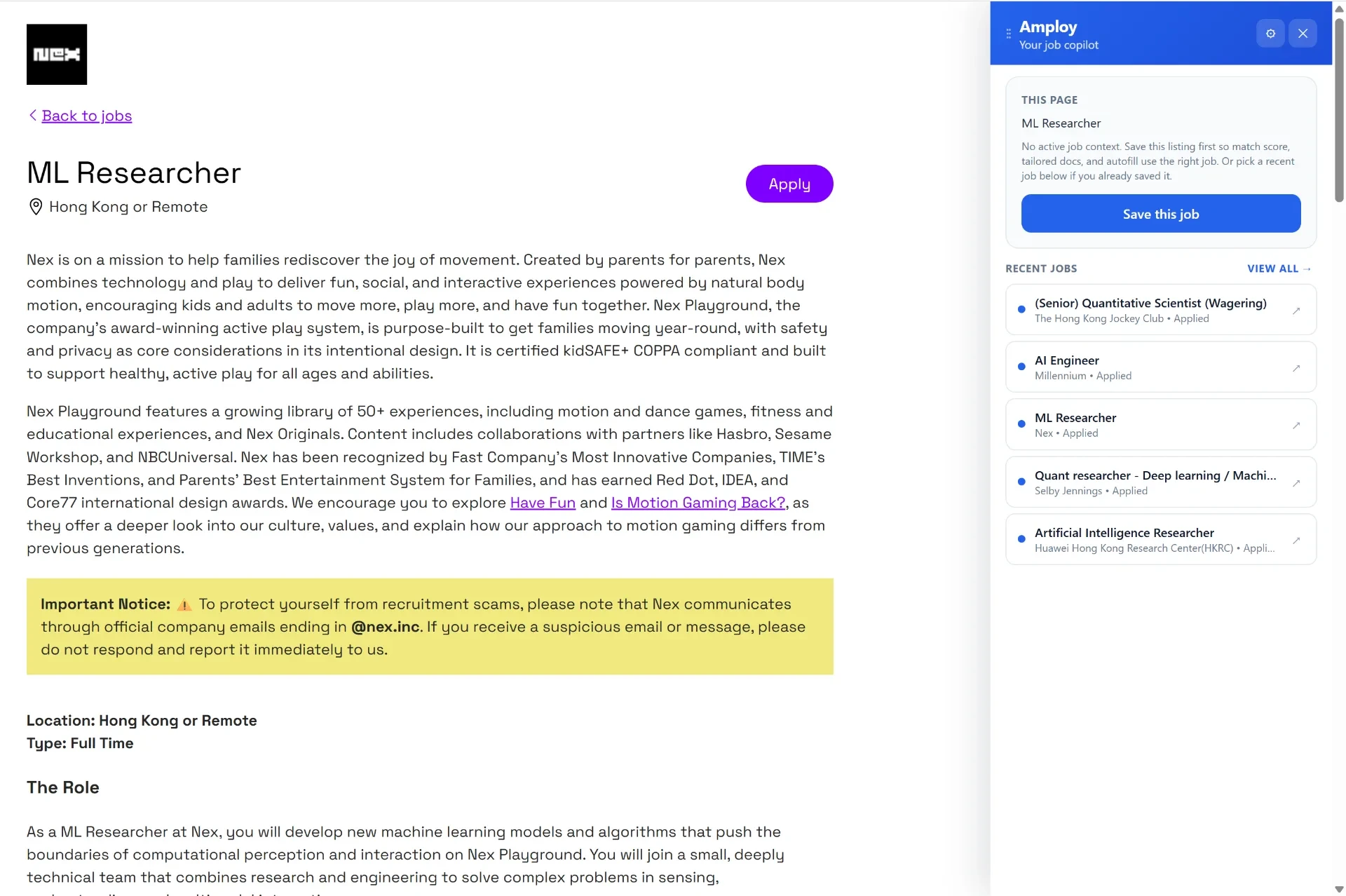
Autofill fills those fields from your profile with one click, so the tenth application of the week takes as long as the first.
Keep your logins straight
Small thing, real friction: career sites each want their own account, and you will forget a password at the worst possible moment — usually mid-application, right when you've built up momentum. A password saver that stores logins per career site keeps you moving instead of resetting your password for the third time.

A beginner's checklist
If you're new to an AI-assisted search, work in this order:
- Build a detailed profile first. Specifics in, specifics out.
- Tailor every resume to the job description — rewrite, don't invent.
- Generate a cover letter draft, then edit it for your voice. Two passes, minimum.
- Track every application in one place so nothing slips.
- Automate the forms so applying doesn't drain the time you need for tailoring.
The bottom line
AI doesn't make your job search sound robotic. Sending the first draft does. Used well — detailed inputs, tailored rewrites, a real edit pass — it gets you applying to more roles with better materials, without burning out.
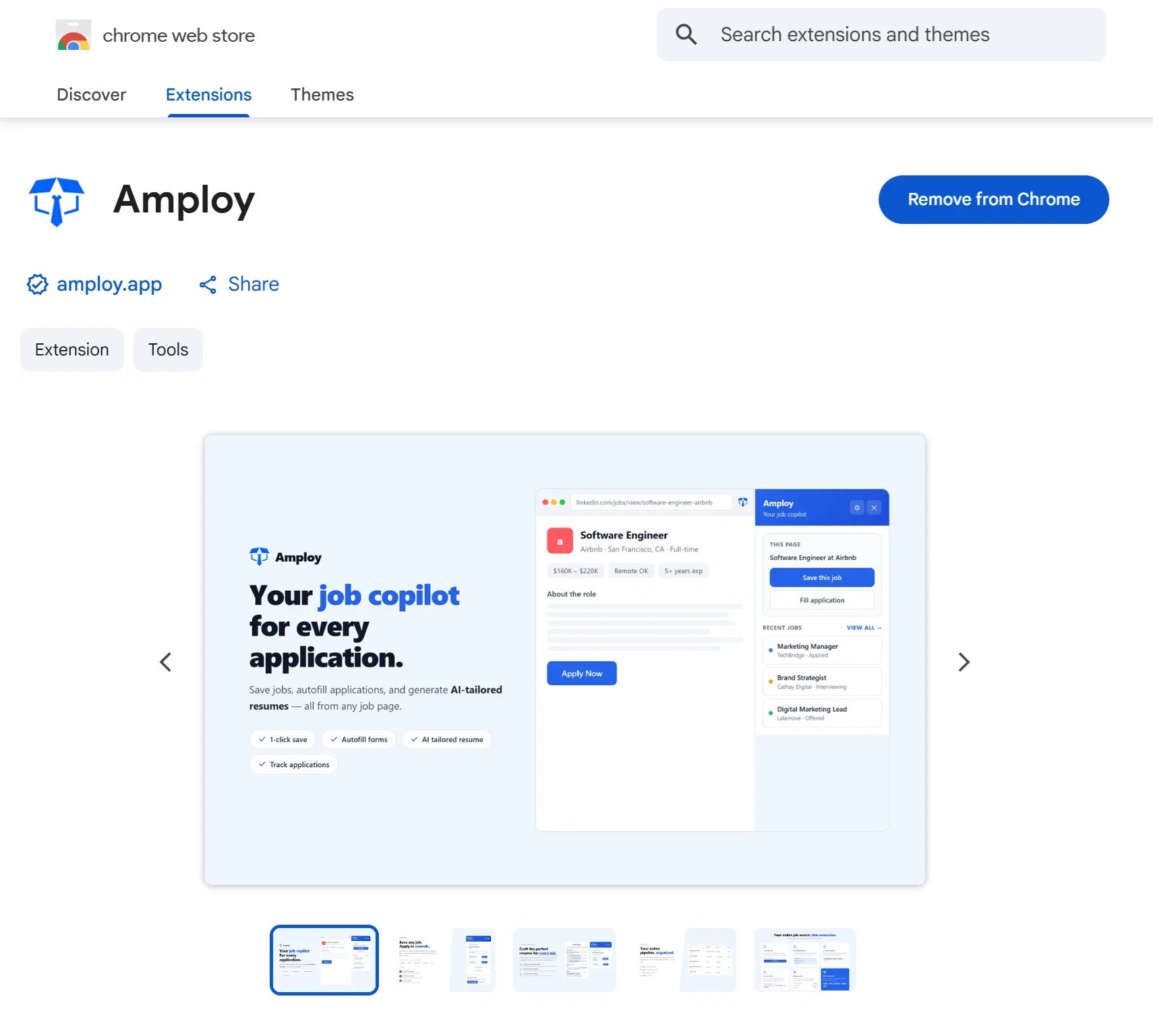
Amploy is built for exactly that: autofill, cover letter drafting, resume rewriting, and a job tracker, all in one Chrome extension. Start by building your profile, then let the busywork take care of itself.