
Tailored Vs. Generic Resume: What Actually Gets Interviews
Most job seekers treat their resume like a single document to perfect. They tweak a bullet here, adjust a font there, then send the same version to every posting. It feels efficient — until the callbacks stop coming.
Here's the uncomfortable truth that sits behind everything Amploy is built for: hiring is broken, and volume wins. Roles routinely pull hundreds of applicants, and most rejections aren't a verdict on your worth. The people who land interviews are usually the ones who apply more, and faster, with a resume that speaks directly to each role.
That raises the real question: what does tailored actually mean, and how much does it matter compared to a polished generic resume?
What a generic resume does well (and doesn't)
A generic resume is one you write once and reuse everywhere. It covers your work history in a clean, general way. When you're staring down a list of ten openings, that single version saves you time.
The problem is relevance. A generic resume describes what you've done in your own words, not the words of the job description on the other side of the screen. Recruiters scanning for a specific match don't have to work hard to miss you — they just skim past.
Why tailored resumes pull more interviews
Tailoring means adjusting how you present your real experience so it lines up with a specific job description. Notice what's not happening there: you're not fabricating anything. You're choosing which parts of your genuine background to lead with, and mirroring the language of the role.
This matters for a simple reason. A hiring manager is asking one silent question with every resume: is this person a fit for this role? A tailored resume answers that question directly. A generic one makes them hunt for the answer.
The catch has always been effort. Rewriting your resume for every posting can take longer than actually applying. That's the trade-off most people quietly give up on — and it's exactly the busywork Amploy is designed to remove.
Making tailoring the default, not the exception
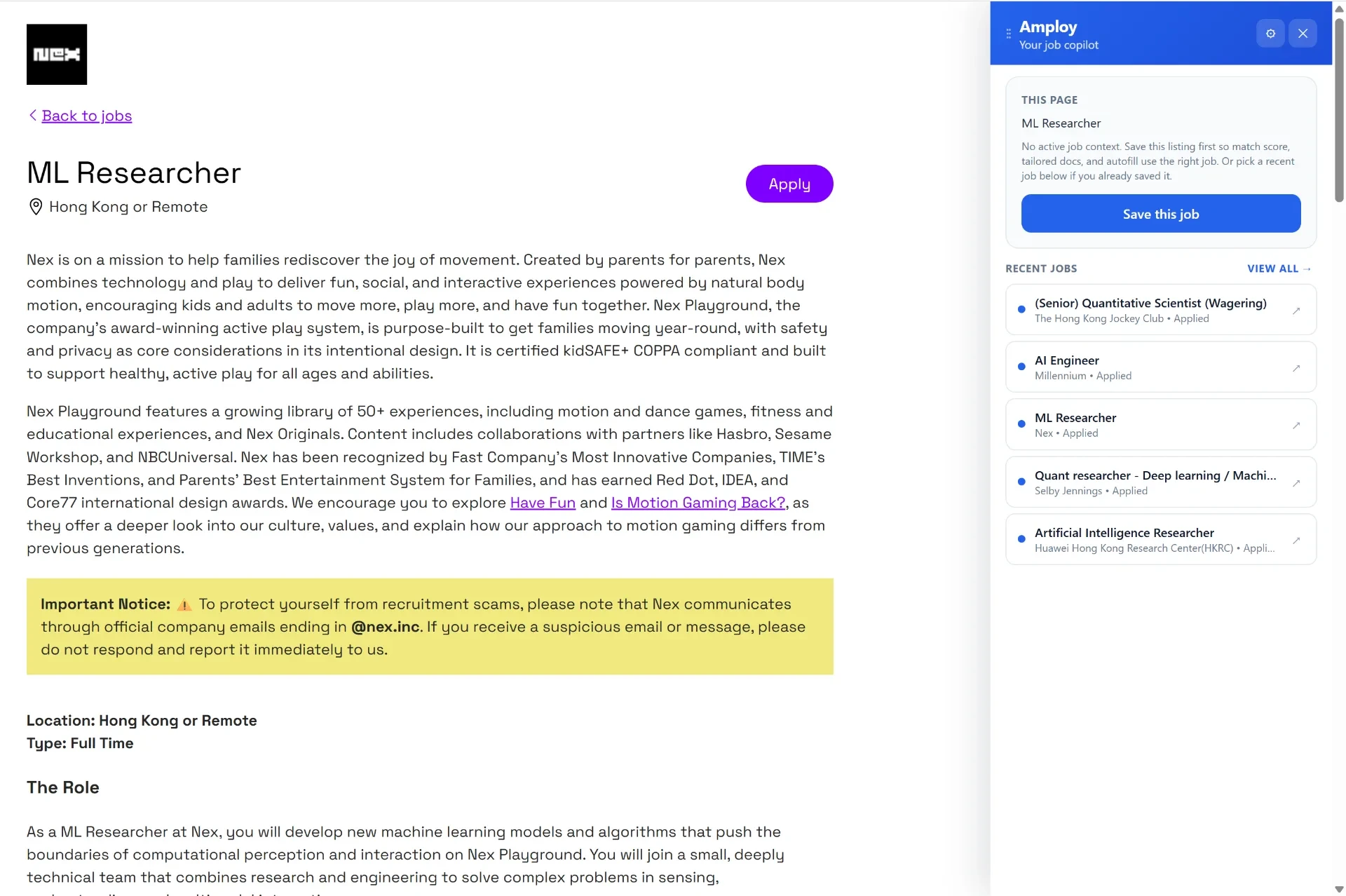
The whole premise of Amploy is that you shouldn't have to pick between applying widely and applying well. The product exists to make tailored the easy path, not the heroic one.

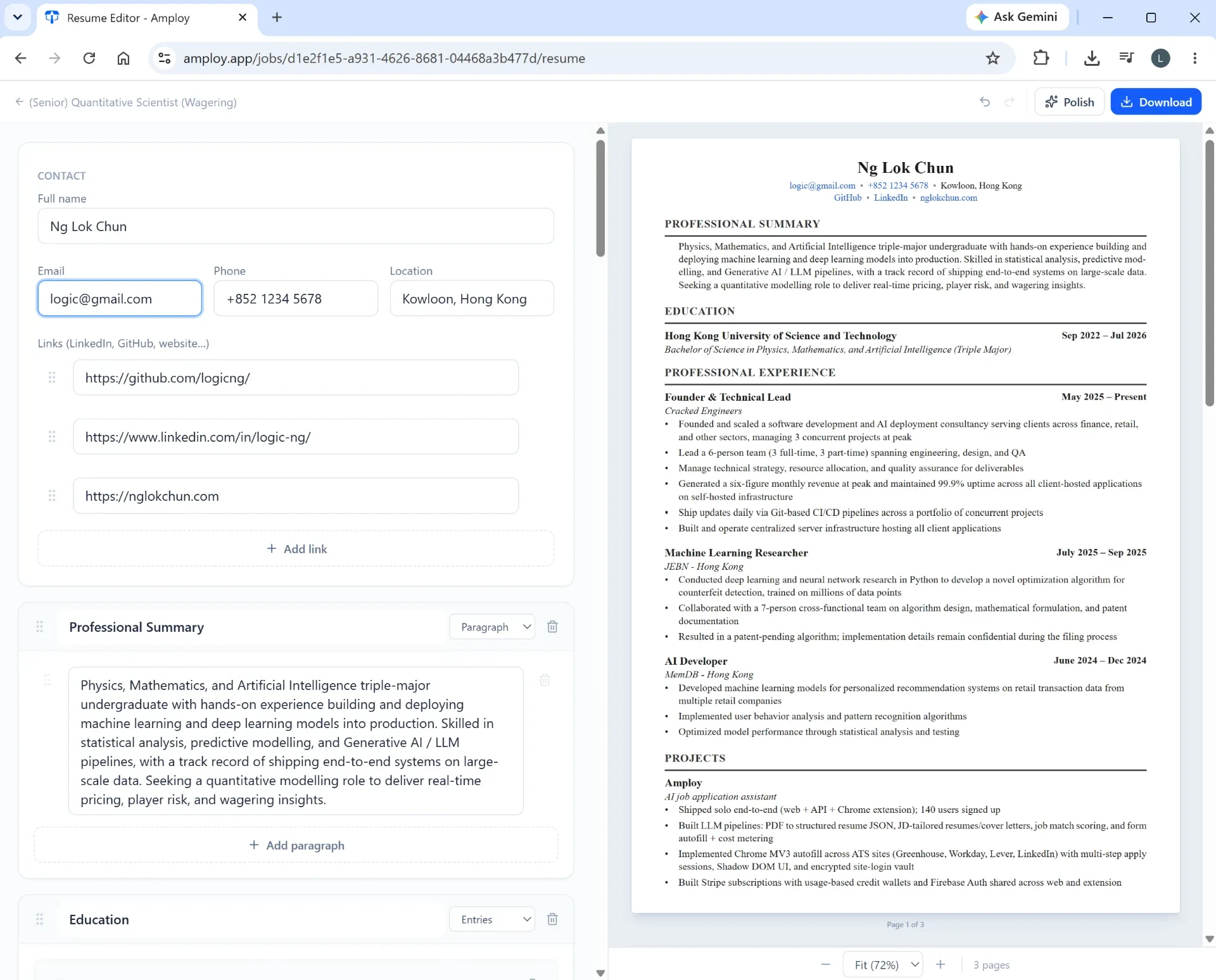
The resume rewrite feature takes your real experience and rewrites it to match each job description. You're still the author — it's your history, your facts — but the first pass is done for you. Instead of starting from a blank page for every opening, you start from a version already pointed at the role.
The cover letter works the same way. Amploy generates a first draft that references the specific role and your actual experience, then hands you the controls to edit it into your own voice. No more recycled openings, no more paragraphs that could be about any company.
The part everyone forgets: keeping track
Tailoring at volume creates a new problem. Once you have a slightly different resume and letter for each role, which version went where? Which companies are still waiting to hear from you?
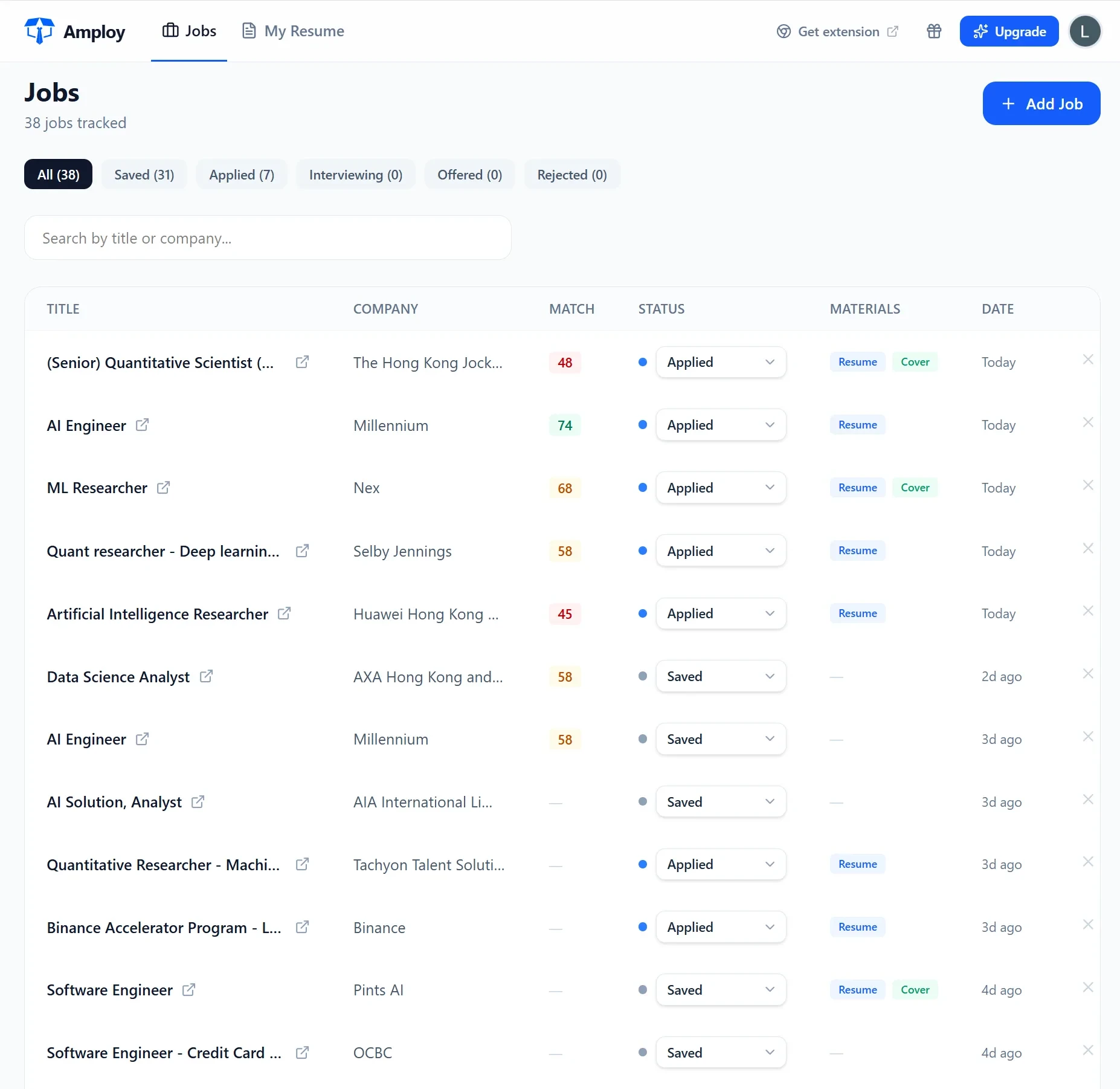
Amploy's job tracker keeps a status pipeline — Saved → Applied → Interview → Offer — right next to each tailored resume and letter. So tailored versions don't become clutter. You always know what you sent, to whom, and where it stands.
And because applying more means signing into more job sites, the password saver stores those logins so a forgotten password never becomes the reason you skip an application.
The bottom line
A generic resume isn't lazy — it's just built for one job: saving time. But it asks the hiring team to do the connecting. A tailored resume does that work for them, in the language of the role.
If you've been sending the same resume everywhere and wondering why the inbox is quiet, the answer is probably in front of you. Try applying to your next role with a resume tailored to that description — then compare. Once you've seen the difference, you won't want to go back.