Tailor Resume Without Burnout: Automate the Rewrite, Keep the Voice
Applying to jobs is a volume game. Most roles get hundreds of applicants. Rejections usually aren't personal — the people who land interviews simply apply more, faster, with a resume that actually matches the job description. That's why "tailor resume" is one of the most searched job-search phrases, and also one of the most abandoned habits. Tailoring is the difference between getting seen and getting skipped, but doing it well for every application is tedious enough that most people give up and blast the same resume everywhere.
Here's the problem with tailoring: it works, but it burns you out.
Why tailoring your resume matters
Hiring is broken, and volume wins. But volume without relevance doesn't help — a generic resume sent to 50 jobs competes with tailored resumes on every one. The candidates getting interviews are the ones whose resumes mirror the language of the job description: the right keywords, the right emphasis, the right framing of experience.
Tailoring isn't lying about your background. It's presenting your real experience in the words the role asks for. The catch is that doing this manually means rewriting the same bullets dozens of times, and each rewrite risks burying the voice and accomplishments that made the resume yours in the first place.
The real cost of manual tailoring
If you've tried to tailor resumes properly, you know the routine:
- Read the job description closely and note the keywords.
- Open your master resume.
- Rewrite bullet points to match the role's phrasing.
- Adjust your summary.
- Write or adapt a cover letter.
- Repeat for every single application.
Do that for five jobs and it's an afternoon. Do it for thirty and you stop. The irony is that the moment you skip tailoring is exactly when volume starts working against you instead of for you.
Automate the rewrite, keep the voice
The point of automating resume tailoring isn't to hand your career over to a template. It's to remove the repetitive rewriting so you can keep the parts that matter — your actual experience, your phrasing, your voice.
Tailoring works in three layers:
- Matching — aligning your resume to the job description's language and priorities.
- Rewriting — reframing your real experience using the role's keywords and framing.
- Editing for voice — making sure the result still sounds like you, not a generic AI output.
The first two are mechanical. They're the burnout layer. The third is where your judgment matters, and it's the only part worth spending time on.
How Amploy handles the rewrite
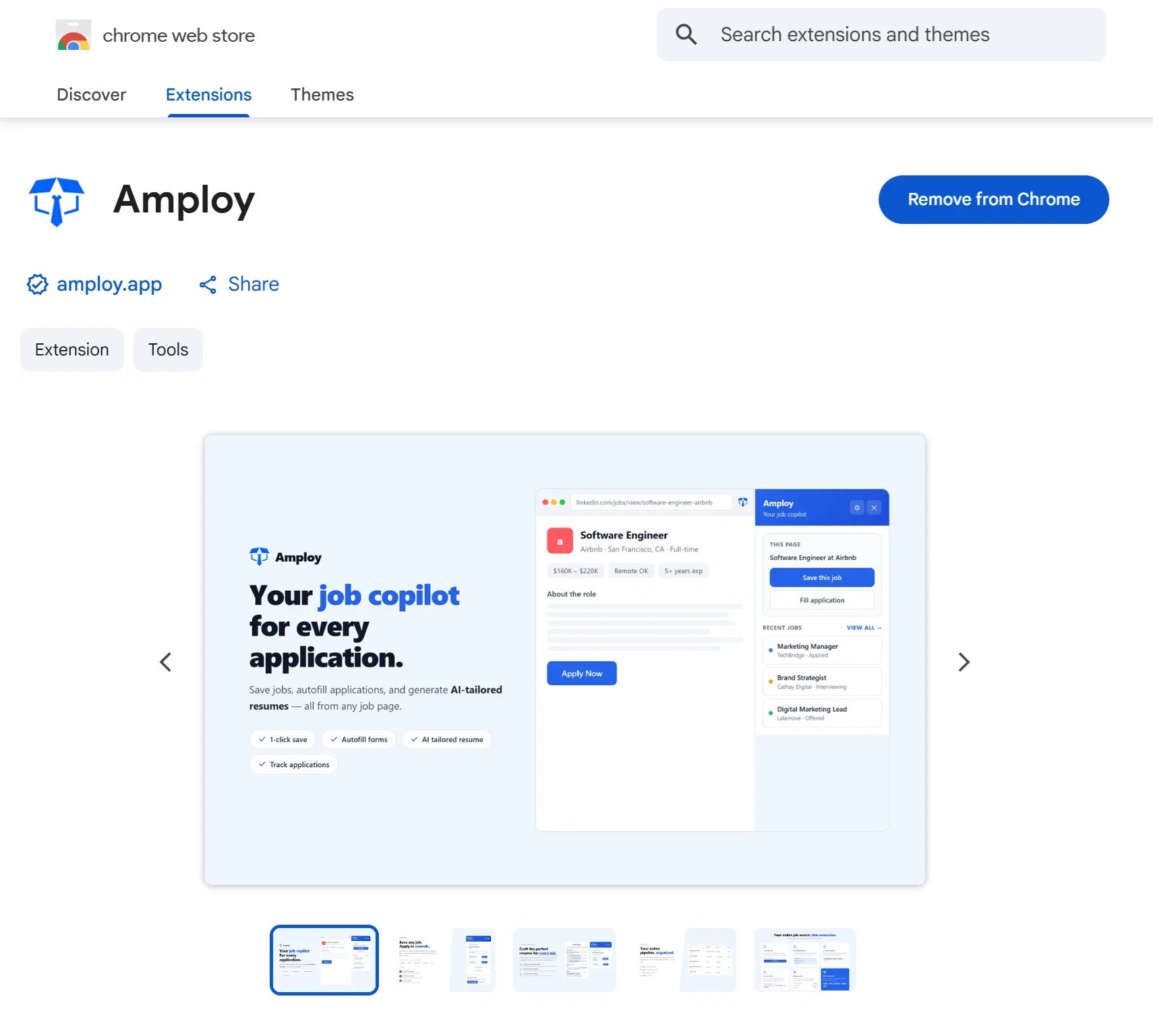
Amploy is a job-search productivity tool — a Chrome extension plus a website — built on one promise: stop wasting so much time applying to jobs. Resume tailoring is where that promise pays off most.

When you're on a job posting, Amploy gives you a tailored resume generated from your real experience and the job description. It rewrites your background to match the role rather than inventing anything — the experience is yours; the framing is tailored. You get a first draft in seconds instead of an afternoon, then spend your actual energy editing for your voice.
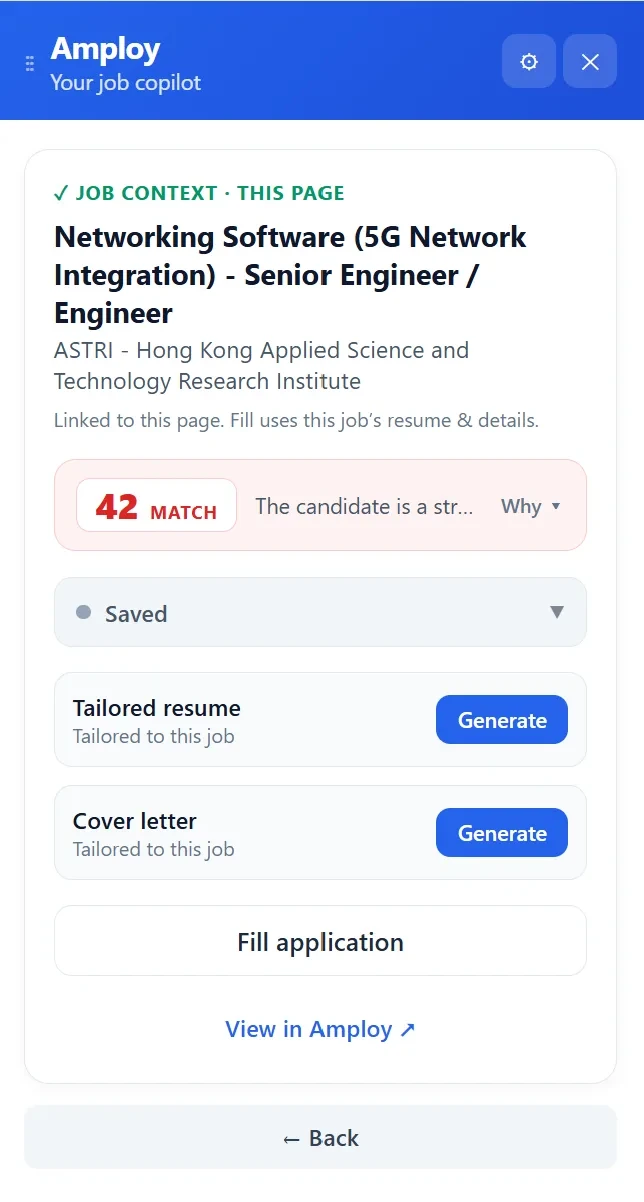
The same automation covers the cover letter: Amploy generates a first draft referencing the specific role and your real experience, editable so it sounds like you. And autofill handles the name, phone, work history, and essay fields so the application form itself doesn't eat your afternoon.
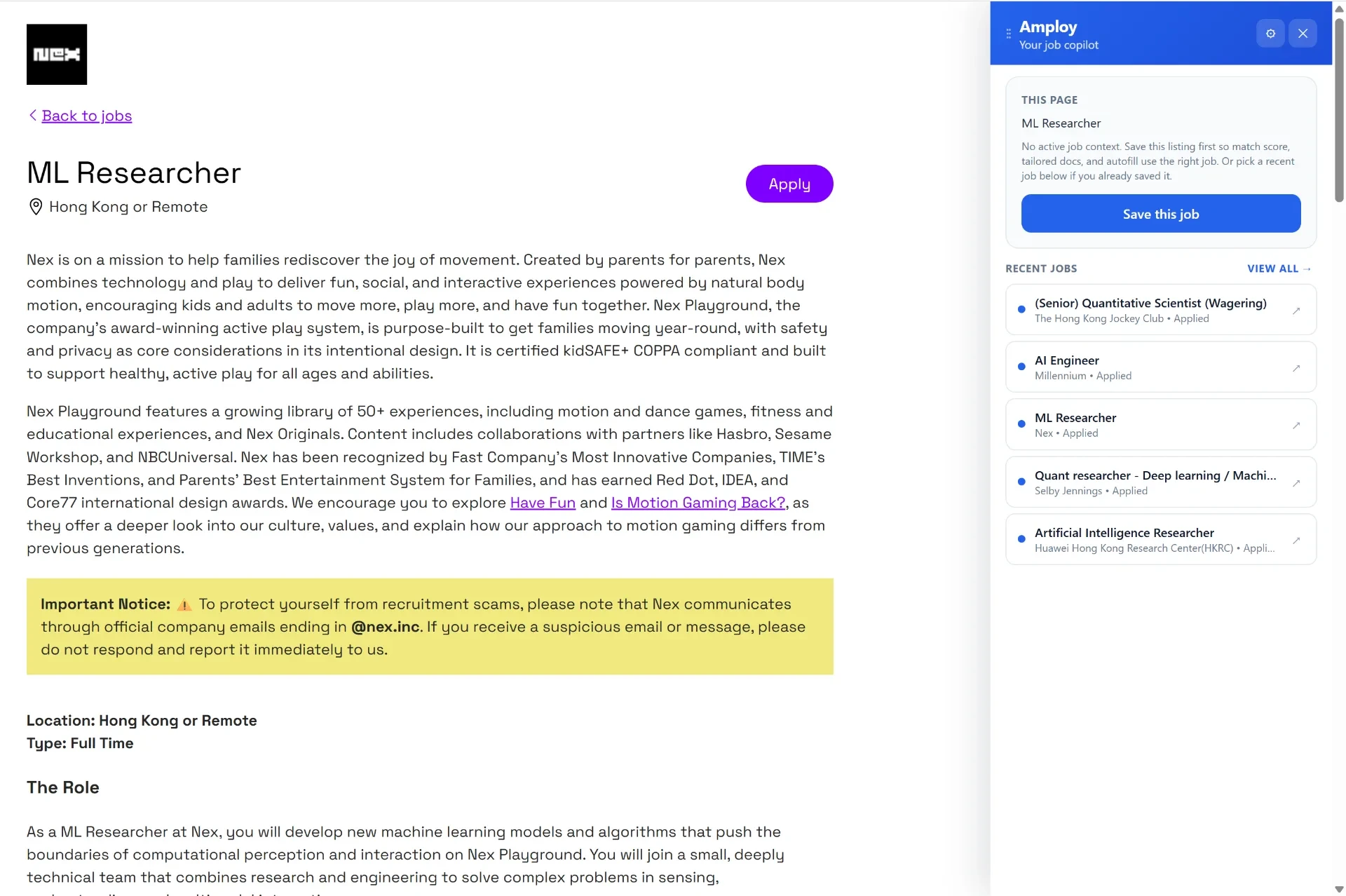
Because it's a Chrome extension, this happens where the jobs are — you don't copy-paste between tabs or rebuild your resume in a separate tool.
Tailoring is only useful if you know what happens next
Tailoring is half the job. The other half is not losing track. When you're applying to more roles, faster, applications slip through the cracks: the follow-up you forgot, the interview stage you didn't notice, the resume version you sent to which company.
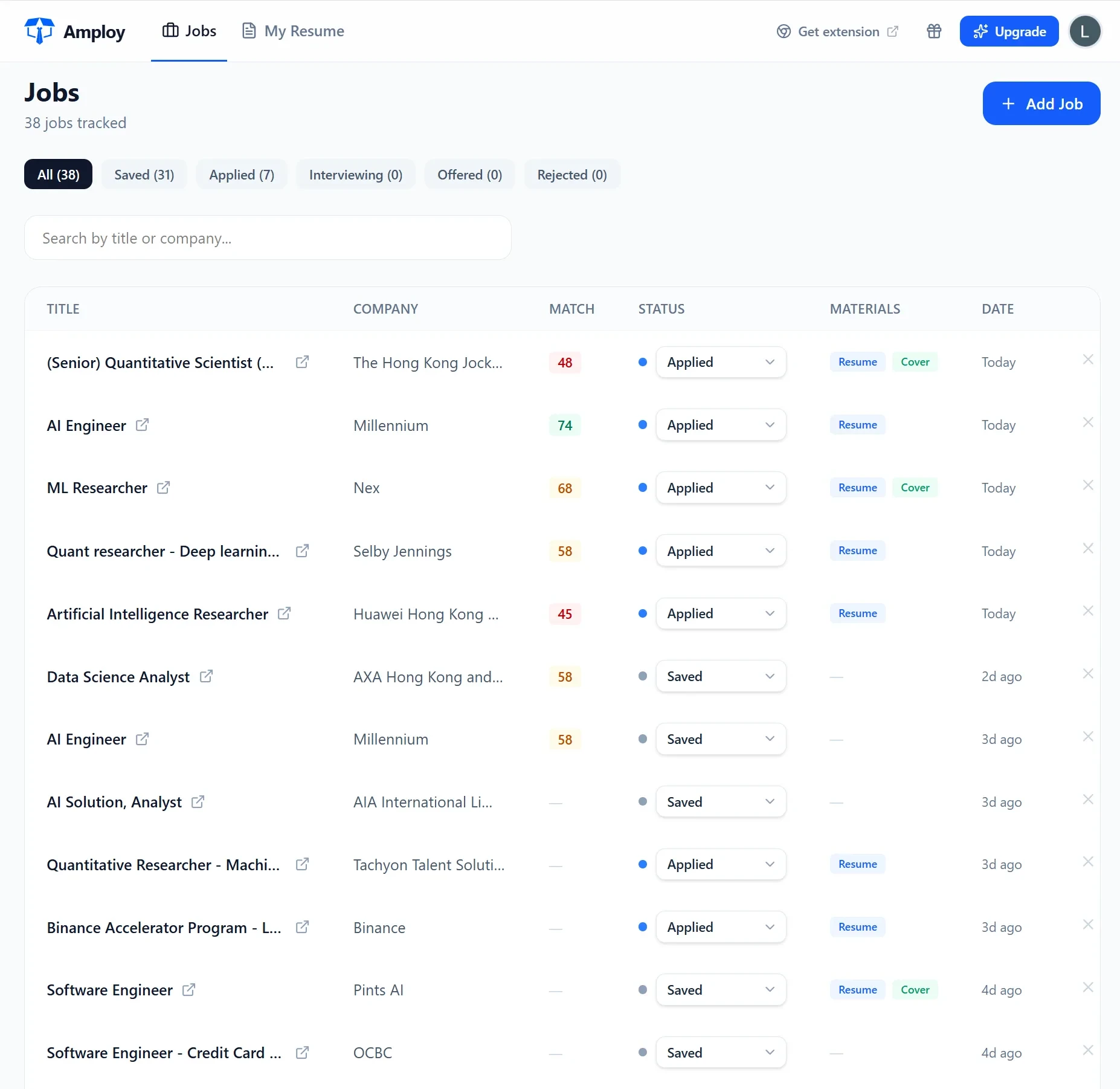
Amploy's job tracker keeps each tailored resume and cover letter next to its application status — Saved → Applied → Interview → Offer — so tailoring actually turns into momentum instead of a folder of forgotten files.
And since you're applying across many different career sites, the password saver stores your logins per site so you never get stuck resetting a password mid-application.

A practical tailoring workflow
Here's how the pieces fit together for a sustainable, high-volume job search:
- Keep one strong master profile in Amploy with your real experience, work history, and contact details.
- When you find a role, generate the tailored resume from the job description — the rewrite handles the matching work.
- Edit for voice — a couple of minutes on the summary and the bullets you care most about.
- Generate the cover letter draft and adjust the phrasing so it sounds like you.
- Fill the application with one click and log it in the tracker so nothing slips.
- Move on to the next role — tailored, tracked, done.
That's the difference between tailoring as a chore and tailoring as a system. The rewriting is automated, the voice stays yours, and the volume works for you instead of against you.
The takeaway
Tailoring your resume is worth doing — but doing it manually at scale is what burns people out. Automate the parts that are mechanical, keep the parts that are yours, and track what happens next. Amploy exists for exactly that: tailor resume content in seconds, keep your voice, and apply to more roles without the busywork.
Install the Amploy Chrome extension and try it on your next application — tailor the resume, generate the cover letter, fill the form, and track the result in one pass.