Tailor Resume to Job Description: The Phrases to Keep, Change, and Cut
You've found a role worth applying for. The job description is sitting in one tab, your resume in another, and the gap between them feels like a translation exercise. Most candidates solve it the same way: reread the posting, sprinkle a few of its keywords into their bullet points, and hit submit. That approach misses the point of tailoring — and it's why so many qualified applicants never hear back.
Tailoring isn't about gaming a keyword scanner. It's about showing a hiring manager, in the ten seconds they spend on your resume, that you've already done the job they're hiring for. That means knowing which phrases to keep exactly as written, which to reframe, and which to delete entirely.
Start with a phrase audit, not a rewrite
Before you change a single line, read the job description twice. On the first pass, highlight every skill, tool, and responsibility the posting names. On the second, mark which of those you can honestly claim.
You'll end up with three piles:
- Keep: language from the posting that accurately describes your experience.
- Change: your existing phrasing that means the same thing as the posting but uses different words.
- Cut: content that's irrelevant to this role, however proud you are of it.
This audit takes twenty minutes and saves you from the most common tailoring mistake — rewriting your whole resume for every application until you burn out and stop tailoring altogether.
The phrases to keep
When the job description uses specific terminology and you have the matching experience, mirror it exactly. If the posting says "stakeholder management," don't write "worked with stakeholders." If it says "A/B testing," don't write "experimentation."
Hiring managers and applicant tracking systems both scan for the same terms. Exact matches help you clear the software filter and signal to the human reader that you understand their vocabulary. This isn't dishonest — it's translation. You're describing the same work in the dialect of the company you're applying to.
Keep phrases in these categories:
- Job titles and seniority language. If they call the function "product operations" and you've called it "program management," use their term where it's accurate.
- Named tools and platforms. List the ones you actually use, spelled the way the posting spells them.
- Industry-specific terms. Every field has its shorthand. Use theirs.
The phrases to change
This is where most of the work happens. You have the right experience, but your resume describes it in your last employer's language, not this hiring manager's.
Change phrases when:
- Your wording is a synonym. "Led cross-functional teams" becomes "drove alignment across engineering, design, and sales" if the posting emphasizes cross-team collaboration.
- Your bullet leads with the task instead of the outcome. Postings describe what success looks like. Reframe your bullets to lead with results: not "responsible for onboarding," but "cut new-hire time-to-productivity by redesigning onboarding."
- The posting emphasizes something your resume buries. If they mention data analysis three times, move your analytics work higher and give it more detail.
The rule of thumb: same facts, different framing. You're not inventing experience — you're making the relevant parts of your real experience impossible to miss.
The phrases to cut
Cutting is harder than adding, because everything on your resume felt important when you wrote it. But a resume tailored to a specific role should feel almost aggressively focused.
Cut:
- Bullets unrelated to this job's core responsibilities. That volunteer project was great — if it doesn't support this application, it's noise.
- Jargon from your current company that means nothing outside it. Internal tool names, team acronyms, and project codenames confuse more than they impress.
- Filler phrases. "Responsible for," "helped with," "assisted in" — these weaken every bullet they touch. Replace them with verbs that show ownership.
- Skills you can't defend in an interview. If it's on the resume, it's fair game for questions. Keep only what you'd happily talk about for five minutes.
Why this takes longer than it should
Doing this properly for one application takes thirty to forty-five minutes. Doing it for ten applications takes a week. That math is exactly why so many job seekers abandon tailoring and send the same resume everywhere — and why so many applications go unanswered.
Hiring is a volume game. The people who land interviews aren't necessarily more qualified; they apply to more roles, faster, with resumes that actually match. Tailoring every application is the right strategy, but only if you can sustain it.
How Amploy handles the tailoring busywork
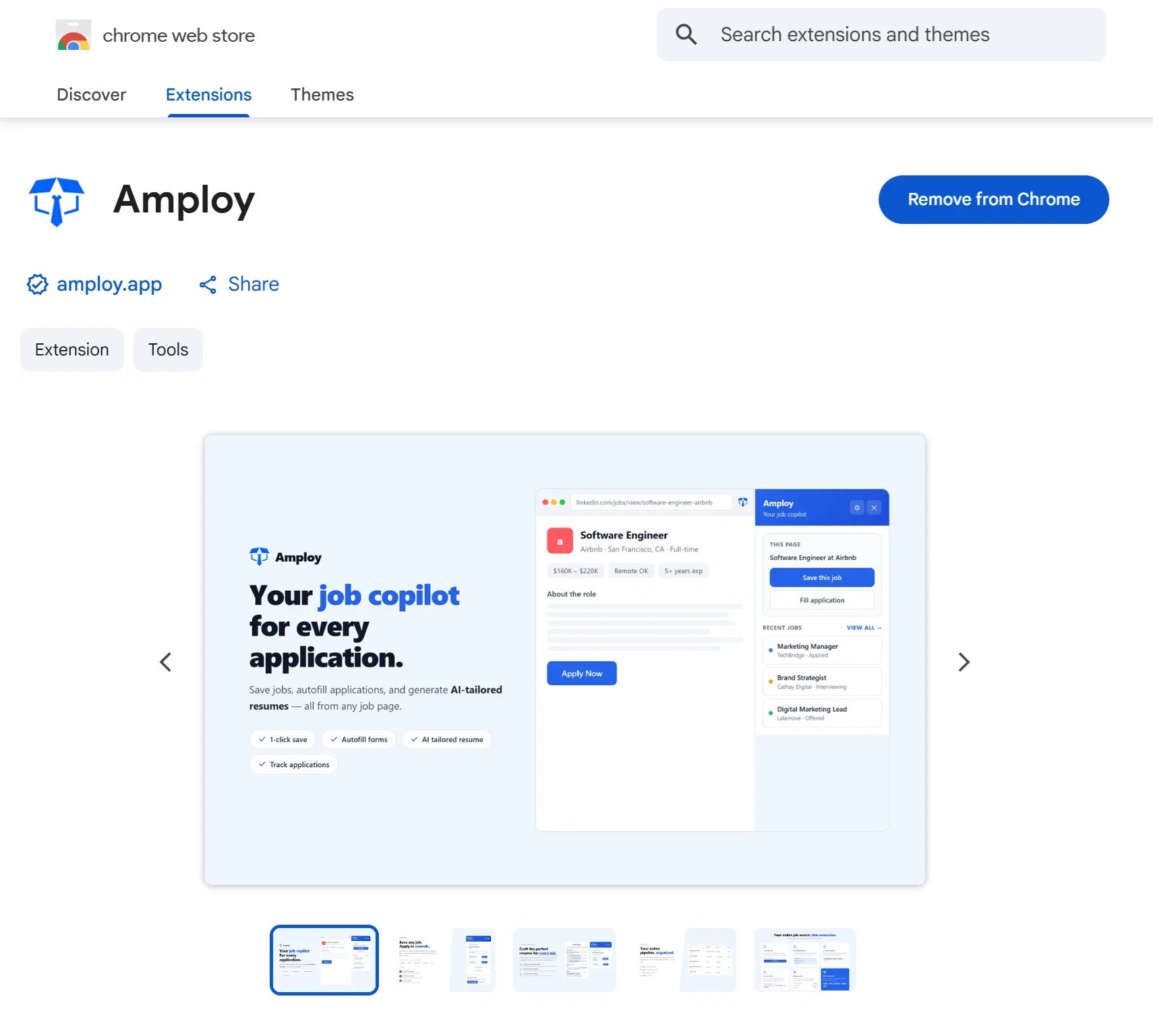
Amploy was built around this exact problem. Instead of you manually cross-referencing the posting against your resume, the extension reads the job description and works from your real experience.
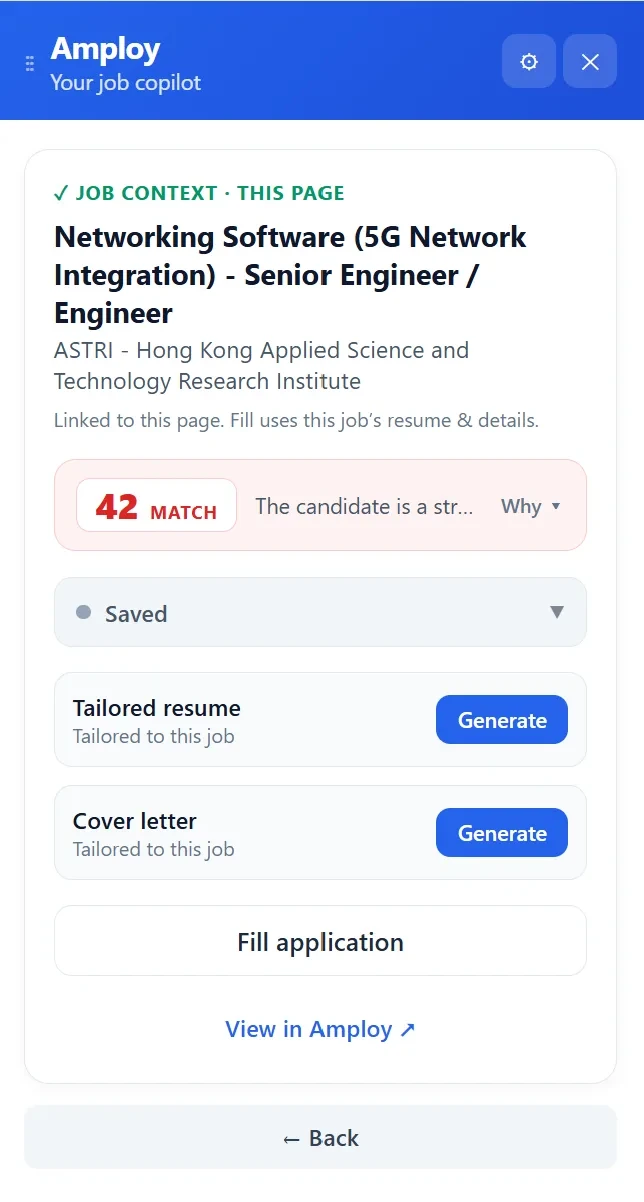
The resume rewrite feature takes your actual work history and reframes it to match each job description — the keep-and-change work, done in seconds. The cover letter generator produces a first draft that references the specific role and your real background, so you're editing for voice rather than writing from scratch. And when you're happy with both, autofill handles the application form itself.

The point isn't to remove you from the process. It's to remove the forty-five minutes of copy-pasting, synonym-hunting, and reformatting that stands between you and the next application. You still decide what's true and what sounds like you.
Keep the pipeline visible
Tailoring only works if you can keep track of what you sent where. Each role gets a slightly different resume and letter, and after ten applications it's easy to lose the thread.
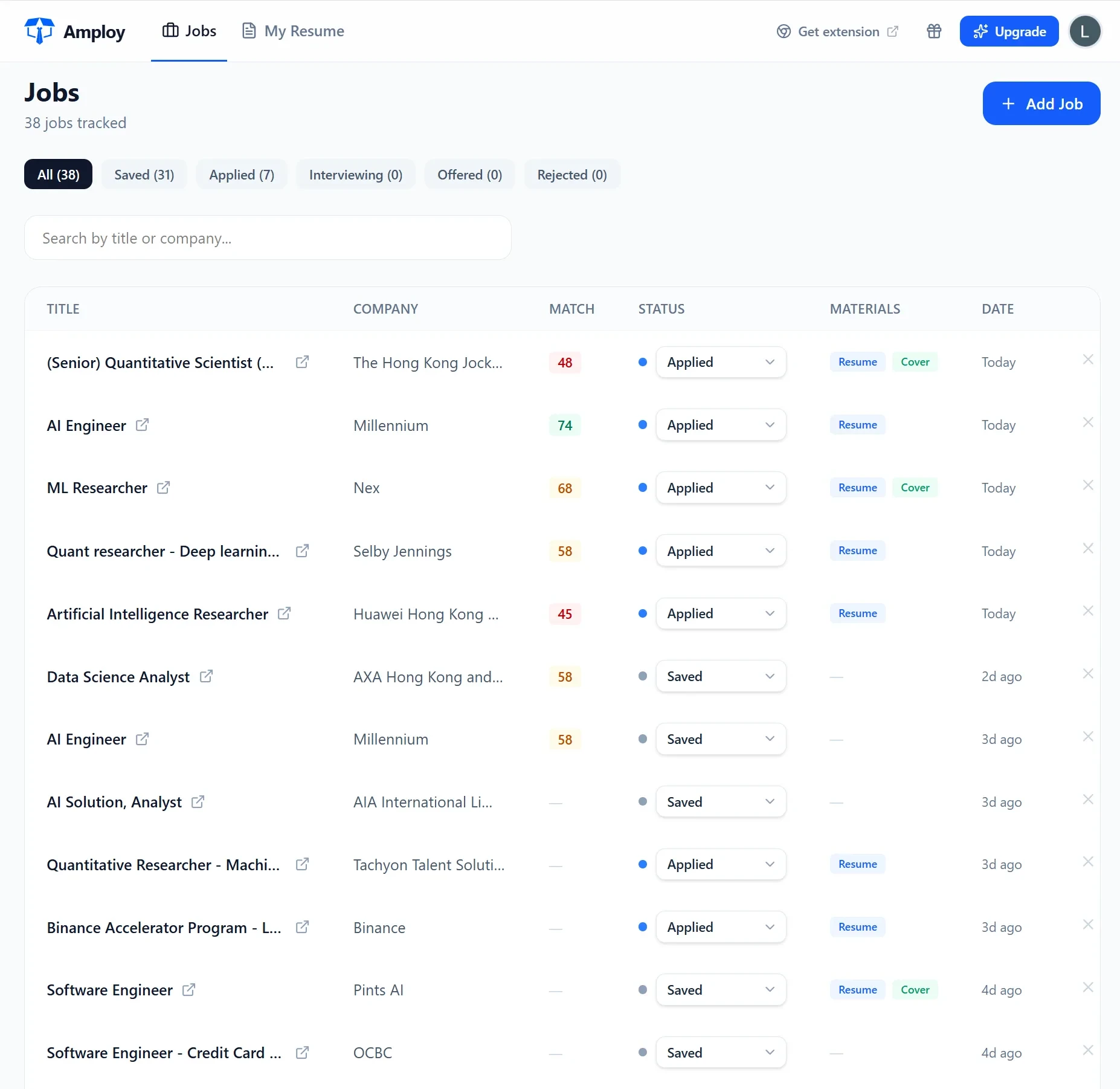
Amploy's job tracker keeps each tailored resume and cover letter next to its status — Saved, Applied, Interview, Offer — so you always know which version went to which company. When an interview lands, you open the exact documents you submitted, not a vague memory of them.
A repeatable process
Tailoring your resume to a job description comes down to three moves:
- Audit the posting and sort its language into keep, change, and cut.
- Mirror what's true, reframe what's buried, and delete what doesn't serve this role.
- Track what you sent, so your tailored versions stay organized as your pipeline grows.
Do this consistently and you'll apply to more roles with better-matched materials — which is the whole game. Amploy exists to make that consistency possible: install the extension, load your profile once, and let it handle the repetitive tailoring while you focus on the roles that matter.