
Simplify Alternative for Job Seekers: What to Use Instead
Job hunting has a volume problem. Most roles get hundreds of applicants, and the people who land interviews are usually the ones who apply to more roles, faster. That's not a motivational slogan — it's just what the math looks like when a single opening can pull in a pile of resumes.
So "simplify" is the right instinct. The question is what you actually simplify, and what you replace the busywork with. Here's a practical way to think about it.
What's actually slowing you down
Before swapping tools, separate the work into two buckets:
- Repetitive work — typing your name, phone, work history, and the same essay answers into form after form; retyping your resume bullets; looking up logins for yet another portal; keeping track of which version went where.
- Thinking work — deciding which roles are worth your time, choosing how to frame your experience, writing in your own voice.
Most job seekers burn their best hours on the first bucket and run out of energy for the second. Simplifying doesn't mean skipping the thinking work. It means getting the repetitive part out of the way so you have something left for the part that actually differentiates you.
Replace scattered tabs with one workflow
A common "simplified" setup is a notes file, a spreadsheet, and a handful of bookmarked job boards. It works until it doesn't — versions blur together, you forget which resume went to which company, and you re-enter the same details on every site.
Amploy is built as a Chrome extension plus a website that keeps the whole loop in one place:
- Autofill fills name, phone, work history, and essays from your profile in one click.
- Cover letter generation drafts from the role and your real experience — then you edit it for your voice.
- Resume rewrite reshapes your actual experience to match each job description.
- Job tracker keeps a status pipeline (Saved → Applied → Interview → Offer) right next to each tailored resume and letter.
- Password saver stores site logins so a forgotten password doesn't stall an application.
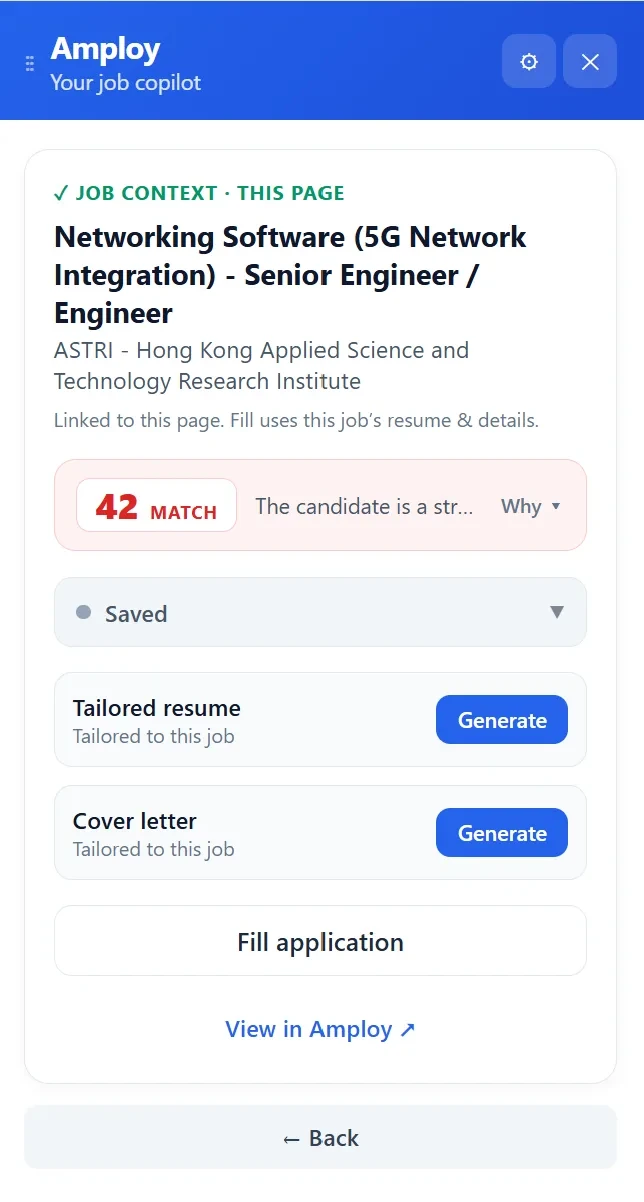
The point isn't more features. It's fewer places to look and fewer things to redo.
Keep the tailoring, drop the retyping
A fair worry about "simplifying" is that it turns into spraying identical applications everywhere. That's the wrong trade. The simplification worth having is the kind that removes the retyping while keeping the tailoring.
That's the distinction Amploy leans on: the drafts and rewrites are a starting point built from your real experience, and you stay in the editor to make them sound like you. You're not choosing between fast and personalized — you're cutting the time spent on the mechanical part so the personalized part is still possible at volume.
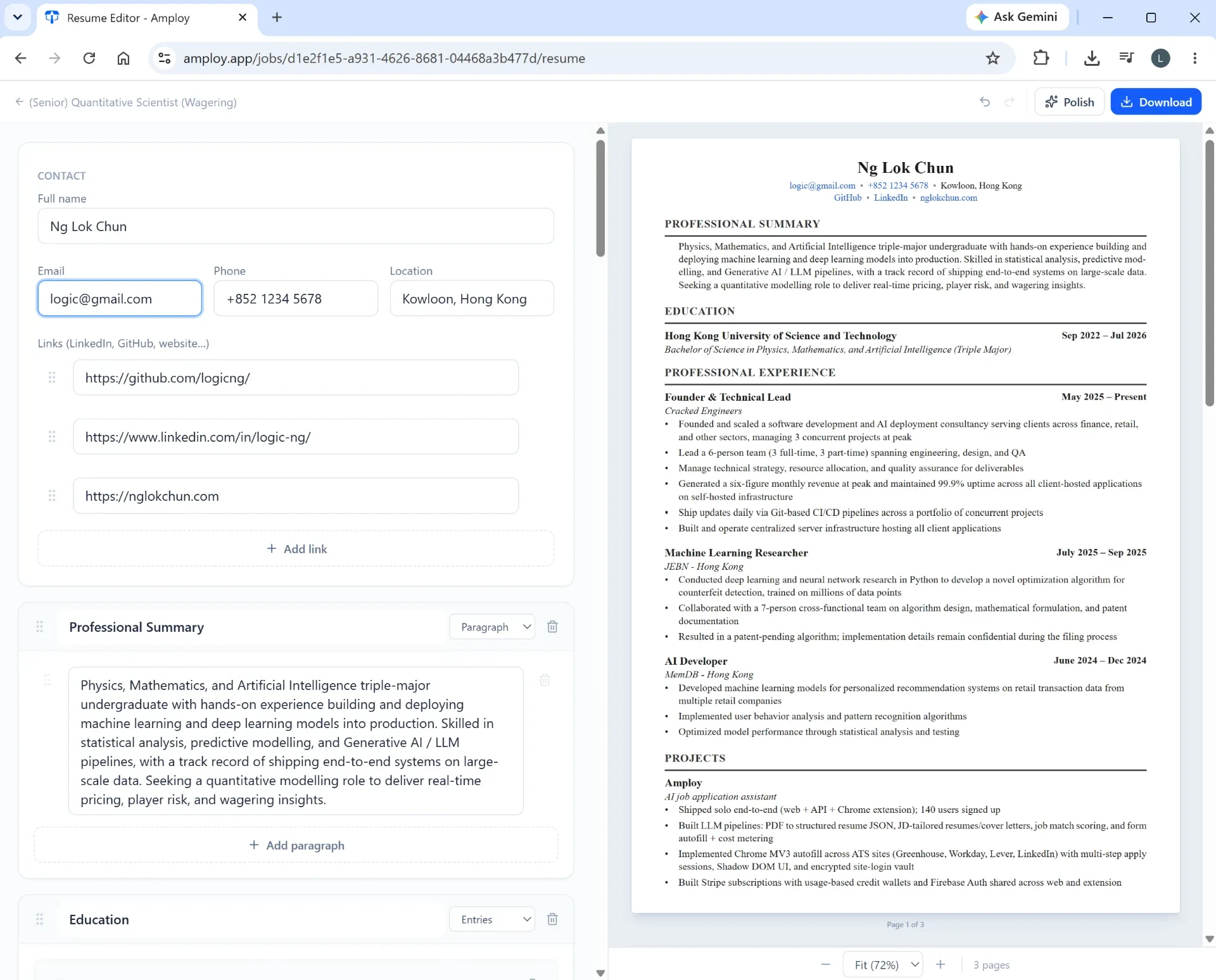
Track what you send
The quiet killer of a high-volume search is losing the thread. You apply to twenty roles, then can't remember which resume you sent, whether you followed up, or which company already replied.
Keeping a status pipeline next to each tailored resume and letter solves this without a separate spreadsheet to maintain. Saved, Applied, Interview, Offer — one view, updated as you go.
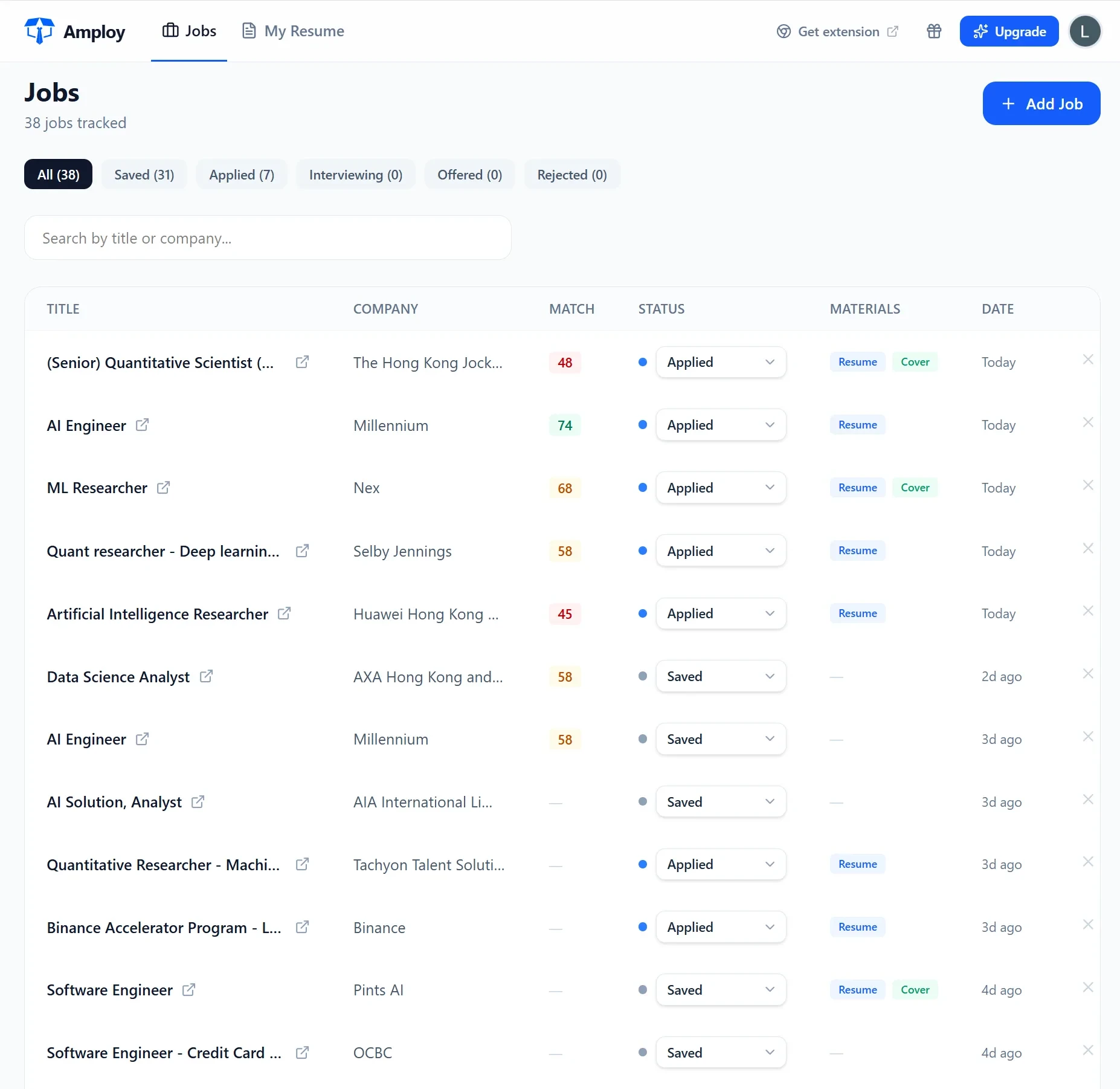
A simpler setup, in practice
If you're rebuilding your process, here's a lightweight version:
- Fill out your profile once. Name, phone, work history — the details every form asks for.
- Tailor per role, starting from a draft. Generate a cover letter and rewrite your resume against the job description, then edit for your voice.
- Apply with autofill. Let the extension handle the repetitive fields.
- Log the status immediately. Move the role into Saved or Applied while it's fresh.
- Save the login. So the next visit to that portal doesn't cost you a password reset.
The takeaway
The alternative to a chaotic job search isn't a more elaborate system. It's a smaller one: one profile, one place to tailor, one tracker, one place for logins. That's the promise Amploy is built around — stop wasting so much time applying to jobs, so you can play the numbers game without burning out.