
One Resume, 50 Applications: How to Tailor Without the Rewrite
Applying to 50 jobs with one generic resume feels efficient. It isn't.
Most roles draw hundreds of applicants, and hiring teams scan for fit fast. A resume that speaks to every job speaks to none of them. The candidates who land interviews aren't rewriting from scratch fifty times — they're tailoring on top of a strong base, quickly. Here's how to do the same.
Why tailoring matters more than volume alone
Volume wins, but only when each application is actually aimed at the role. Sending the same resume everywhere means the recruiter has to do the work of connecting your experience to their job description. Most won't bother.
The fix isn't to abandon volume. It's to make tailoring fast enough that volume and relevance stop competing.
Start with one honest master resume
Your base document should contain everything: every role, every project, every measurable result. Don't trim it yet. This is the source of truth you'll pull from.
Two things make this base work:
- Real experience only. No invented titles or stretched dates.
- Detail at the bullet level. Each bullet stands alone so it can be swapped or reordered per role.
A rich master resume is what makes fast tailoring possible. A thin one forces you to write new material every time.
Read the job description like a checklist
Before touching your resume, scan the posting for the words and skills that repeat. Those are the signals the employer cares about most.
Then map them against your master resume. Which bullets already match? Which are close but phrased differently? Which are missing entirely?
This takes a few minutes per role — and it's the part that actually moves the needle.
Tailor by rearranging, not rewriting
Tailoring doesn't mean writing a new resume. It means reordering and reframing what you already have.
- Lead with the most relevant role and bullets. Put the experience that matches the job at the top.
- Mirror the language. If the posting says "stakeholder management" and you wrote "worked with teams," use their phrasing where it's honest.
- Cut what doesn't fit. For this application, trim bullets that distract from the role.
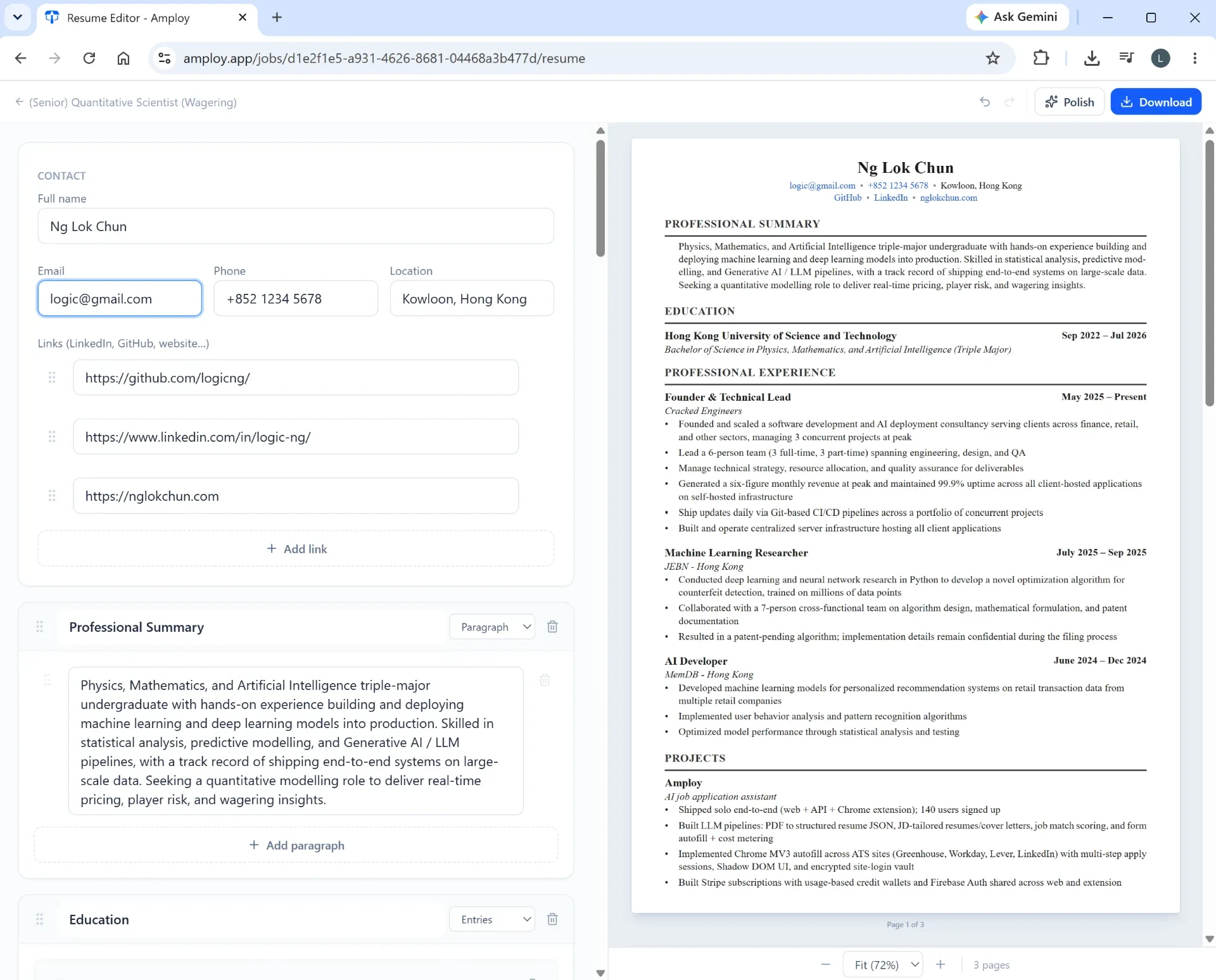
This is where a tool earns its keep. Amploy's resume rewrite takes your real experience and reframes it to match each job description, so you're editing a tailored starting point instead of staring at a blank page.

Pair it with a fast cover letter draft
Cover letters are where tailoring slows people down most. But a cover letter doesn't need to be a fresh essay every time.
Amploy generates a first draft that references the specific role and pulls from your real experience. From there, edit for your voice — a sentence on why this company, a line that connects your background to their problem. The draft handles the structure; you handle the personality.
Keep the pipeline visible
When you're sending 50 applications, things get lost. Which resume went to which company? Who replied? What's still pending?
Track every application with its tailored resume and letter attached, in a simple status pipeline: Saved → Applied → Interview → Offer.
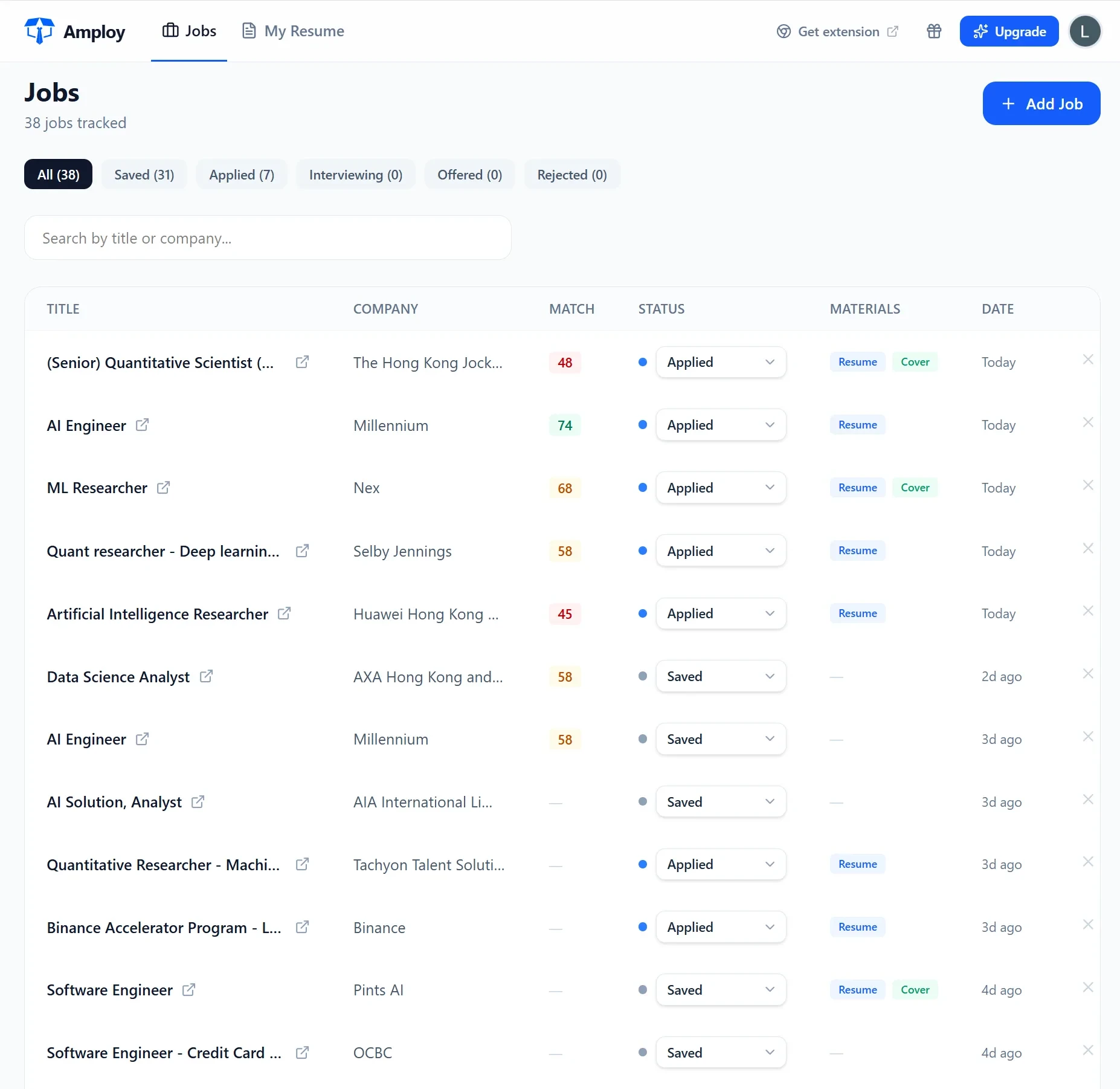
A visible pipeline stops you from double-applying, helps you follow up on time, and shows you where your effort is actually converting.
Don't let logins slow you down
Fifty applications means dozens of career portals, each with its own account. Forgetting a password mid-application is a small thing that quietly kills momentum.
Amploy's password saver stores site logins so you never get locked out of your own job hunt.

The workflow, end to end
Here's the loop that makes 50 tailored applications realistic:
- Build one detailed master resume.
- Scan each job description for the signals that matter.
- Rewrite your resume to match the role — reframing, not starting over.
- Generate a cover letter draft and edit it for your voice.
- Save the tailored pair under the role and move it through your tracker.
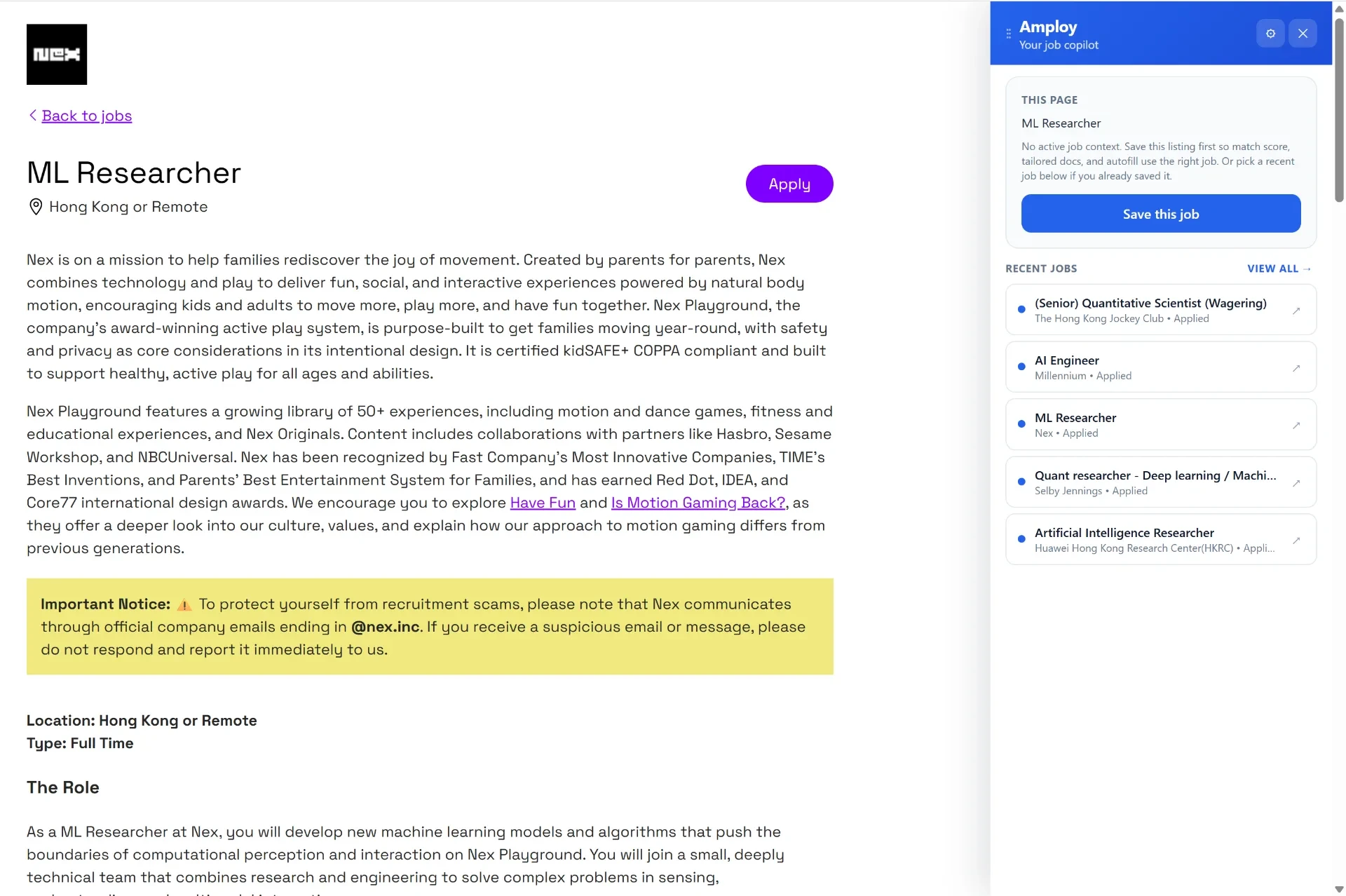
- Apply with autofill so the form itself takes seconds, not minutes.
Volume and quality aren't opposites
The old trade-off — apply to more jobs or apply well — only exists because tailoring used to be slow. When your real experience is captured once and reframed in minutes, you can do both.
That's the whole point: stop wasting so much time applying to jobs, and spend it applying to more of them, better.