
Job Tracker Apps Compared: What Actually Matters for Job Seekers
You're applying to more jobs than ever, and somewhere between the third "Saved" bookmark and the fifth browser tab, you lose track of what you applied to, when, and whether anyone replied. A job tracker app is supposed to fix that. But most comparison posts list features without telling you which ones change your outcomes. Here's what actually matters — and where Amploy fits.
The real job of a tracker
A tracker isn't a database. It's a decision tool. Its job is to help you answer three questions fast:
- Which roles have I already applied to?
- What did I send to each one?
- What's the next action?
If a tracker doesn't make those three questions effortless, the extra columns and charts aren't helping you. They're just another place to fall behind.
What actually matters
1. Status at a glance, not buried in filters
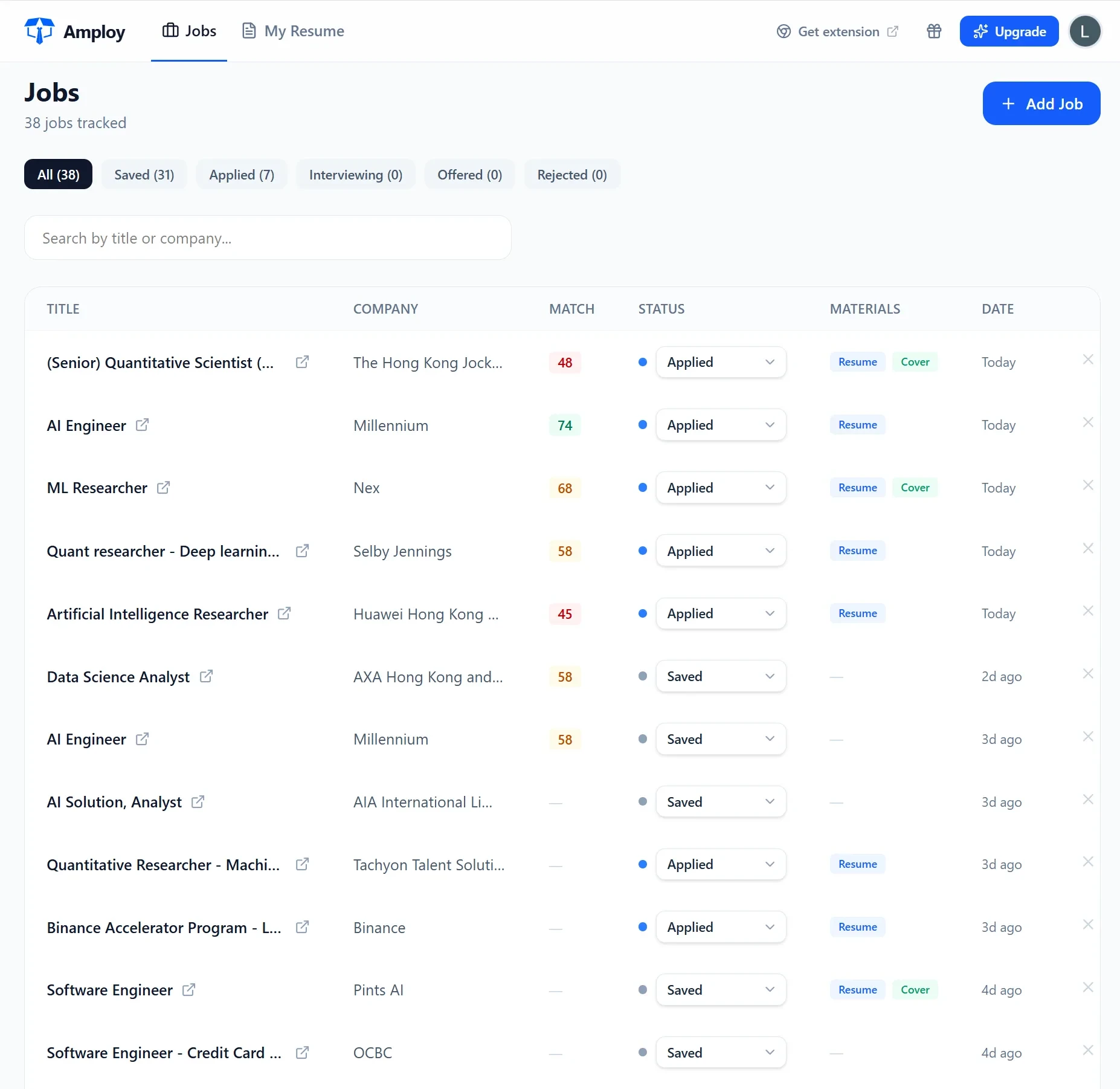
The best tracker is one you'll actually update. That means a simple, visible pipeline — Saved → Applied → Interview → Offer — sitting right next to the role. If updating a status takes more than a couple of clicks, you'll stop doing it within a week.
2. It's connected to what you actually send
Here's the trap with standalone tracker apps: your tracker says "Applied," but it doesn't know what you sent. A few weeks later, a recruiter calls and you can't remember which version of your resume or cover letter went to that company.
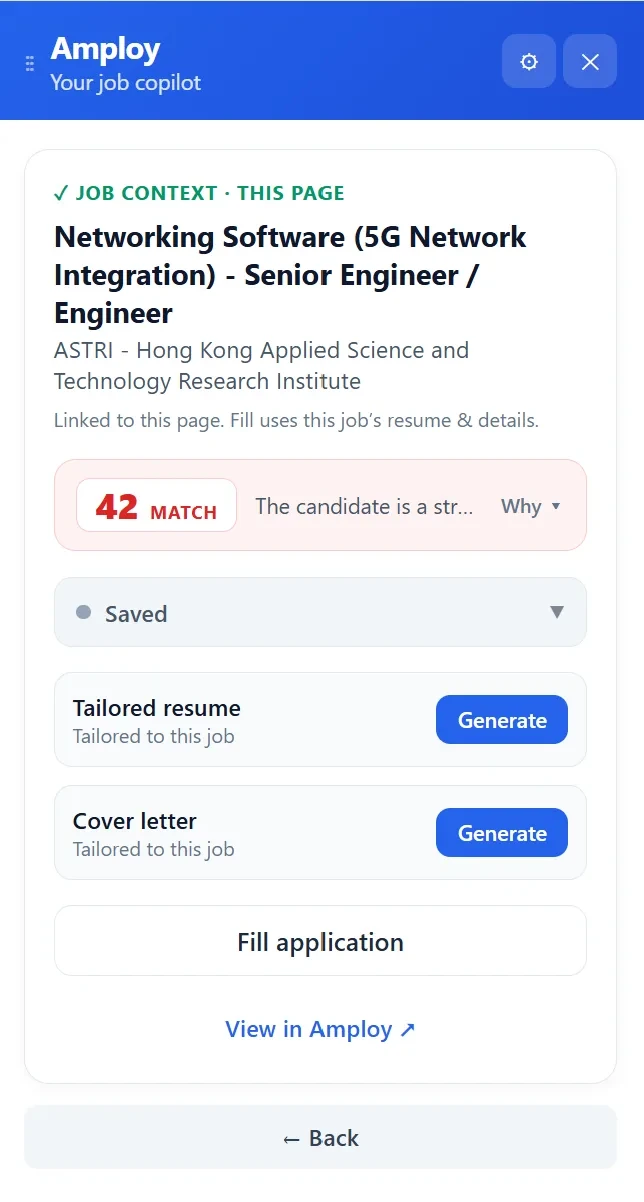
The tracker should live next to the materials — the tailored resume and the cover letter for that specific role. That's how Amploy is built: your tracker status sits beside the resume and letter you generated for that job, so the record matches reality.
3. It removes work, not adds it
Many tracker apps ask you to copy-paste job details, company names, and links manually. That's data entry disguised as organization — and it's exactly the busywork that makes people quit tracking after two weeks.
The better pattern: the tool fills the form, and the tracking happens with minimal input from you. Less typing, more applying.
4. It covers the whole loop, not just the log
A tracker is one piece. The parts that actually consume your time are:
- Filling out repetitive application forms
- Writing cover letters for each role
- Rewriting your resume to match each job description
- Remembering logins for a dozen career sites
If you're stitching together a tracker, a form autofiller, a cover-letter tool, and a password spreadsheet, you've recreated the fragmentation you were trying to escape.
5. Fewer passwords forgotten
Small feature, big time-saver. Career sites multiply, and each one wants a login. A password saver keeps those credentials in one place so a forgotten password doesn't stall an application — Amploy stores one saved login per career site, not per job.

How Amploy handles tracking
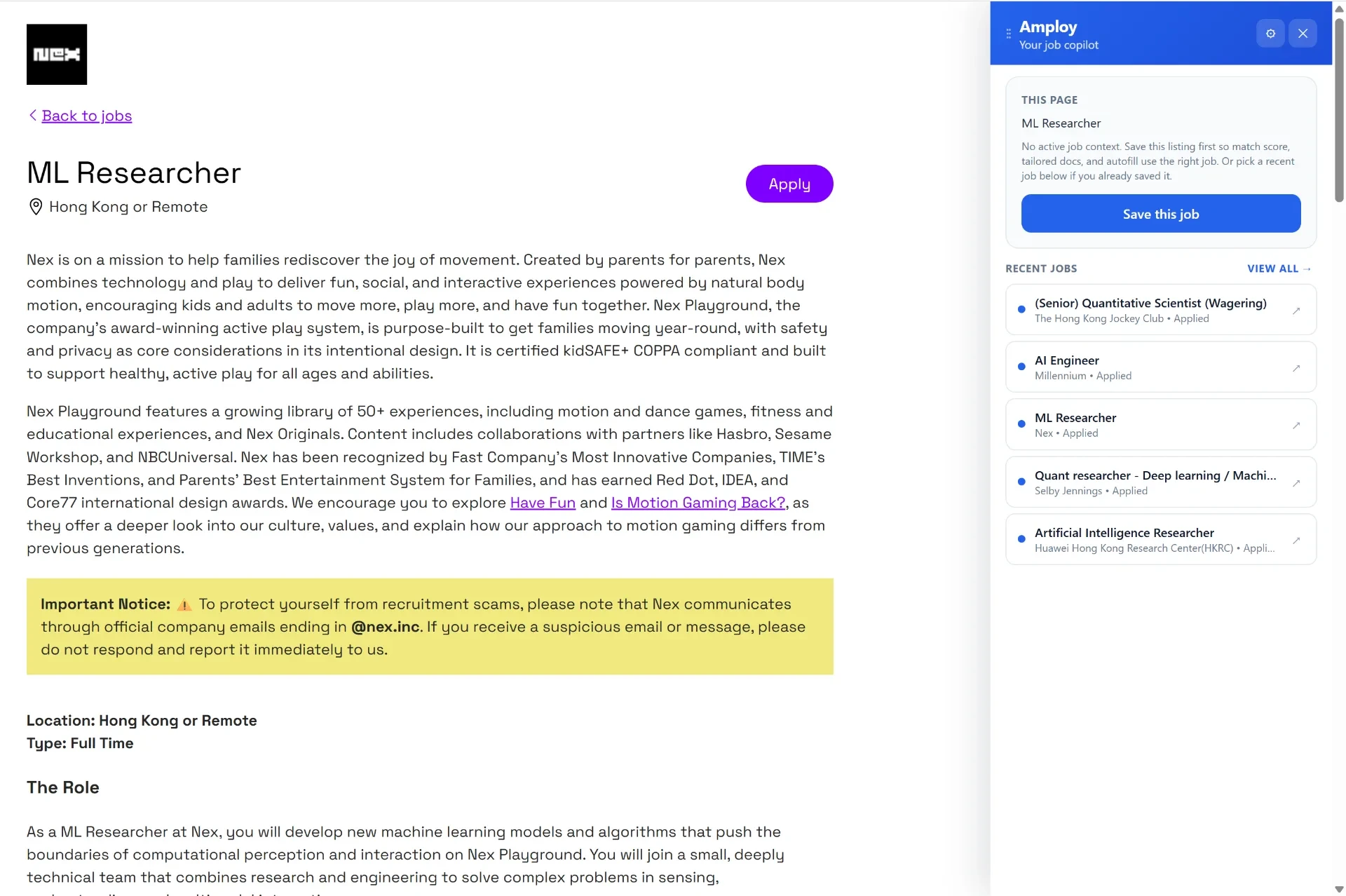
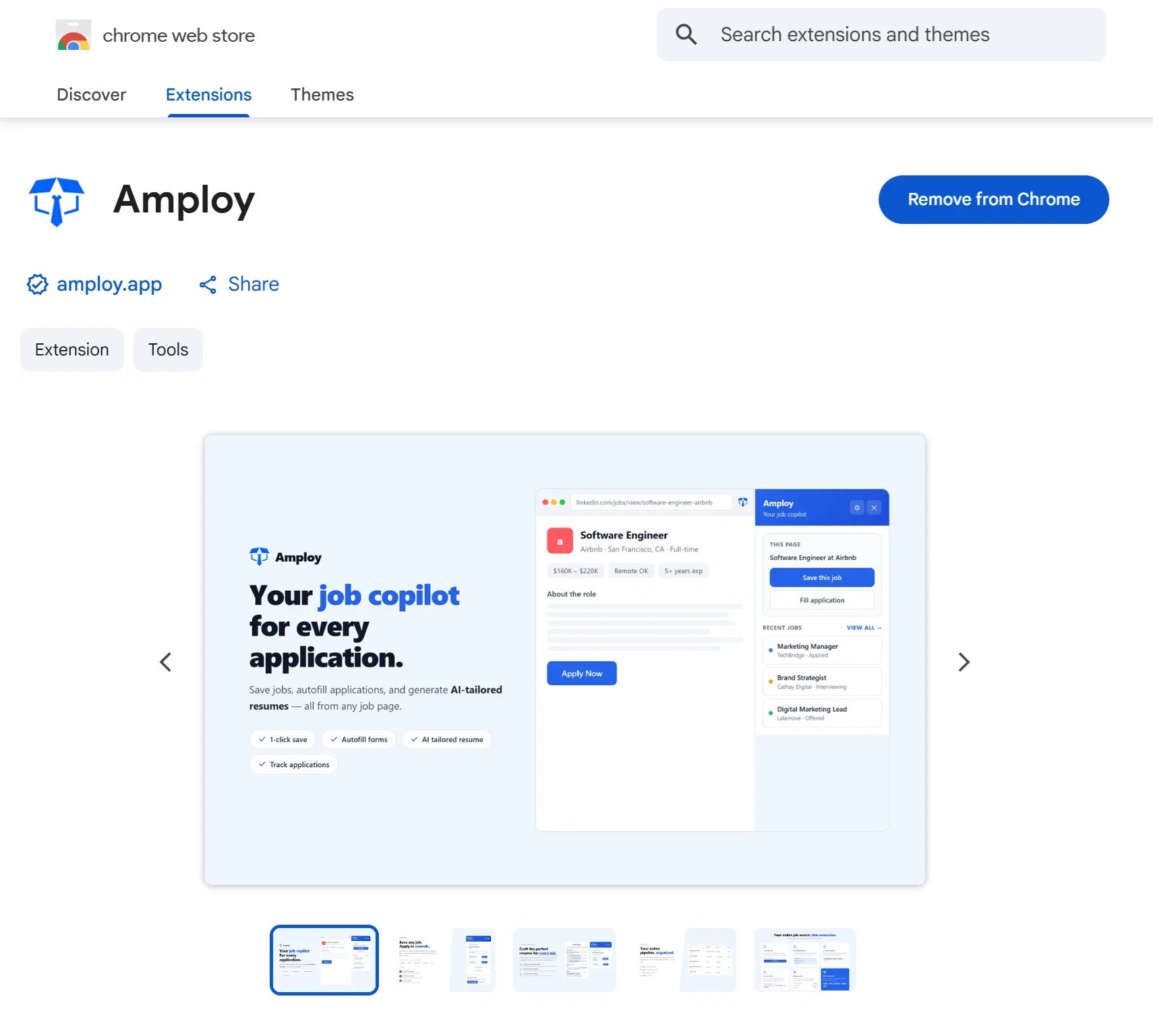
Amploy is a job-search productivity tool — a Chrome extension plus a website — built around one idea: stop wasting so much time applying to jobs.
- Autofill — one click fills name, phone, work history, and essays from your profile.
- Cover letter — generates a first draft referencing the role and your real experience, editable for your voice.
- Resume rewrite — rewrites your real experience to match each job description.
- Job tracker — a status pipeline (Saved → Applied → Interview → Offer) next to each tailored resume and letter.
- Password saver — stores site logins so you never forget the passwords.
Because everything runs in the same place, tracking isn't a separate chore. You fill the form, generate the materials, and the pipeline updates alongside them.
A quick way to evaluate any tracker
Before you commit to one, ask:
- Can I update a status in seconds?
- Does it show me the exact resume and letter I sent for each role?
- Does it cut down typing, or add it?
- Does it handle the parts of applying that actually take time?
- Will I still be using it in a month?
If the answer to most of those is "no," the tracker is costing you time instead of saving it.
The bottom line
A job tracker only earns its place if it helps you apply to more roles, faster, without losing track of what you sent where. Amploy combines tracking with autofill, tailored resumes, cover letters, and saved logins — so the pipeline is a byproduct of applying, not another job on top of it.