
Job Search AI and the Numbers Game: Why Volume Still Wins
Hiring is broken. Not in the sense that companies are malicious or recruiters are careless — it's simply a volume problem. A single competitive role can pull in hundreds of applicants. When that many people are in the pile, rejection stops being a verdict on your worth and starts being a math problem. The people who land interviews aren't necessarily better than you. They're applying more, and faster.
That's the uncomfortable truth at the center of the job search: volume wins. The good news is that AI is making that volume achievable without the burnout that usually comes with it — if you use it the right way.
Why volume actually wins
Think about the funnel realistically. If you apply to five roles and one gets back to you, that feels like a 20% response rate. If you apply to fifty with the same quality, you're looking at a much larger set of conversations — and a wider set of chances to find a role that actually fits.
Most people don't apply more because of a bottleneck, not a lack of desire. Tailoring a resume takes time. Writing a cover letter takes time. Re-entering the same work history into a different form on a different site takes time. Ten quality applications in an evening is a good night for most job seekers. By the time you've done it a few weeks in a row, momentum dies.
The insight behind Amploy is that the bottleneck isn't effort — it's repetition. And repetition is exactly what should be automated.
Job search AI hasn't changed the game — it's changed the speed
A lot of what's marketed as "job search AI" is either a glorified keyword matcher or a chatbot that writes a nice-sounding paragraph you could have written yourself. Neither removes the tedious parts.
What actually matters for a high-volume search comes down to four things:
- Filling applications faster. Every form asks for your name, phone number, work history, education, links, and essays. You've already written all of it — many times over.
- Tailoring each application without starting from scratch. A role that mentions specific tools and outcomes should see your real experience positioned for exactly those things.
- Keeping track of where everything stands. Volume without organization turns into chaos. You need to know what you've sent, what's in progress, and what's waiting on you.
- Not getting locked out of yet another career portal. Every site wants a login. Forgetting one on the day a recruiter emails you is an avoidable setback.
AI is genuinely useful on all four — but only if it's wired into the actual workflow, not off to the side.
The volume approach, minus the burnout
Here's what a sustainable high-volume search looks like in practice with Amploy.
Start with your profile. Enter your work history, education, and details once. From there, autofill handles the repetitive fields on applications in a single click — name, phone, history, essays pulled from what you've already given it.
Tailor each application. Instead of rewriting your resume for every posting, the resume rewrite rewrites your real experience to match each job description. You're still showing what you actually did — it's just framed for the role in front of you. The same goes for cover letters: you get a first draft that references the role and your experience, then edit it so it sounds like you.
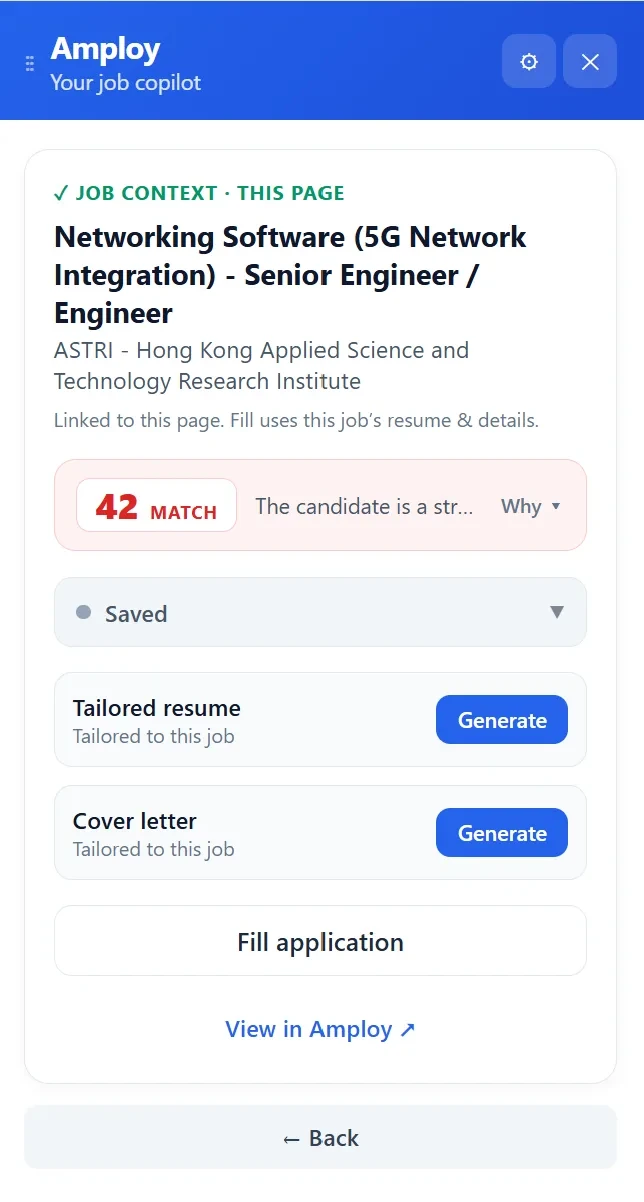
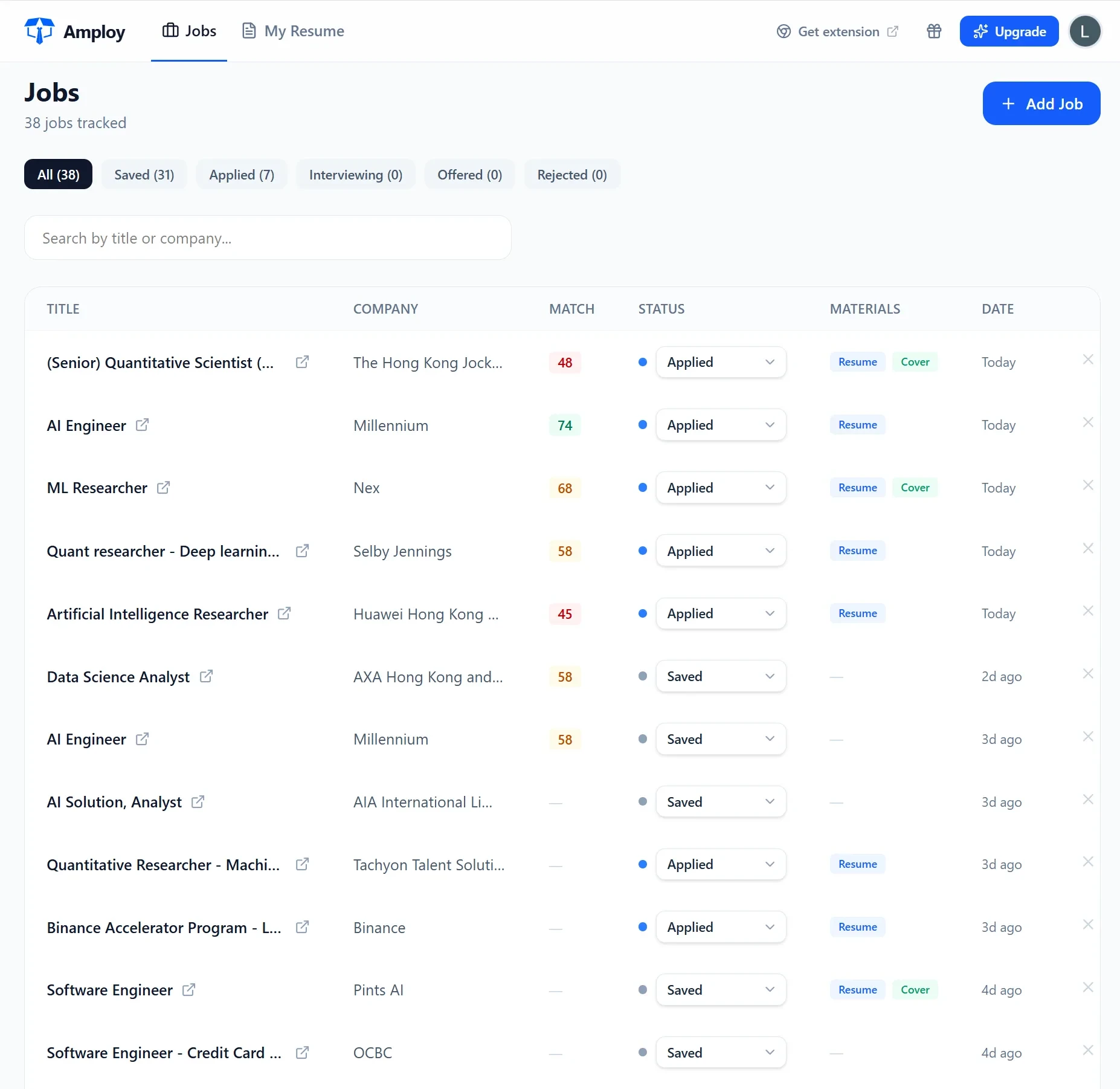
Keep the pipeline visible. With volume comes the need for a system. Every tailored resume and letter sits next to its status — Saved, Applied, Interview, Offer — so you always know where each application stands instead of digging through email threads and browser tabs.
Stop losing access. Career portals are notorious for logins you use once and forget. The password saver keeps one saved login per career site so you're never locked out of a portal when a recruiter finally gets back to you.
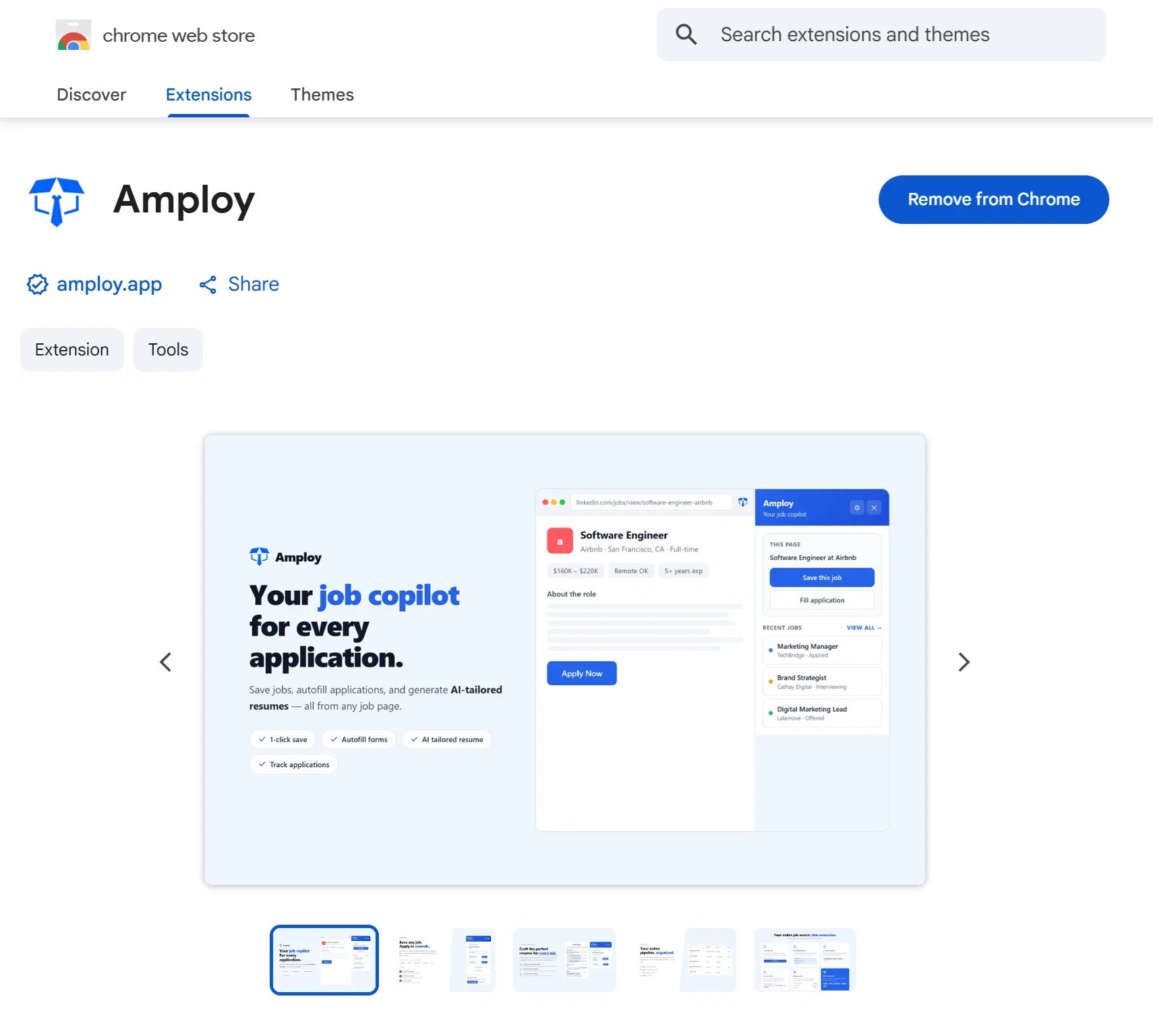
The result isn't spam. It's you, applying to more roles at the same quality, without the grind that used to cap you at five applications a night.
A note on volume
Volume wins, but only when it's your volume — your real experience, your voice in the letter, your decisions about where to apply. AI is good at the repetitive scaffolding. It's not a replacement for judgment, and the tools here are built on your real work history rather than invented claims. Tailor more applications, but stay deliberate about which ones.
The candidates landing interviews aren't outworking everyone else. They've removed the busywork that stood between them and the "apply" button. If the bottleneck holding your search back is repetition, that's exactly what a job search AI with autofill, tailoring, and tracking is for.