
Job Hunt Burnout: How to Keep Applying When Rejections Pile Up
Rejection emails have a way of arriving in batches. Three in a week, and suddenly every job posting looks like a trap you've already fallen into. That's the point where most people slow down — and slowing down is exactly what kills a job search.
Here's how to keep going without pretending it doesn't sting.
Name what's actually exhausting
Job hunt burnout rarely comes from rejection itself. Rejection is a feeling; the fatigue comes from the work around it. Retyping your work history into a different portal for the fourth time. Rewriting a cover letter from scratch for a role you'll never hear back about. Keeping a mental spreadsheet of where you applied, which resume version you sent, and whether that login was your old email or the new one.
That's hours of low-value, high-friction work per week — invisible labor that no interviewer ever sees. So before you tell yourself you're "lacking motivation," check whether the real problem is that your process costs too much energy for too little payoff.
Reframe what a rejection means
Hiring is broken. Most roles get hundreds of applicants, and the person who gets the interview is often simply the one who applied more, faster — not the one who wanted it most.
That single reframe does a lot of work: rejections stop being verdicts on your worth and start being the expected noise of volume. The people who land interviews aren't luckier. They just keep sending applications into the pile.
Which means the goal isn't to care less. It's to make each application cheaper — so the volume doesn't burn you out.
Apply the numbers game without the grind
If volume wins, the smartest move is to cut the busywork that stands between you and each submission. A few practical shifts:
- Batch tailoring, not marathon tailoring. Tailor for 20–30 minutes, then send. Perfecting a single resume for hours is diminishing returns when a recruiter spends seconds on the first pass.
- Reuse real material. Your experience doesn't change per job — the framing does. Start from your actual work history every time instead of a blank page.
- Protect your momentum. Stop applying before you're depleted, not after. Tired applications are sloppy ones.
- Never lose track. Every unrecorded application is a future "wait, did I already apply there?" — and that confusion costs energy you don't have.
Where Amploy fits into your process
Amploy is built for exactly this moment: a Chrome extension and website that automate the repetitive parts so you can keep applying when the rejections are piling up.
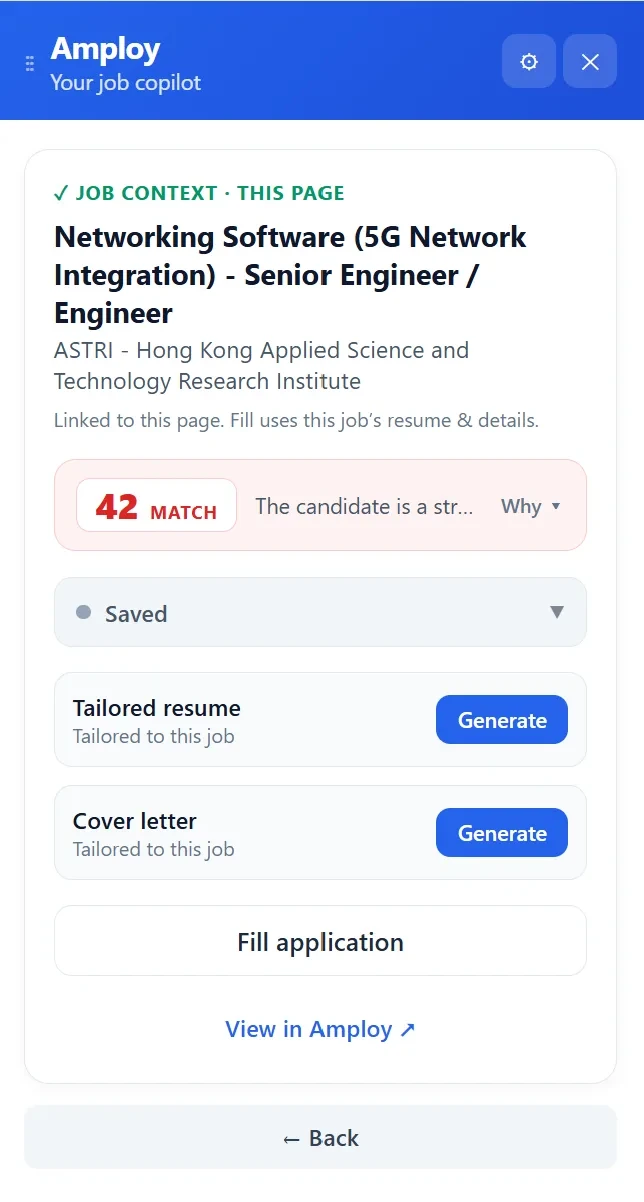
Instead of re-typing your details into every portal, autofill fills name, phone, work history, and essays from your profile in one click. Instead of facing a blank page for each cover letter, it generates a first draft referencing the role and your real experience — you edit for voice, not from zero. And resume rewrite reshapes your actual experience to match each job description.
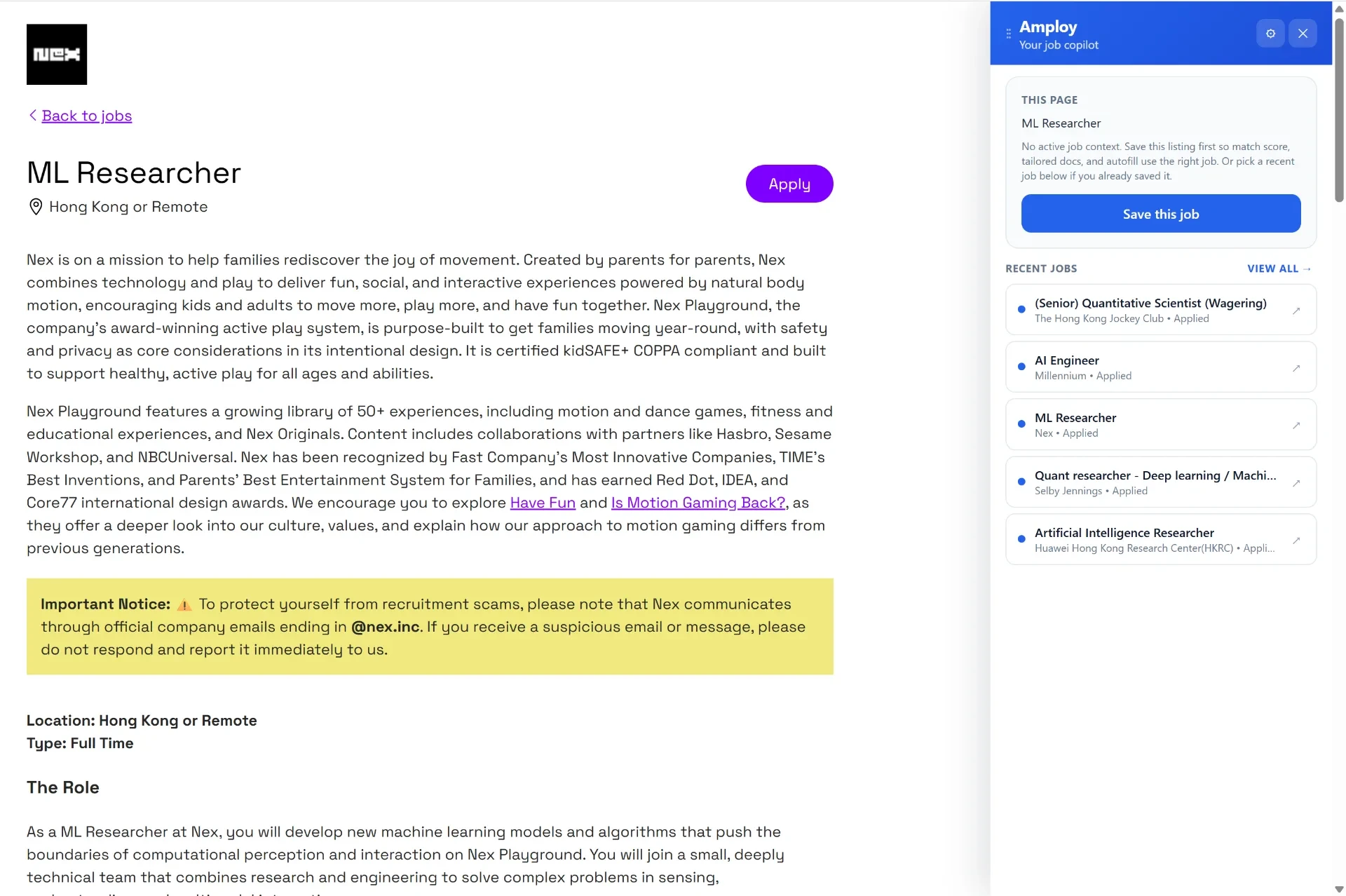
That's the burnout math changed: fewer minutes per application, more applications per week, without the grind that made you want to quit.
Keep the pipeline visible
One of the quietest sources of job hunt burnout is ambiguity. You can't tell if you're making progress, so your brain keeps the loop running in the background.
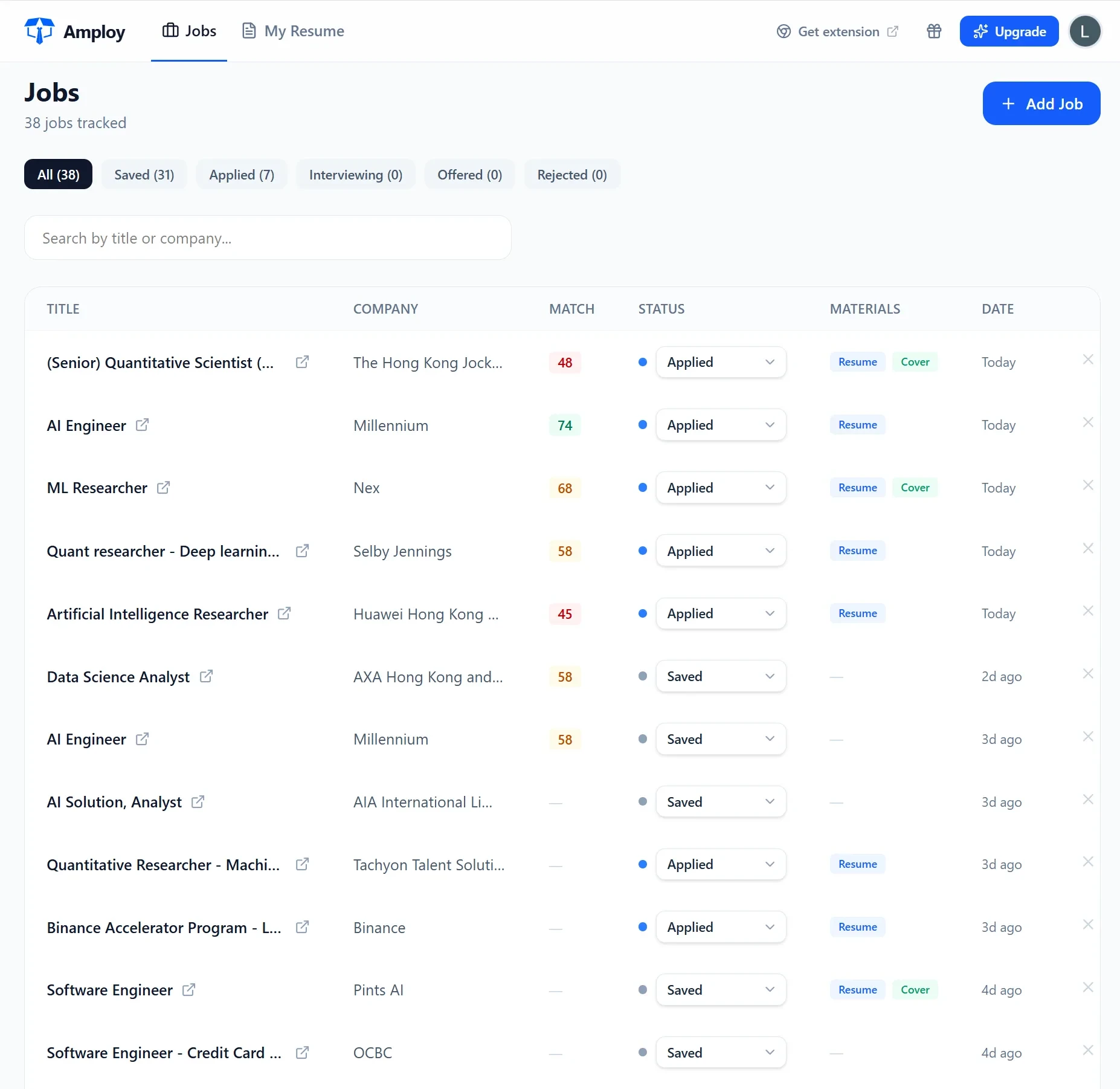
Fix that by making your pipeline something you can see. Amploy's job tracker keeps each application in a status pipeline — Saved → Applied → Interview → Offer — sitting right next to the tailored resume and letter you used. Progress stops being a vague feeling and becomes a list you can act on.
And when you're applying across dozens of career sites, the small stuff adds up — different portals, different saved logins, the recurring "which password was this?" detour. A password saver stores your site logins so that speed bump never interrupts your flow.
Build a routine that survives bad weeks
A sustainable job search looks less like a sprint and more like a maintenance habit:
- Set a daily floor, not a ceiling. A small number of quality applications beats a heroic weekend you'll resent later.
- Separate applying from following up. Dedicate short, scheduled blocks to each — chasing status updates shouldn't eat your tailoring time.
- Make tailored the default. When tailoring is built in, you stop dreading it.
- Track everything, or nothing gets tracked. Review your pipeline weekly and adjust where you're spending effort.
Next steps with Amploy
If burnout has your search stalled, don't wait for motivation to return — reduce the effort each application requires. Install the Amploy extension, load your profile once, and let autofill, cover letter drafts, resume rewrites, the job tracker, and the password saver carry the repetitive work. Then turn your energy toward the part that actually lands interviews: showing up, day after day, and applying again.