
Is AI Job Search Worth It? A Guide for High-Volume Applicants
The math of modern job hunting is brutal: most roles get hundreds of applicants, and the people who land interviews aren't necessarily more talented — they just apply more, faster. That's the reality behind the phrase "volume wins." If you've been eyeing AI job search tools and wondering whether they're genuinely worth it or just hype, this guide breaks it down for people who are applying at scale, not once every few months.
What "AI job search" actually means
The term gets used loosely, so it helps to separate the real use cases from the noise. In practice, AI in a job search usually shows up in a few distinct places:
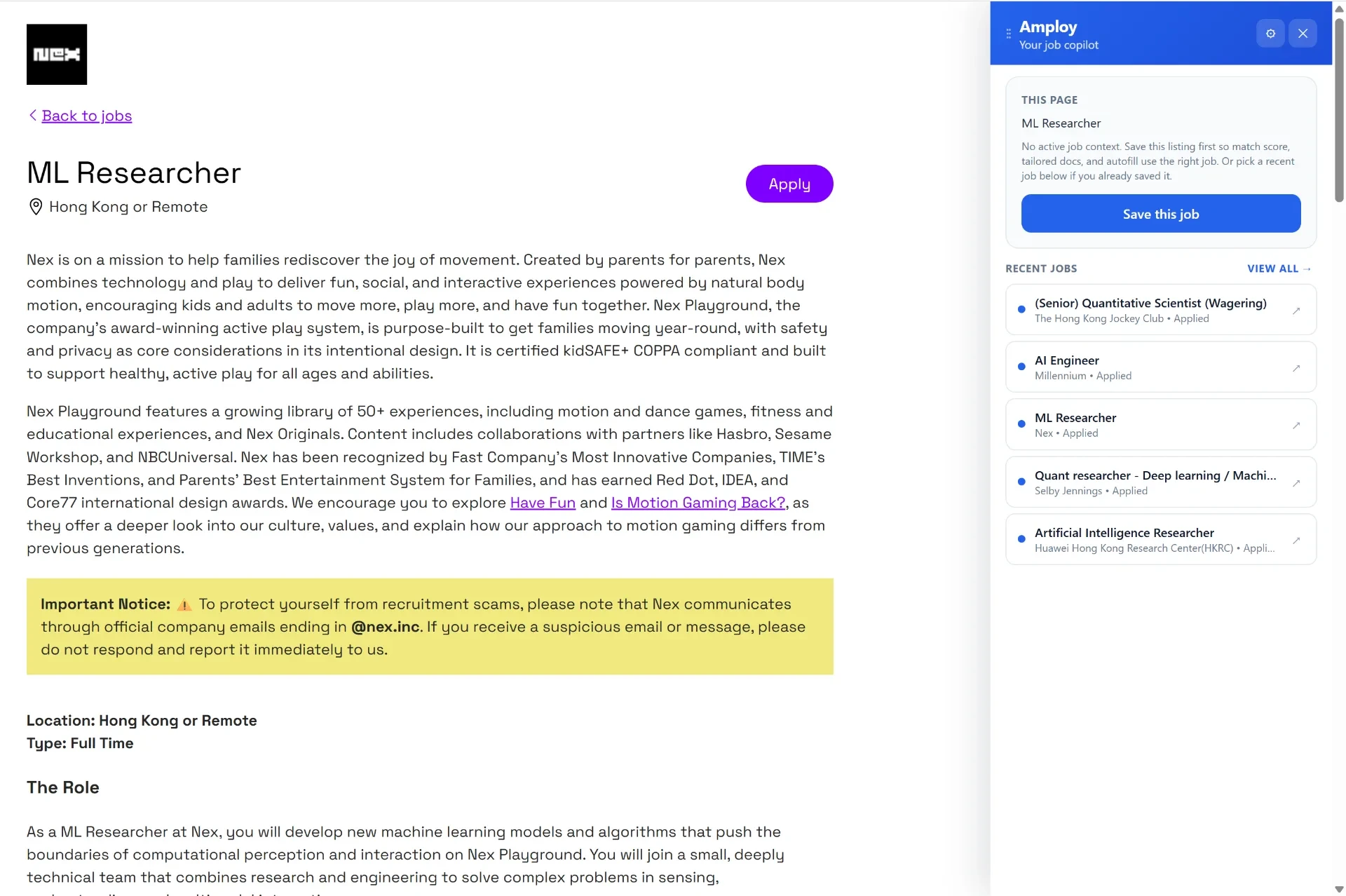
- Autofill — populating application forms with your name, phone, work history, and essay answers from a saved profile.
- Tailoring — rewriting your resume and drafting a cover letter that reflects the specific job description.
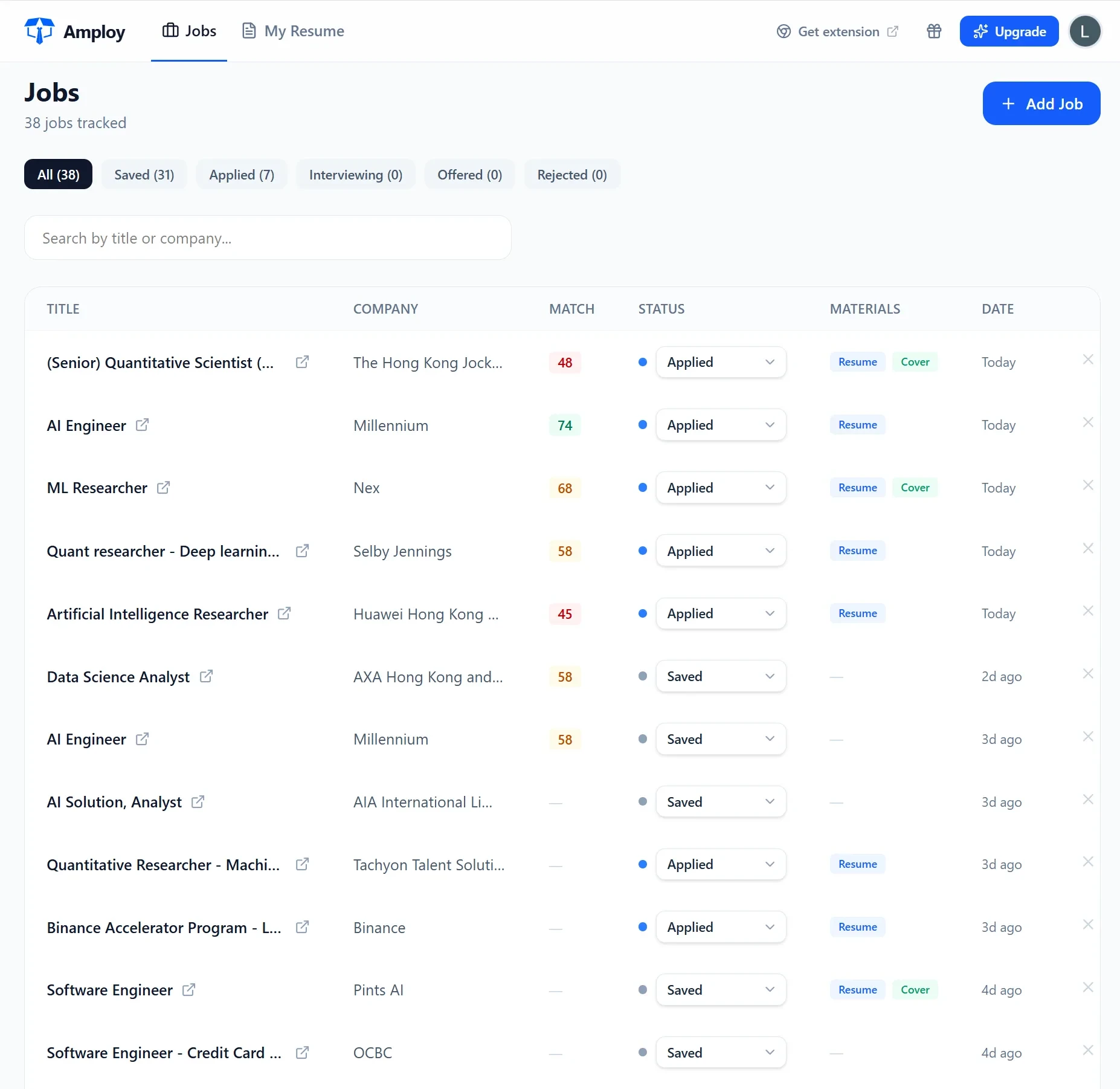
- Tracking — keeping every application, tailored resume, and letter organized in one pipeline.
- Logins — remembering the passwords across dozens of career sites.
Most of these are not glamorous. That's exactly the point: the value of AI job search isn't in making you look smarter. It's in removing the repetitive work that makes high-volume applying exhausting.
Where AI genuinely earns its keep
1. Filling out the same information, again and again
Every application portal asks for the same details in a slightly different layout. Done manually across dozens of applications per week, this is where most of your time disappears. One-click autofill of your name, phone, work history, and essays from a single profile turns a 20-minute form into a couple of minutes.
2. Tailoring without starting from zero
A generic resume gets skimmed and forgotten. But tailoring every application by hand doesn't scale either. This is the sweet spot for AI: generating a first draft of a cover letter that references the role and your real experience, and rewriting your real experience to match each job description. You still edit for your voice — the tool just gets you past the blank page.
The key word is draft. AI is strongest when it handles the structure and you bring the judgment and tone.
3. Keeping the pipeline visible
Volume only works if you can keep track of it. A status pipeline — Saved → Applied → Interview → Offer — sitting right next to each tailored resume and letter means you're never guessing which version you sent where, or which follow-up is overdue.
4. Not losing the plot on logins
This sounds trivial until you're locked out of a career site mid-application. Saving one login per career site (not per job) removes one more small failure point that can cost you an application.
Where AI job search is not worth it
Being honest about the limits is part of taking the tool seriously. AI job search is worth less when:
- You apply to very few, highly targeted roles. If you're sending two applications a month with deep research behind each, the time savings are marginal.
- You let the draft stand unedited. A generated cover letter that doesn't sound like you is worse than no letter at all. The edit is where your value lives.
- You treat volume as a substitute for fit. Applying faster doesn't mean applying blindly — the goal is to apply to more relevant roles, faster, not every role.
Does it actually pay off for high-volume applicants?
For high-volume applicants, the ROI calculation is straightforward. The question isn't "Does AI write better than me?" — it's "How many more qualified applications can I send with the same amount of energy?" Rejections at scale aren't personal; they're a numbers game. The candidates who get interviews are usually the ones who applied more, faster, without burning out.
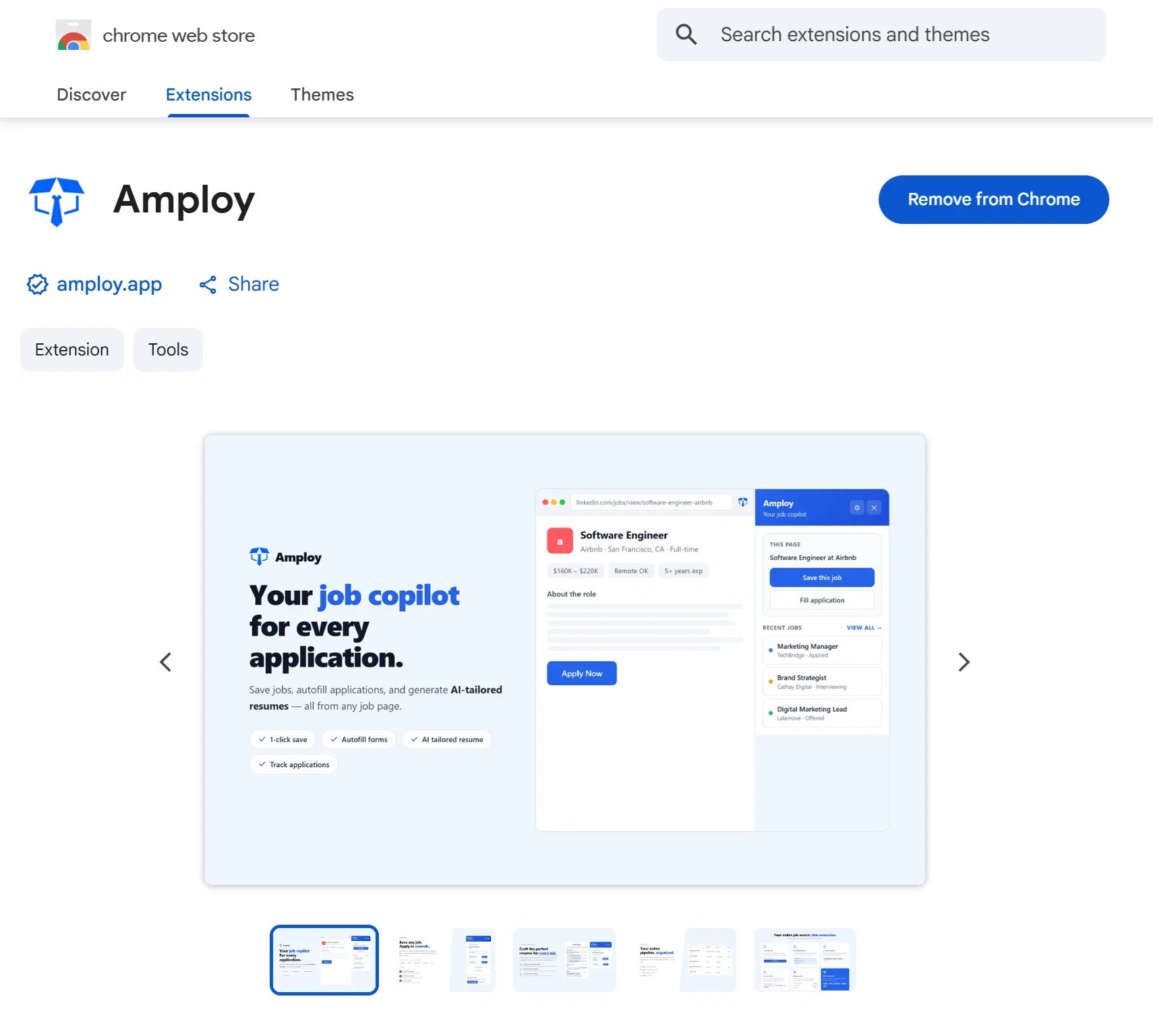
That's the specific case Amploy was built for. It's a job-search productivity tool — a Chrome extension plus website — that automates the repetitive parts: one-click autofill, a cover letter first draft, a resume rewrite matched to each job description, a status tracker, and saved site logins. The promise is deliberately unglamorous: stop wasting so much time applying to jobs, and play the numbers game without burning out.
How to use AI job search well
If you're going to adopt it, adopt it deliberately:
- Build your profile once, thoroughly. Every autofill is only as good as the profile behind it.
- Tailor at volume, not by hand. Let the tool rewrite to the job description, then spend your time on the one or two sentences that actually matter.
- Track everything. A pipeline turns a chaotic inbox into a process you can improve.
- Edit for your voice. Always. The draft is the starting line, not the finish.
The bottom line
AI job search earns its place when it removes the repetitive friction between you and the next application — the forms, the blank-page cover letters, the scattered tracking, the forgotten passwords. For high-volume applicants, that friction is the whole problem. Remove it, and volume stops being a grind and starts being a strategy.