
How to Write a Cover Letter
Most cover letters fail for a boring reason: they were written for every job and therefore for none. The good news is that a strong, specific cover letter doesn't require hours of staring at a blank page. It requires a clear structure, a few details pulled straight from the job posting, and your real experience to back them up.
Here's how to write a cover letter that gets read — and how to do it without it eating into your application volume.
Start with the one thing most people skip
Before you write a word, read the job description and pull out three things:
- The role title and who it reports to, if listed
- The two or three skills or outcomes they repeat or emphasize
- Any specific language they use (tools, products, or phrasing you can mirror)
This is the raw material for your letter. A cover letter that references the actual role reads as thoughtful. A cover letter that could be sent to any company reads as noise — and recruiters can spot it in a sentence.
The structure that works
You don't need to reinvent the format. A short letter — a few tight paragraphs — covers everything a hiring manager wants:
1. Open with the role and a reason
Name the position you're applying for and why you're a fit in one sentence. Skip "I am writing to express my interest." Everyone knows that. Lead with something tied to the role.
2. Prove it with one real example
Pick the most relevant thing from your actual work history — a project, a result, a responsibility you owned — and connect it directly to what the job description asks for. One specific, concrete example beats a paragraph of adjectives.
3. Mirror their language
If the posting says "cross-functional collaboration," don't call it "working with teams." Use their words where they're accurate for you. This is less about gaming a filter and more about showing you understood what they're asking for.
4. Close simply
Reiterate your interest, thank them for their time, and sign off. Short. No rambling final paragraph.
The mistakes that quietly cost you
- Repeating your resume. The letter isn't a prose version of your CV. It's the "why this role, why me" that the resume can't say in bullet points.
- Vague flattery. "I've always admired your company" tells them nothing. Say what about the role or work pulls you in, specifically.
- Overwriting. A tight, one-page letter gets read. A long, hedge-filled one gets skimmed or skipped.
- Waiting on the perfect draft. The imperfect letter sent on time beats the polished one that never went out.
Where Amploy fits in
Writing a tailored letter for every application is exactly the kind of busywork that makes people apply to five jobs instead of fifty. Amploy's cover letter feature generates a first draft that references the specific role and pulls from your real experience — so you're never starting from zero.
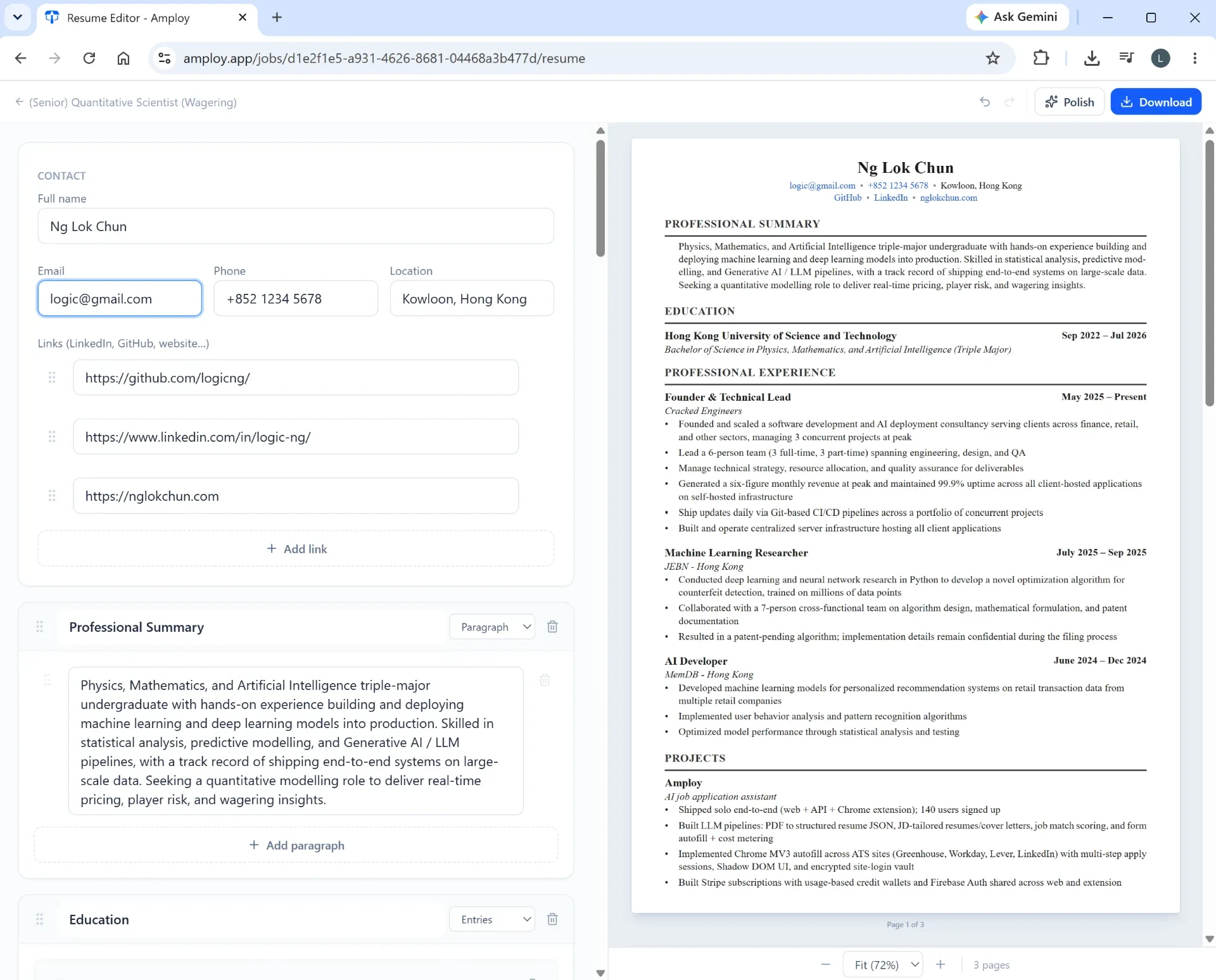
From there it's yours: edit the draft for your voice, tighten the example, adjust the tone, and send. You get the speed of a template without the generic, one-size-fits-all problem that makes templates fail.
Build the habit, not the perfect letter
Once you have a repeatable process — read the posting, pull the three details, write a short three-paragraph letter with one real example — the cover letter stops being the bottleneck. It becomes a couple of minutes in a process you can run over and over.
That's the whole game. Hiring is broken and volume wins; the people who land interviews are the ones applying more, faster. A cover letter you can write well and quickly is how you keep that volume up without burning out.
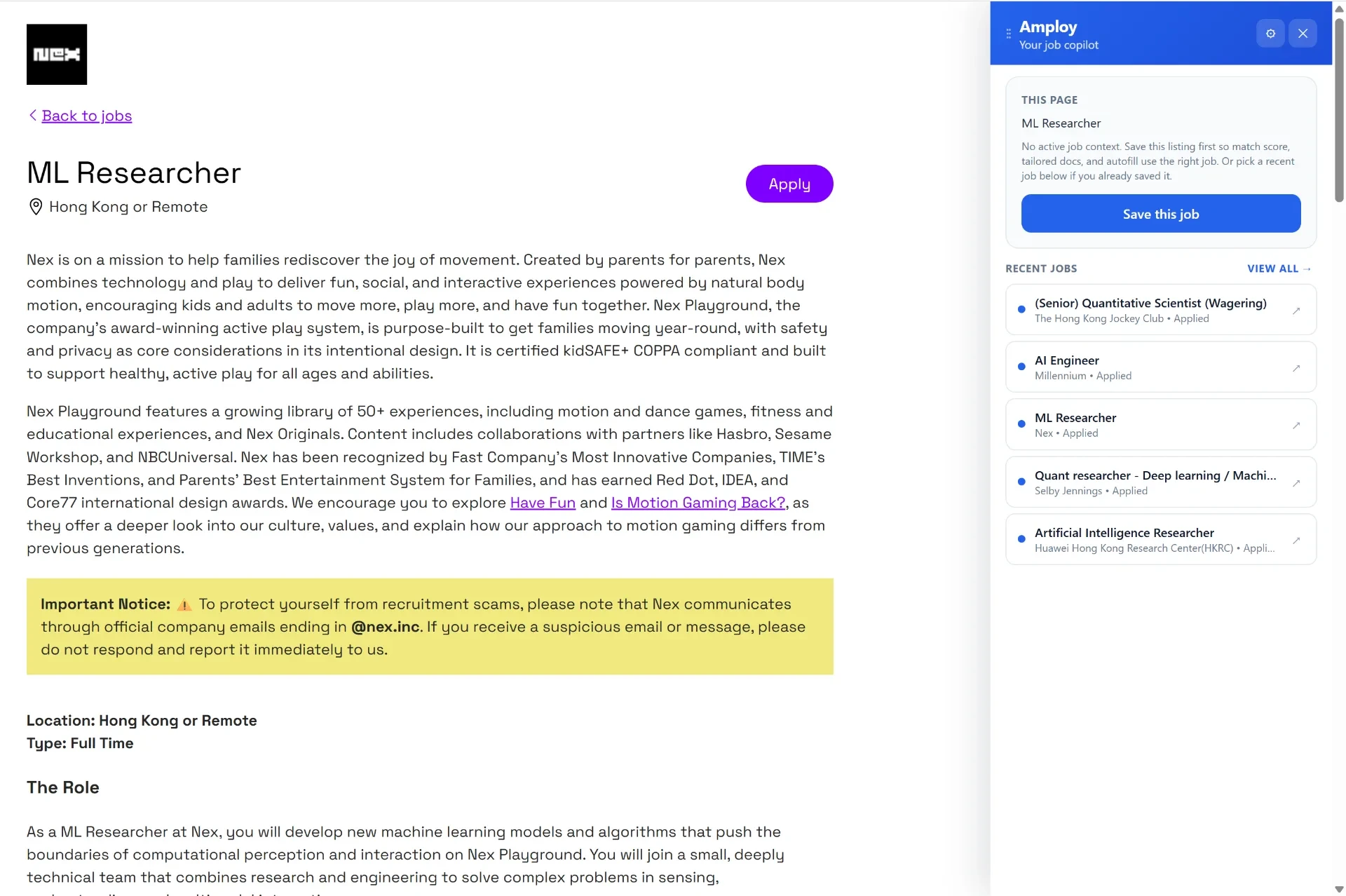
Pair each tailored letter with a resume that matches the job description and track it all in one place, and the repetitive parts of applying take care of themselves — so you can spend your energy on the applications that matter.