
How to Tailor Your Resume to a Job Description (With Real Examples)
Most job seekers don't get rejected because they're unqualified. They get rejected because their resume doesn't visibly match what the job description is asking for. The person reading your resume is scanning for a reason to say yes — usually in under a minute — and if the match isn't obvious, they move on.
Tailoring your resume to each job description fixes that. It's also the step most people skip because it's slow. Here's how to do it well, with examples, and how to make it fast enough to actually keep up.
Why tailoring matters more than you think
Most postings attract hundreds of applicants. With that kind of volume, recruiters can't afford to read closely — they pattern-match. If your resume mirrors the language of the posting, you read as a fit. If it doesn't, you read as a gamble.
The good news: the people who land interviews usually aren't more talented. They just apply more, faster, with a better match each time. Tailoring is the lever that turns volume into responses.
Start by reading the job description like a checklist
Before you change a single line, pull out three things from the posting:
- The required skills and tools — the ones named directly, especially in the first few bullets.
- The repeated language — terms that show up more than once are usually the things the team cares most about.
- The outcomes — what they say this role is responsible for achieving.
The words they use are the words you should use. If the posting says "stakeholder management" and your resume says "worked with clients," you're making the recruiter translate. Don't make them translate.
Match the job title and summary
Your headline and opening summary are the first thing read, so align them with the role you're applying for. If the job is "Product Marketing Manager," your summary shouldn't lead with "Content Strategist" — even if that's what you've been doing. Describe yourself in their terms, using your real experience.
Keep it to a line or two: who you are, the relevant skill set, and the kind of role you want. No fluff.

Rewrite your experience bullets — with examples
This is where tailoring does the most work. Same real experience, different emphasis depending on the job.
Say you ran social media at your last company. Here's the same role described two ways:
Generic bullet (untailored):
Managed social media accounts and created content.
Tailored for a growth-focused role:
Grew social channels through weekly content and A/B-tested campaigns, focused on audience acquisition.
Tailored for a brand-voice role:
Owned brand voice across social channels, writing and editing all copy to keep messaging consistent.
Notice nothing was invented — the same job is just framed around what this posting emphasizes. Pull the language from the job description, then point your real work at it. Don't claim skills you don't have, and don't add metrics that didn't happen; frame the truth in their direction.
If you're moving between industries, do the same thing with transferable experience. Translate what you did into the vocabulary of the new field.
Mirror keywords — without keyword-stuffing
Applicant tracking systems and human reviewers both look for the words in the posting. Use natural matches: if they say "budget planning," use "budget planning," not a synonym.
The mistake is stuffing. A resume that repeats keywords without context reads as spam to a human and doesn't help you with a machine. The rule: every keyword you mirror should sit inside a real sentence about real work.
Cover letters get the same treatment
If a posting asks for a cover letter, treat it as an extension of the same tailoring — lead with the role and your most relevant experience, in the same language as the posting. Keep it short and specific. A first draft that references the role and your actual background is most of the battle; then edit it so it sounds like you.
Keep your versions organized
If you're tailoring for every application, you'll have a lot of versions of your resume — one per role, ideally beside the cover letter you sent. Keep them tracked next to the application so you know exactly what you sent where, and you can follow each one through Saved → Applied → Interview → Offer.
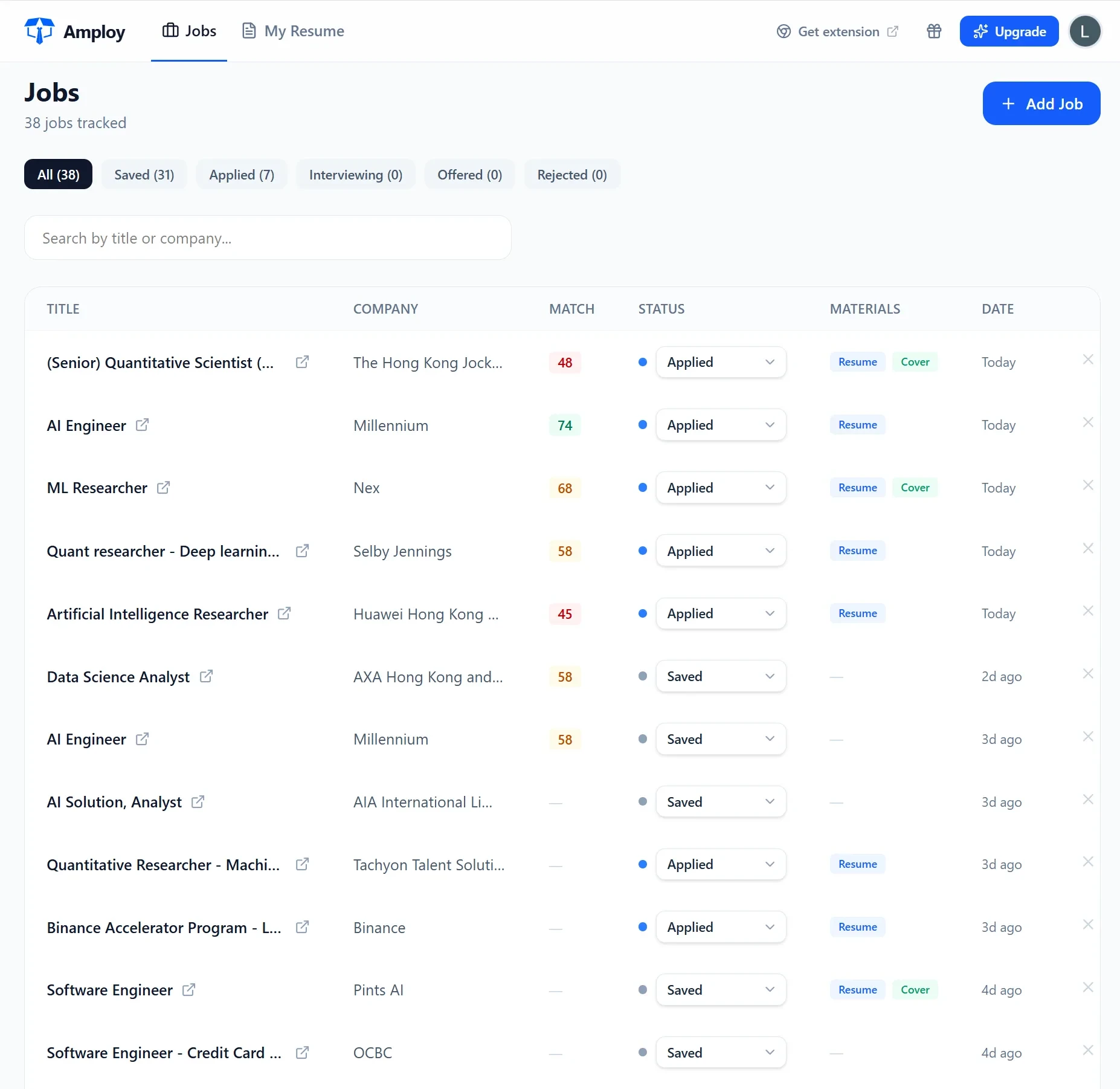
Tailoring doesn't have to mean rewriting from scratch
The reason people stop tailoring is time: a thoughtful version per job can take an hour, and that doesn't scale past a handful of applications. The efficient move is to tailor the first draft fast, then spend your time on judgment calls and editing.
That's what we built Amploy for. Autofill pulls your details straight from your profile so you're not retyping work history and essays every time. The resume rewrite takes your real experience and reshapes it around each job description, then you edit for accuracy and voice. A cover letter draft referencing the role appears alongside it. And your password saver keeps all those site logins in one place so an account you made three months ago doesn't block an application.
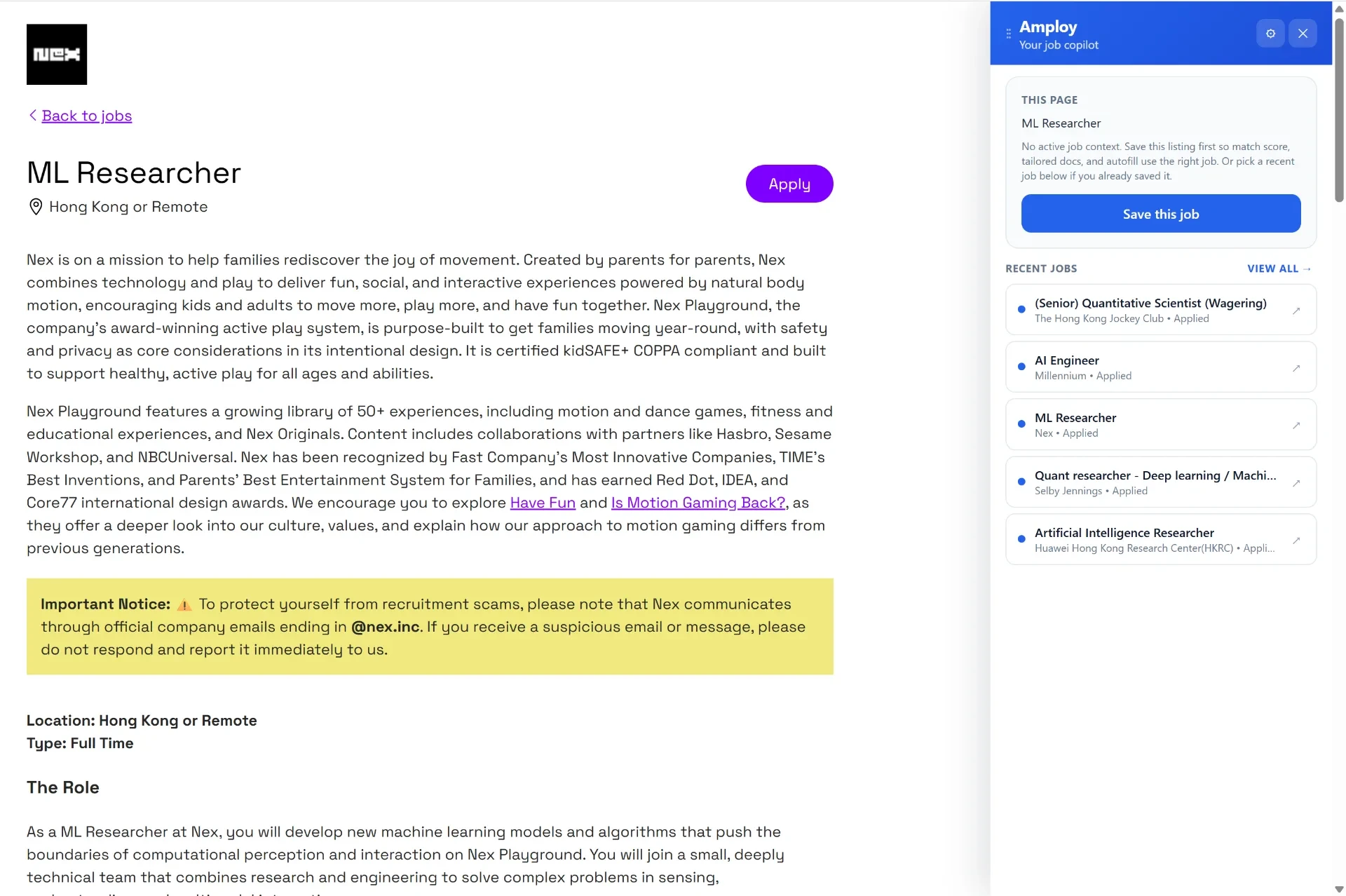
A quick checklist before you hit submit
- Job title and summary match the role you're applying to
- Your top bullets mirror the posting's language — using your real experience
- Keywords appear naturally, inside real sentences
- The most relevant experience is near the top
- Your tailored resume and cover letter are saved next to that application
Tailoring is the difference between sending a resume and sending the resume. Do it for every role that's a real fit, and let the volume work in your favor — without losing your evenings to it.