
How to Push Through Job Hunt Burnout Without Sacrificing Quality
Job hunting burns people out for a structural reason: the process demands an enormous amount of repetitive work, and most of it produces no feedback. You fill in the same fields, rewrite the same bullet points, and refresh the same inbox — often for roles you never hear back from.
That silence is what makes burnout feel personal. It isn't. But pushing through it doesn't mean "trying harder" with the same manual process at 1 a.m. It means protecting the quality of each application while cutting the hours it takes to produce one.
What job hunt burnout actually looks like
It rarely announces itself as burnout. It shows up as smaller things:
- You start skipping applications because the form is long.
- Your cover letters become copy-paste with a swapped company name.
- You lose track of which version of your resume went to which company.
- You open a job board, stare at it, and close the tab.
The last one is the dangerous one. Volume matters in a broken hiring market — the candidates who land interviews tend to be the ones applying more, faster. When fatigue pushes your application count toward zero, the quiet cost is opportunities you never gave yourself a chance at.
Separate the parts that need you from the parts that don't
Not all application work is equal. There's a small amount that genuinely benefits from your judgment, and a large amount that's just transcription.
Needs you: deciding which roles are worth your time, and reviewing the final tailoring so it sounds like a person.
Doesn't need you: retyping your work history into the fifth portal this week, remembering which password belongs to which career site, and rebuilding a resume draft from scratch for every posting.
Burnout usually comes from doing the second category by hand and running out of energy before you reach the first. Automate the transcription, and you get your attention back for the decisions.
Make tailoring a review, not a rewrite
Tailoring is where quality lives — a resume that mirrors the job description's language gets read differently than a generic one. But tailoring from a blank page every time is exhausting, which is why people drop it first when they're tired.
The better pattern: start from a draft built from your real experience and adjust it. Amploy's resume rewrite and cover letter tools work this way — they generate a first pass referencing the role and what you've actually done, and leave the editing to you.

Your job in this workflow is the part that requires taste: cutting the sentences that don't sound like you, sharpening the ones that do. Ten minutes of review is a very different task from an hour of writing. It's also the version you'll actually do on a hard day.
Stop rebuilding your identity on every application
The most demoralizing repetition in a job hunt is data entry. Name, phone, work history, the same paragraph in the "tell us about yourself" box, again and again.
Amploy's autofill fills those fields from your profile in one click. It's a small thing in isolation and a large thing across forty applications.
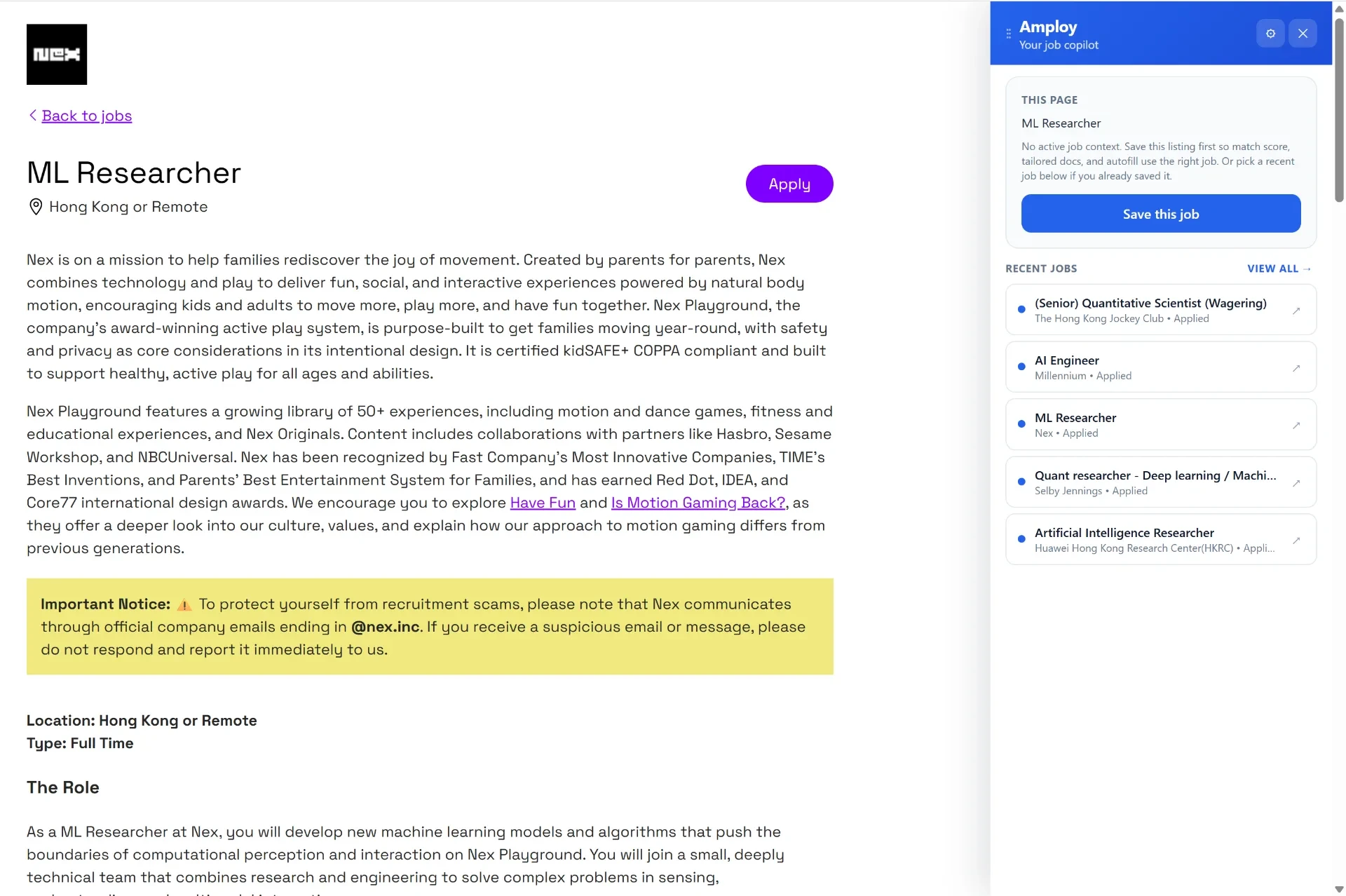
If you're tracking whether this is worth installing, the extension sits in your Chrome toolbar and works on the application page itself, so the workflow stays where you already are.
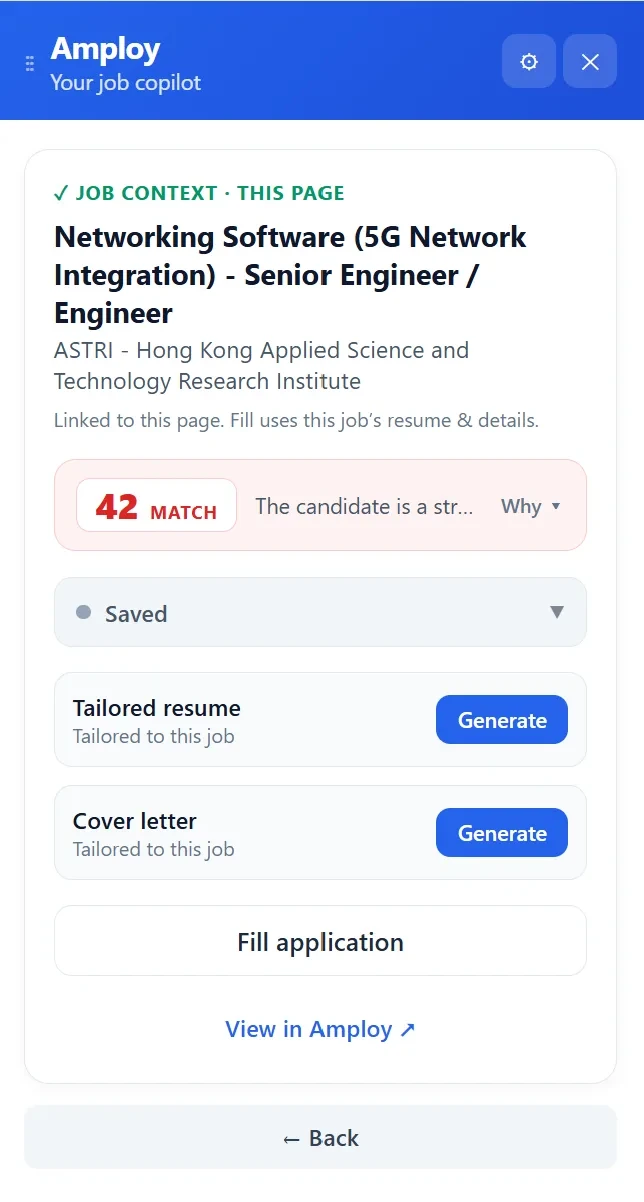
Keep one source of truth so nothing gets lost
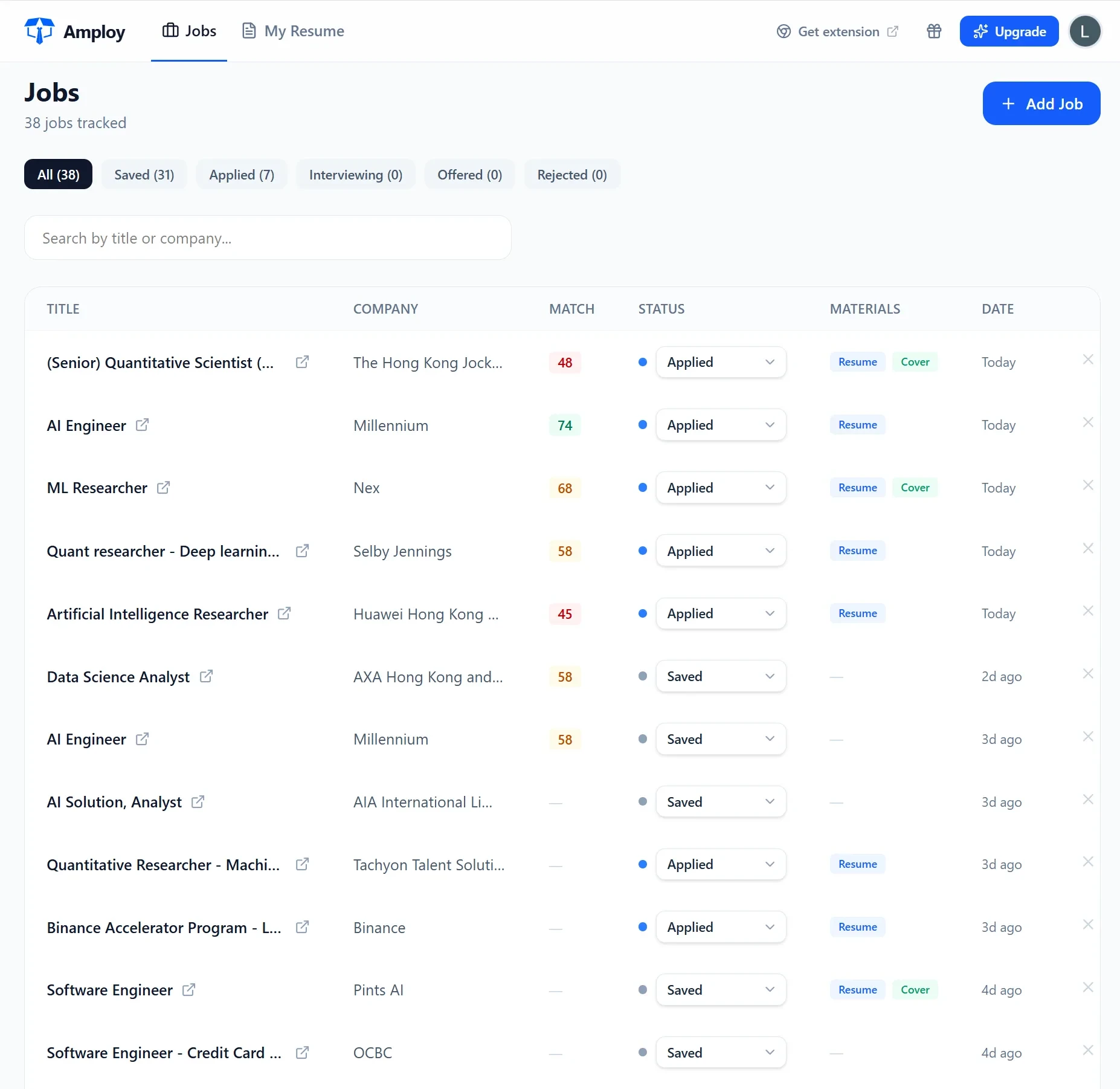
A large share of job hunt stress isn't the applying — it's the remembering. Which company did you send the tailored version to? Where did you get to in that process? You end up maintaining a spreadsheet that decays within a week.
Amploy's job tracker keeps a status pipeline (Saved → Applied → Interview → Offer) next to the tailored resume and letter for each role, so the context lives together instead of in your memory.
And the password saver stores one login per career site — not per job — so a forgotten credential never becomes the reason an application doesn't get finished.

Protect quality at sustainable volume
The goal isn't to spray applications everywhere. It's to raise the number of good applications you can produce before fatigue sets in.
Two habits help here:
Batch the dull work. Set aside a block to fill out profile details, save logins, and generate drafts. Then keep separate time for reviewing and submitting, when your attention is fresher.
Review in the same pass. Generate, edit, submit, and update the tracker in one sitting so a half-finished application doesn't linger and nag at you later.
The point of automation isn't speed
It's that speed is what lets you keep going. Applying to more roles, faster, is the thing that gives you more shots at interviews — and the reason burnout wins is that the manual version of that pace is unsustainable.
Amploy exists to remove the busywork between you and a submitted application, so the energy you have goes into the judgment calls that make each one count. Play the numbers game without burning out — start by installing the extension and letting it handle the repetitive parts while you stay in charge of the quality.