
How AI-Based Job Search Tools Change the Way You Apply in 2024
The job search hasn't changed because hiring got kinder — it changed because the tools got better. In 2024, "AI-based job search" stopped meaning a smarter keyword filter and started meaning software that sits beside you while you actually apply. That shift matters more than most listicles admit, because it moves AI from the search bar to the application form.
Here's what's genuinely different this year, and how to use it without turning your applications into obvious copy-paste.
From searching to applying
For years, job-search tech focused on discovery: aggregators, alerts, matching engines. The result was a strange bottleneck. You could find fifty relevant roles in an afternoon and still only apply to five, because each application demanded the same repetitive work — retyping your work history, rewriting bullet points, drafting a cover letter, remembering which portal used which password.
AI-based tools in 2024 are pointed at that bottleneck instead. The interesting question is no longer "can it find jobs?" but "can it get me through the application without losing an hour?"
The three places AI actually helps
Strip away the marketing and most of the value lands in three spots:
Autofill. Application forms ask for the same twelve fields across hundreds of sites. AI-assisted autofill pulls your name, phone, work history, and even long-form essay answers from a saved profile in one click.
Tailoring. This is where generic AI advice falls apart and good tools earn their keep. A useful tool rewrites your real experience to match a specific job description — not inventing a new you, but reframing the true one in the language of the posting. The same applies to a cover letter: a strong first draft references the actual role and your actual background, and then you edit it into your own voice.
Tracking. Applying at volume creates a new problem — you lose the thread. Which version of your resume went to which company? What stage is each one at? A status pipeline (Saved → Applied → Interview → Offer) attached to each tailored resume and letter turns a pile of tabs into a system.
What this looks like in practice
Say you find a role worth pursuing. The modern flow is short: open the posting, generate a resume tailored to that description from your real experience, generate a cover letter draft, then let autofill populate the application.
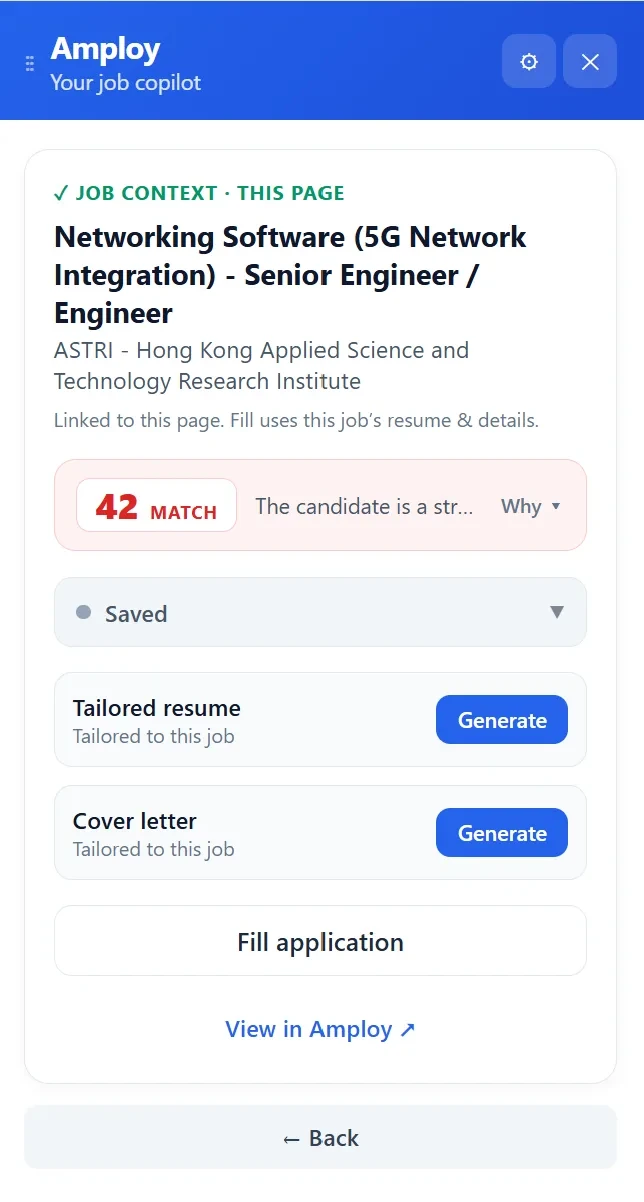
The point isn't that AI does the thinking for you. It's that the thinking — deciding which roles are worth it, sharpening your story, preparing for the interview — is the only part that should take your time. Everything mechanical gets pushed to the tool.
A word on the "AI slop" problem
Recruiters can spot a lazy AI application from a mile away: cover letters that name the wrong company, bullet points that don't match the resume, a tone that belongs to nobody. The fix is simple and non-negotiable — always edit the draft. Use the generated version as a first pass that gets you 80% there, then adjust for your voice, add the specific detail only you know, and cut anything that sounds like a template.
Tools that tailor from your real experience make this easier, because the raw material is already yours. Tools that generate from scratch make it worse. That distinction is the whole game.
Why this belongs in Amploy
Amploy is built around exactly this shift. It's a Chrome extension plus website that automates the repetitive parts of applying so you can focus on the roles that matter:
- Autofill fills name, phone, work history, and essays from your profile in one click.
- Cover letter generates an editable first draft referencing the role and your experience.
- Resume rewrite reframes your real experience to match each job description.
- Job tracker keeps a status pipeline next to every tailored resume and letter.
- Password saver stores one login per career site, so you're never locked out mid-application.
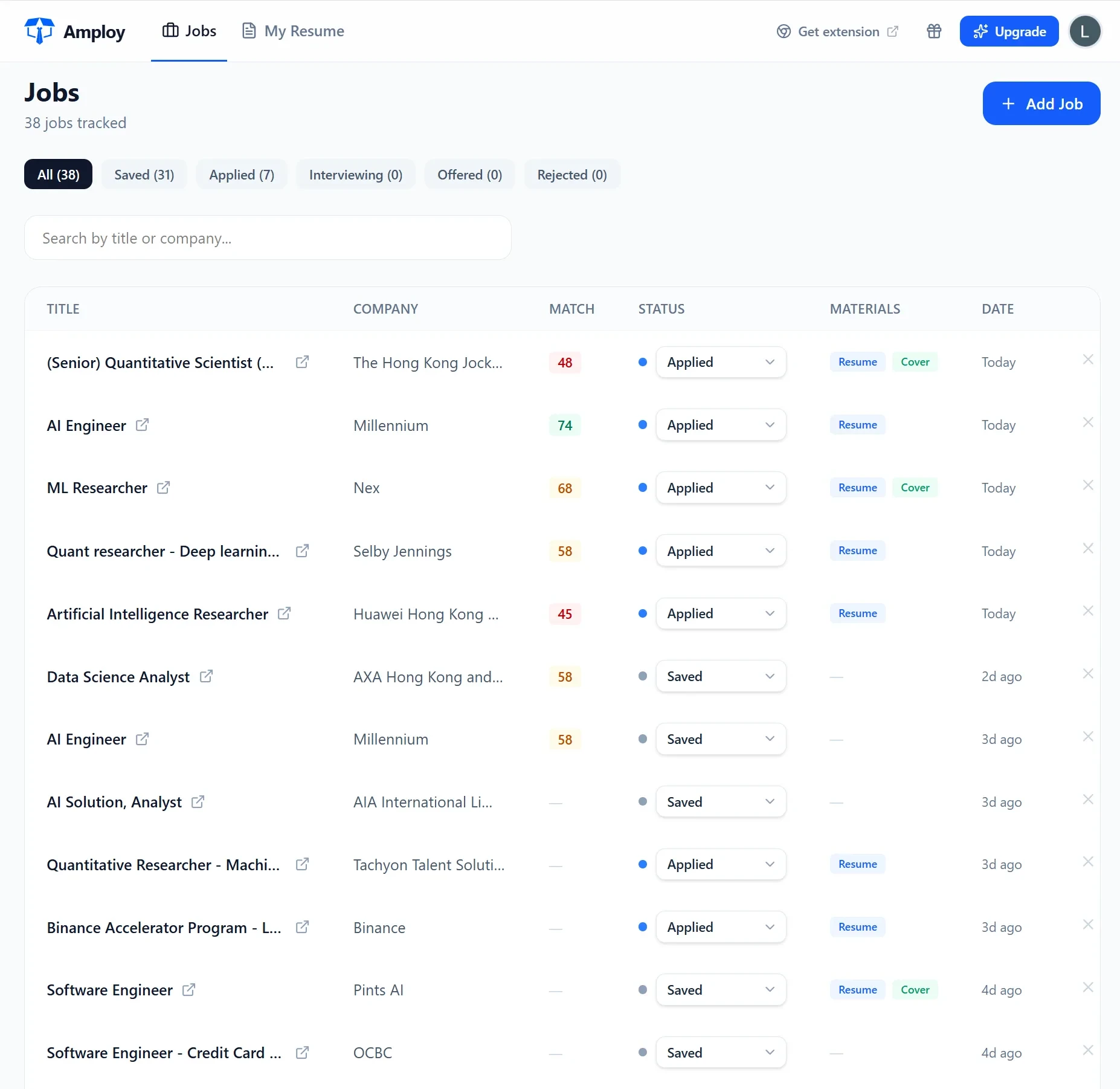
None of it replaces your judgment. It replaces the hour you'd otherwise spend retyping your employment history into a portal that will forget you in a week.
How to start using AI in your search this week
- Build your profile once. Every autofill and tailoring feature is only as good as the source material. Get your work history and experience into one place.
- Tailor before you apply, every time. A resume that matches the description is the single highest-leverage change you can make.
- Edit every draft. Generated cover letters are a starting point, not a submission.
- Track as you go. Log each application the moment you send it — future-you will be grateful when the interview requests start arriving.
The bottom line
AI-based job search tools in 2024 aren't magic, and they won't get you hired on their own. What they do is collapse the distance between finding a role and applying to it — which is precisely the gap where most searches quietly stall.
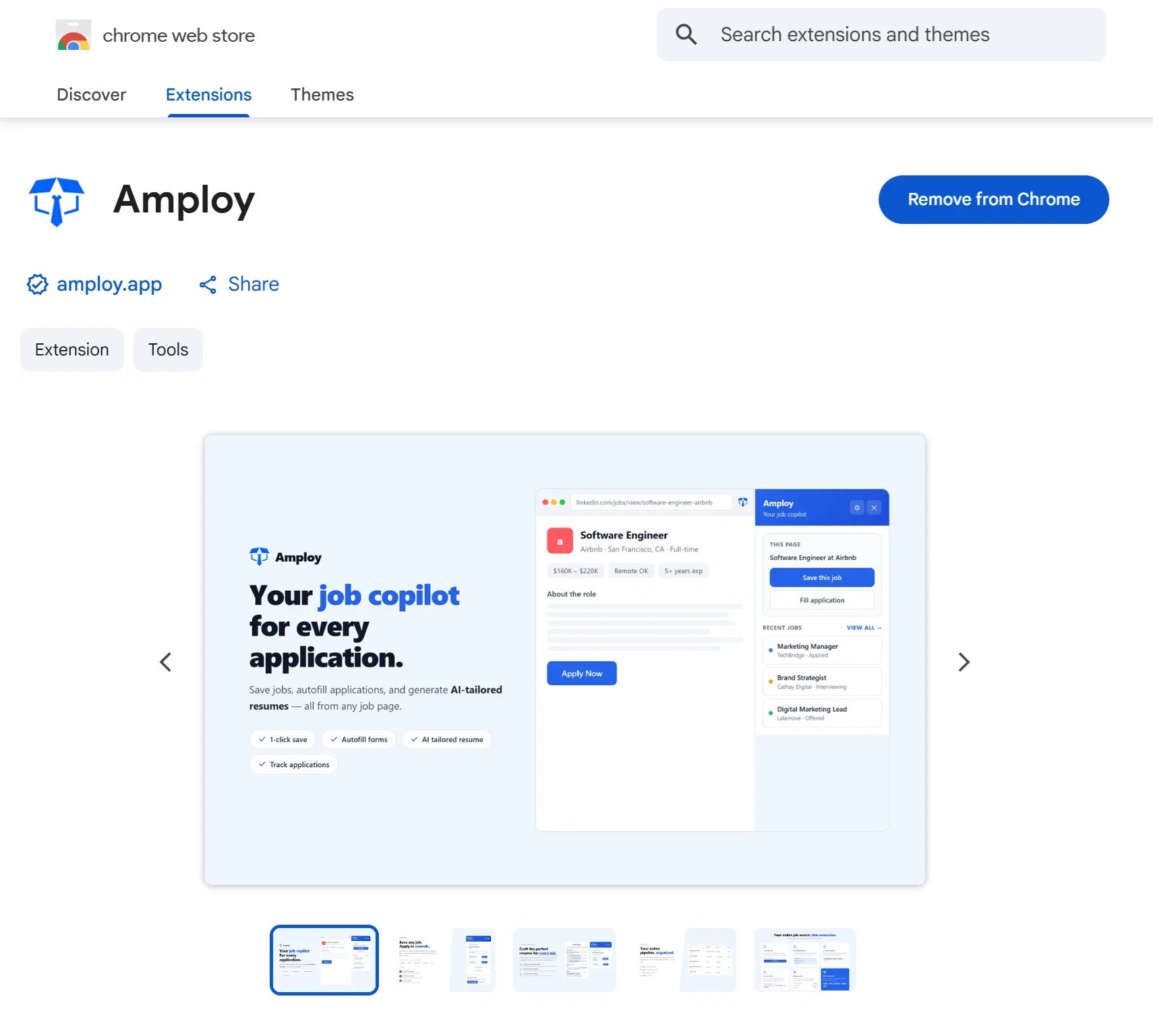
If you've been applying to five jobs a week and wondering why the pipeline feels thin, the answer usually isn't a better resume. It's more at-bats, without the burnout. That's what Amploy is for — install the extension, set up your profile once, and let the busywork take care of itself while you focus on the roles worth winning.