
How a Job Application Tracker Keeps Your Tailored Materials in Order
Most job seekers don't lose momentum because of a lack of effort. They lose it because they're managing a dozen versions of themselves at once: a resume tailored to one role, a cover letter written for another, a half-finished application on a third site, and no clear record of which version went where. That's the gap a job application tracker is built to close.
The hidden cost of scattered applications
When you're applying at volume, the materials quietly multiply. Each job description invites a slightly different resume rewrite. Each company gets its own cover letter draft. Each portal asks for the same details again. Without a system, three things happen:
- You can't remember which resume version you sent to which company.
- You re-open the same job to check whether you already applied.
- You draft materials that bear no resemblance to the role you're targeting.
The result isn't just wasted time. It's a pile of tailored work that you can no longer use, because it's disconnected from the application it was made for.
Why tailored materials need a home, not a folder
Tailoring is the whole point — a resume that speaks to a specific job description will always outperform a generic one. But tailoring only pays off if you can see the material beside the role it was created for.
When your status pipeline lives next to your tailored documents, the job search stops being a memory test and becomes a process you can actually run.
What to track alongside every application
A useful tracker keeps the moving parts of each application connected:
- The role and company you applied to, so nothing gets confused across tabs.
- Status — from saved through applied, interview, and offer — so you know what needs follow-up.
- The exact resume and cover letter you sent for that job, so you can reference them in an interview or reuse the structure for a similar posting.
- Your logins for the portals you keep returning to, so a forgotten password never stalls an application.
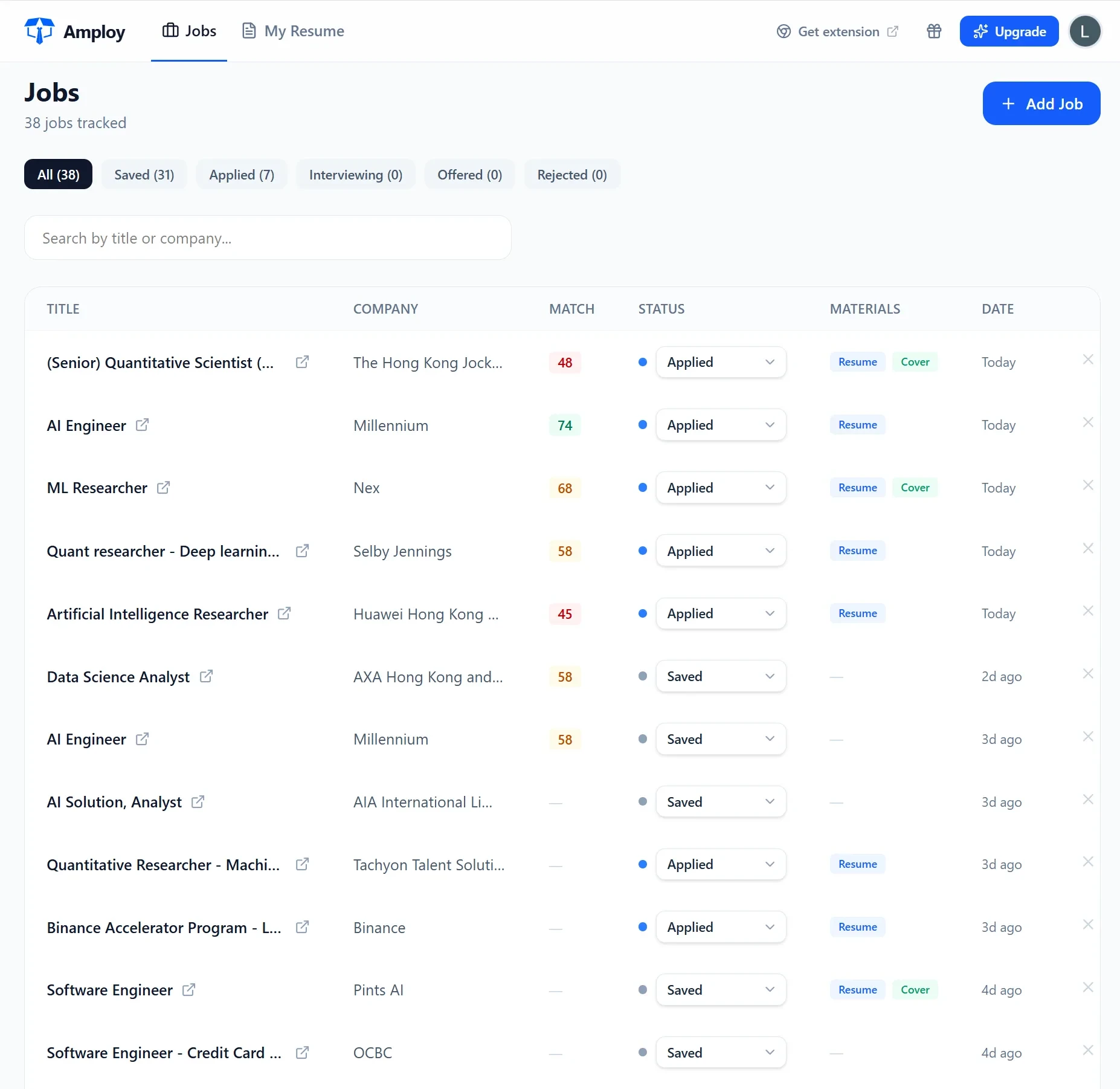
The point isn't ceremony. It's that every piece of tailored work stays attached to the application it was made for — and you can pick up exactly where you left off.
How Amploy keeps it all in one place
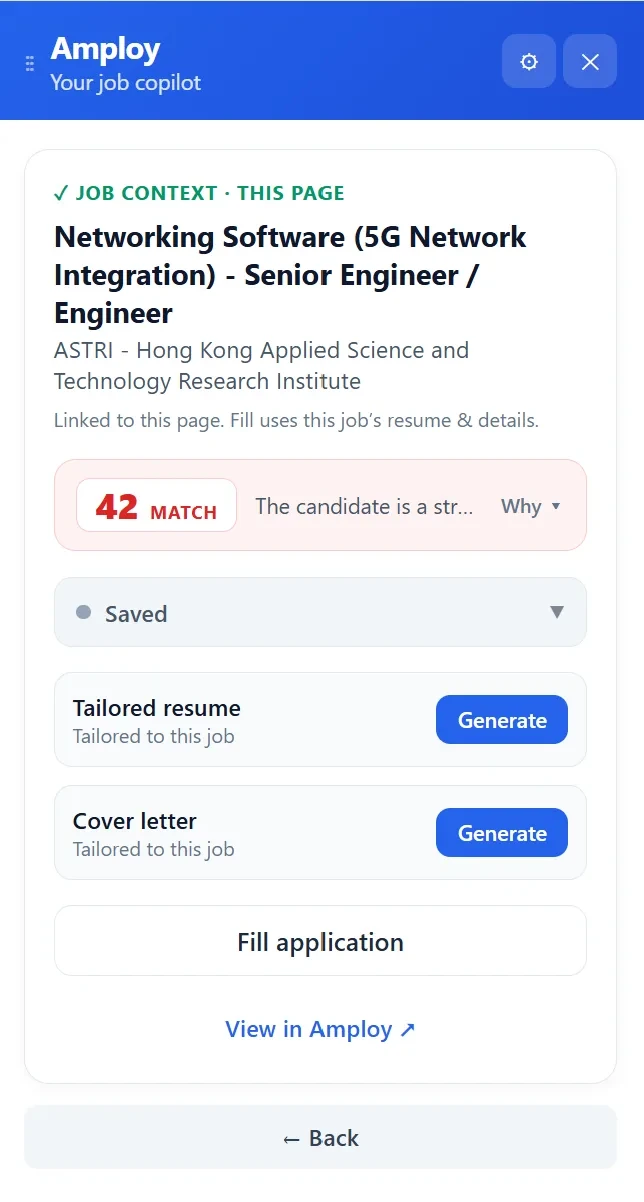
Amploy is built so the tracker sits directly on top of the work that produces your materials, not in a separate spreadsheet you have to maintain by hand.
Instead of a generic template, Amploy rewrites your real experience to match each job description, so every role gets a resume that reflects that job description — not a copy of the last one. It generates a cover letter first draft referencing the role and your actual experience, which you can then edit to sound like you. When you apply, autofill drops your name, phone, work history, and essays into the form from your profile in one click, so you're not retyping the same details on every portal.
And once you've applied, the job tracker keeps each tailored resume and cover letter next to its status, moving through Saved → Applied → Interview → Offer. Your password saver holds one saved login per career site, so a forgotten password on a portal you've already visited never costs you an application.
Build the habit, not the spreadsheet
The more roles you target, the more tailored materials you'll create — and the more valuable a tracker becomes. The goal is simple: make it effortless to apply to more roles, faster, without losing track of the work that got you there.
If you've been juggling files, tabs, and half-remembered applications, start by putting the tracker where the tailoring happens. Amploy handles the resume rewrite, the cover letter draft, the autofill, and the pipeline in one place — so you can play the numbers game without burning out.