
Cover Letter Format for Hong Kong Jobs (Jobsdb & CTgoodjobs Examples)
Hong Kong's job market moves fast, and on platforms like Jobsdb and CTgoodjobs, hiring managers can receive hundreds of applications for a single role. Your cover letter is often the first thing that separates a "maybe" from a "no." Here's how to format one that works on these platforms — and how to produce tailored drafts at volume without burning out.
Why cover letter format matters on HK job boards
On Jobsdb and CTgoodjobs, many applications go through a quick screen: a recruiter scans your resume, then skims whatever cover letter comes with it. A clear, well-structured letter is easy to skim and signals that you read the job description. A wall of text or a generic template gets skipped.
The format below is built for that scan. It's not about being fancy — it's about being readable and specific in under a minute.
The standard structure at a glance
Most Hong Kong cover letters can follow the same skeleton, adapted to the role:
- Header — your name, contact details, and the date
- Salutation — addressed to a named person where possible, otherwise a professional default
- Opening paragraph — the role you're applying for and a one-line hook
- Body — one or two short paragraphs matching your real experience to the job description
- Closing — a brief line on availability and a call to action
- Sign-off — professional close and your name
Keep the whole thing to one page. Hiring teams on volume-heavy boards appreciate brevity.
Jobsdb example format
Jobsdb applications often include an in-platform message field alongside your uploaded resume. Treat that field as your cover letter.
A workable pattern:
- Line 1: "Re: Application for [Job Title] — [Job Reference / Posting ID if shown]"
- Short opening: two sentences on why this role and this company, drawn from the actual posting.
- Middle: two or three bullet-style sentences mapping your experience to the listed requirements — mirror the language of the job description using your real background.
- Close: confirmation that your resume is attached, your availability, and a thank-you line.
CTgoodjobs example format
CTgoodjobs applications tend to flow through an employer's own inbox or portal, and many employers list a named contact or a preferred file format. Adapt accordingly:
- Formal header with your name and contact details, matching the style expected in Hong Kong business correspondence.
- Salutation to the named contact if the posting provides one; otherwise a professional default.
- Opening that names the position and where you saw it.
- Body focused on fit: your relevant experience rewritten to match the job description, ideally in plain sentences rather than dense paragraphs.
- Closing with your availability and a short thank-you.
If the posting specifies a file format or naming convention, follow it exactly. Small compliance details are an easy way to signal attentiveness.
Writing the body without starting from scratch
The hardest part of a cover letter isn't the format — it's tailoring the middle section to each role. That's the repetitive work most applicants drown in.
Amploy's cover letter feature generates a first draft that references the specific role and your real experience, then leaves it editable so you can adjust the tone to your own voice. You're not writing from a blank page; you're editing a draft that already reflects the job description.
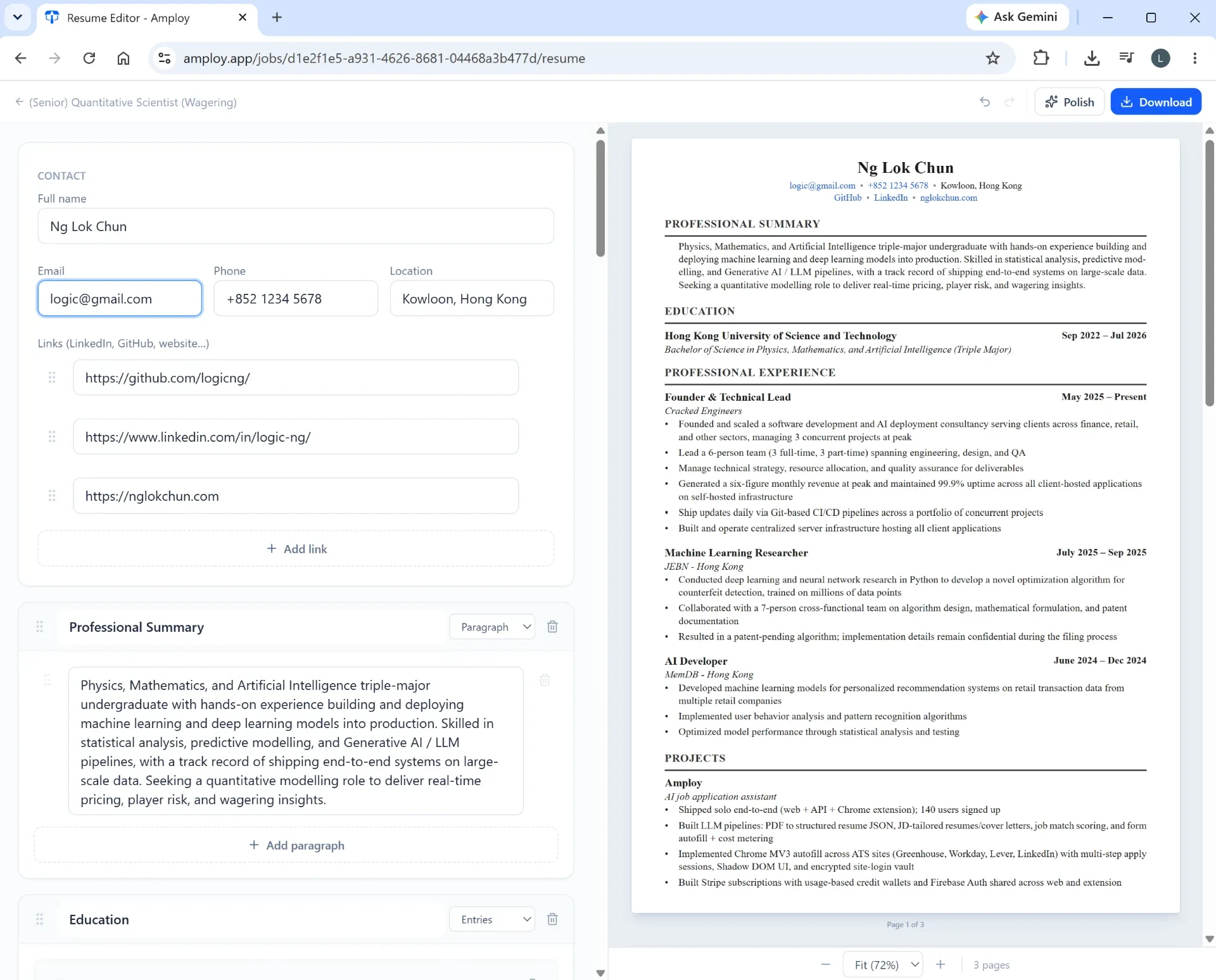
You can pair that with the resume rewrite feature, which reshapes your actual experience to match each job description, so your resume and letter tell a consistent story.
Formatting habits that make a difference
A few practical points that apply across both platforms:
- One page, always. If it spills over, cut, don't shrink the font.
- Match the job description's keywords where they're genuinely true of your experience — this helps with both human screening and any automated filtering.
- Keep paragraphs short — two to three sentences each.
- Use the company and role name correctly. A wrong company name is the fastest way to get filtered out.
- Save logins as you go. Applying across many employer portals means many accounts and passwords. Amploy's password saver keeps track so you're not locked out of a portal mid-application.

Keeping track of what you've sent
Once you're applying to more roles, the volume itself becomes a problem — which version went where, and which applications are still open. A tracker turns that chaos into a pipeline: Saved → Applied → Interview → Offer, with each tailored resume and letter attached to its application.
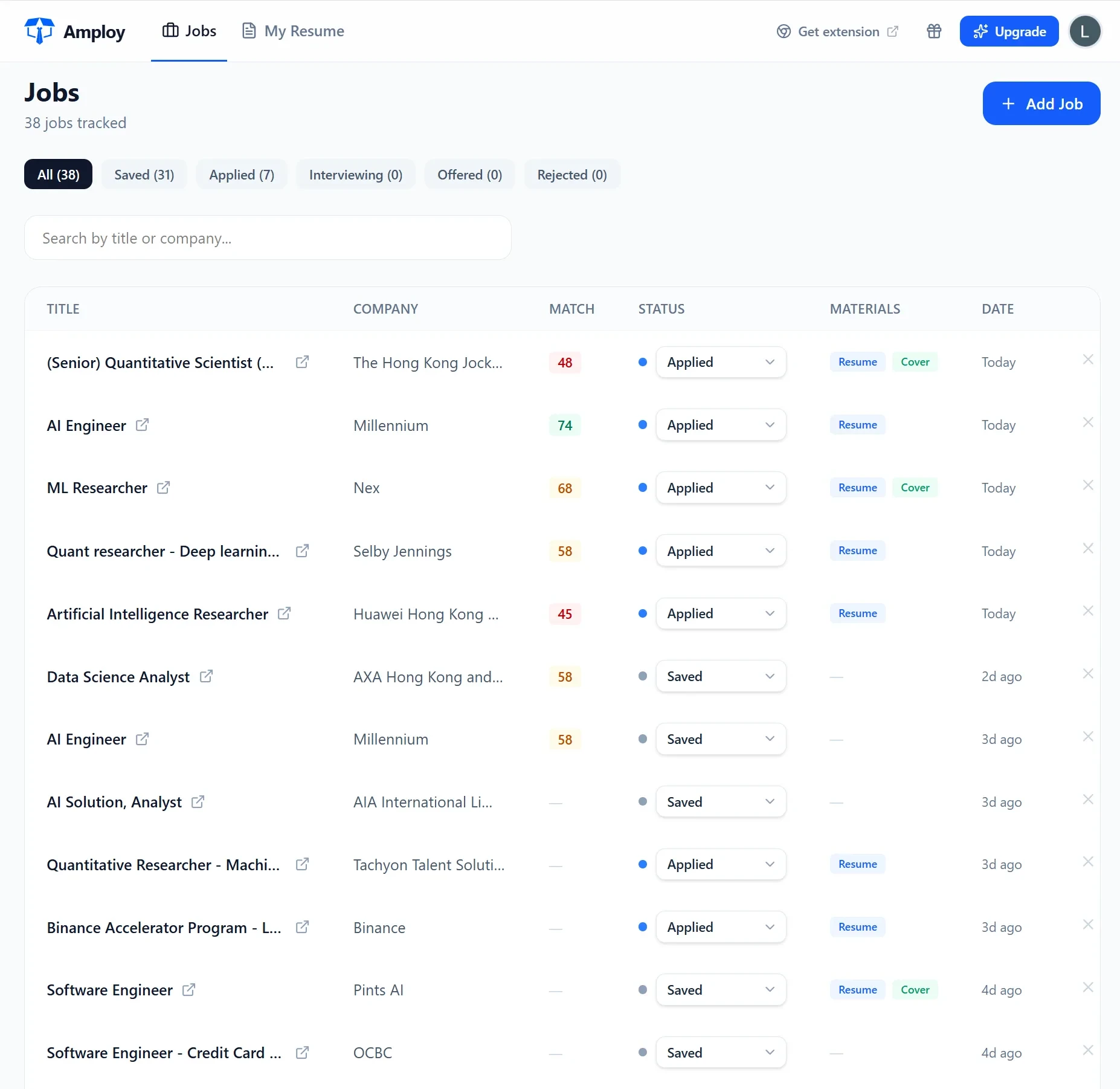
When you're applying to more roles, faster, the tracker is what keeps the process manageable instead of overwhelming.
The takeaway
The cover letter format for Hong Kong job boards isn't complicated: a clean header, a named salutation where you can get one, a specific opening, a body that mirrors the job description using your real experience, and a short close. What's hard is doing it well across many applications.
That's exactly the busywork Amploy removes — so you can play the numbers game without burning out.