
Cover Letter for Marketing Managers (With Examples That Match the JD)
Marketing manager roles are competitive, and the cover letter is one of the few places where you get to speak directly to the hiring team instead of being filtered by a keyword scan. The challenge is that most cover letters are written once and reused for every application — which is exactly why they stop working.
A cover letter that matches the job description doesn't have to take an hour. It has to hit the right points, in the right order, and sound like a person wrote it. Here's how to structure one for marketing manager roles, with examples you can adapt.
Why the marketing manager cover letter is different
Marketing manager postings tend to blend several things: channel ownership, team or agency management, budget responsibility, and reporting to leadership. Two roles with the same title can ask for very different mixes — one might be heavily performance-marketing focused, another might be brand and content led.
That means the generic "I'm passionate about marketing and have five years of experience" opener does very little work. A hiring manager reading it can't tell whether you've run paid acquisition, built a content engine, or managed a team of five. The letter needs to answer the specific version of the job in front of you.
The structure that works
A strong marketing manager cover letter generally follows this shape:
- Opening line — name the role and the one thing about your background that maps most directly to it.
- Evidence paragraph — one or two specific examples tied to the posting's priorities.
- Management or collaboration paragraph — how you work with teams, agencies, or stakeholders, if the role requires it.
- Close — a short, confident statement of interest and next step.
Keep it to one page. Three or four paragraphs is enough.
Opening lines: three approaches
Lead with the match. If the posting is clear about its focus, say so directly.
I'm applying for the Marketing Manager role on your growth team. Over the past several years I've owned paid acquisition and lifecycle campaigns end to end, which lines up closely with the channels and outcomes described in your posting.
Lead with the company. Useful when you have a genuine reason to want this specific company.
Your team's recent push into [product area or audience] is the kind of work I want to be doing. I've spent my career building campaigns for similar audiences, and the Marketing Manager role reads like a direct fit for that experience.
Lead with a result. Effective if you have a measurable outcome that mirrors what the role is hired to deliver.
I've built and run marketing programs that grew qualified pipeline while keeping cost per lead steady. That's the balance your Marketing Manager posting describes, and it's the part of the job I enjoy most.
Avoid opening with "I am writing to apply for…" — it's accurate but wastes your strongest sentence on logistics.
Matching the body to the job description
This is where most letters fall apart. The fix is mechanical: read the posting, list its top priorities, and give each one a line or two of real evidence.
Say the posting emphasizes campaign ownership across channels. Your paragraph might read:
In my current role I plan and run campaigns across email, paid social, and organic search. I own the calendar, the budget split, and the reporting, and I work with design and content to get assets out the door on schedule. Last year that meant coordinating [number] campaigns across [number] channels without adding headcount.
If the posting emphasizes managing a team or agency relationships:
I've managed a small in-house team and worked alongside external agencies on both creative and media. A large part of my week is setting priorities, reviewing work, and making sure everyone has what they need to hit deadlines — which is the part of the Marketing Manager role your posting spends the most time on.
If the posting emphasizes reporting to leadership:
I own the marketing dashboard and present results to leadership monthly. I focus on translating channel metrics into decisions — what to scale, what to cut, and what to test next — rather than just reporting numbers.
Notice the pattern: each example names a responsibility from the posting, then describes how you've actually done it. No adjectives doing the work that specifics should do.
A full example, annotated
Here's a complete draft for a role that emphasizes campaign ownership, cross-functional work, and reporting.
Dear Hiring Team,
I'm applying for the Marketing Manager position. Your posting describes a role that owns campaigns across channels and reports directly on their performance — that's been the core of my work for the past several years.
In my current role I plan and execute campaigns across email, paid social, and content. I own the calendar and the budget, coordinate with design and content on assets, and run the reporting that tells us what's working. When a channel underperforms, I test alternatives rather than waiting for the next planning cycle.
The cross-functional side of the role is familiar too. I work daily with sales on lead quality and with product on launch messaging, and I've managed agency relationships on both creative and media.
I'd welcome the chance to talk about how my experience maps to your team's goals. Thank you for your time.
[Name]
It's short, it mirrors the posting's language, and every paragraph contains something a hiring manager could ask you about in an interview. That's the test: if a sentence could be pasted into any marketing application, cut it.
Common mistakes to avoid
- Repeating your resume. The letter should add context and emphasis, not list the same bullets in paragraph form.
- Vague enthusiasm. "I'm excited about your innovative culture" tells the reader nothing. Tie enthusiasm to something specific in the posting or the company's work.
- Ignoring the seniority signals in the posting. A manager role that mentions "player-coach" wants someone comfortable doing and leading. A role that mentions "building the function" wants someone who has started from scratch.
- Burying the match. If your strongest qualification is in the last line, move it up.
Tailoring at volume without burning out
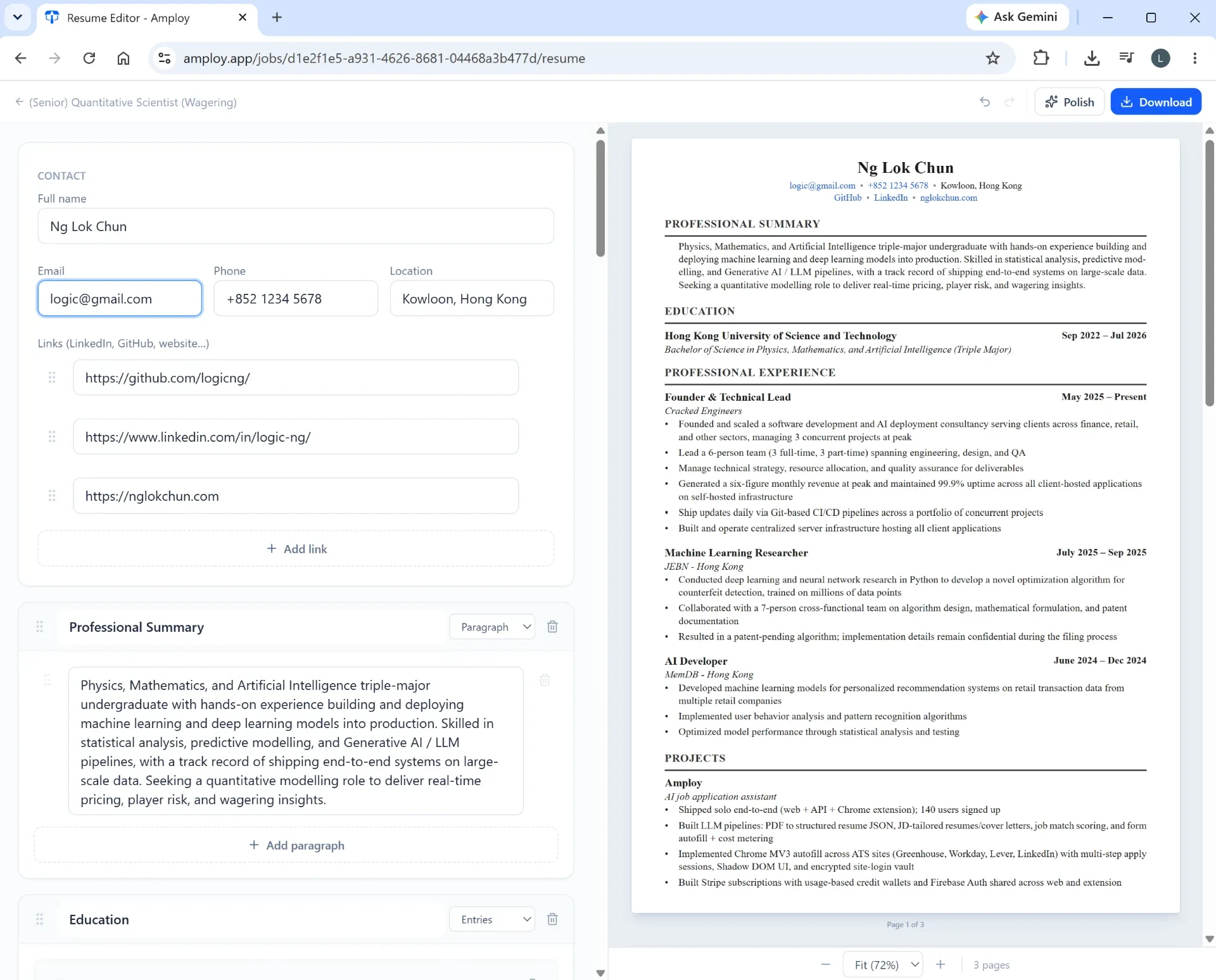
The honest tension here is that tailored letters take time, and applying to more roles means writing more of them. That's the problem Amploy is built for.
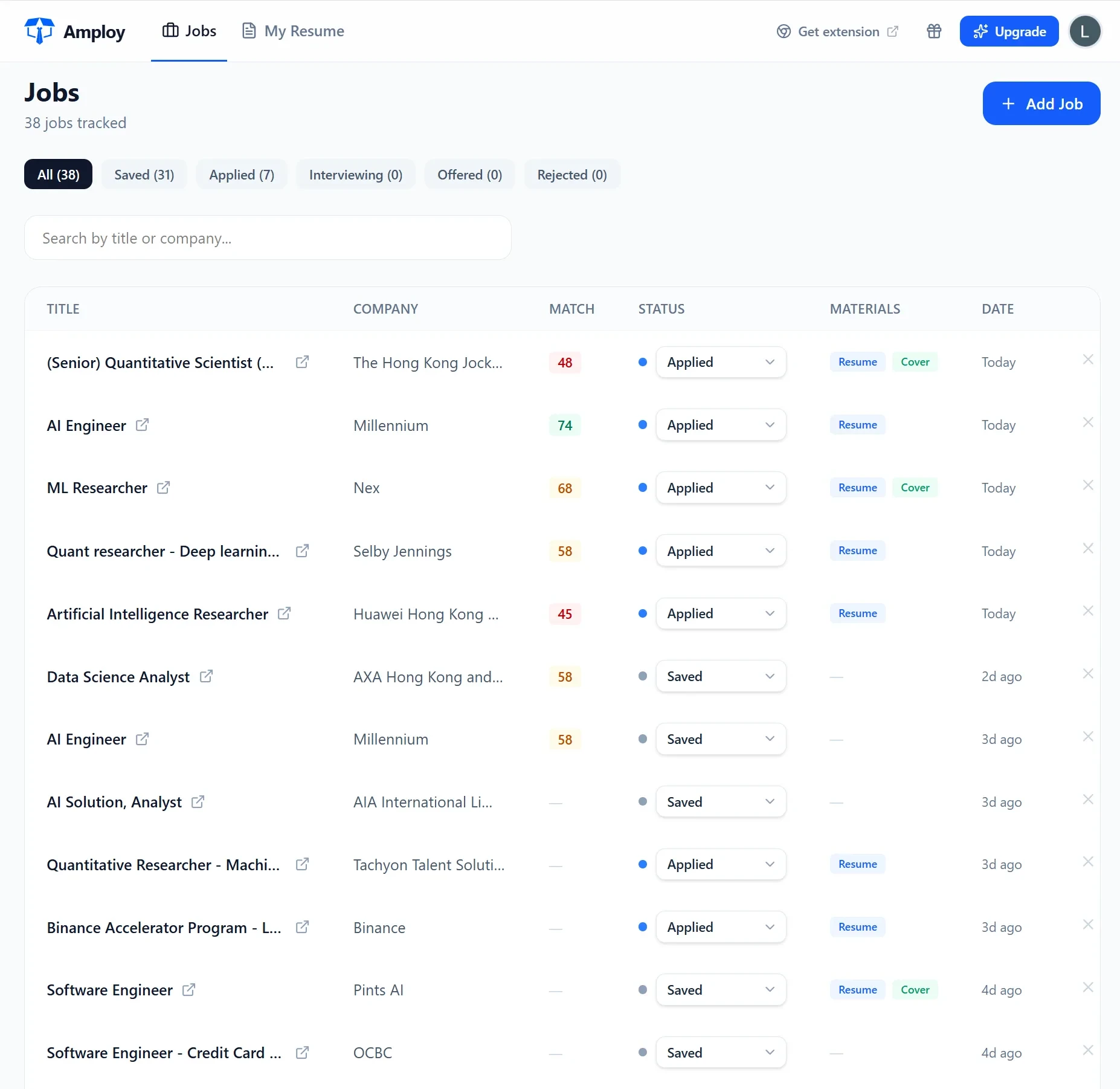
Amploy generates a first draft of your cover letter that references the specific role and your real experience, then leaves it editable so you can adjust the voice and emphasis. It pairs with a resume rewrite that matches your experience to each job description, and a job tracker that keeps each tailored letter and resume next to its application status — Saved, Applied, Interview, Offer — so you're not digging through folders to remember which version went where.
The draft is a starting point, not a replacement for judgment. You still read the posting, decide which examples to lead with, and make the letter sound like you. But you're not starting from a blank page every time.
The bottom line
A marketing manager cover letter works when it answers the specific posting in front of you: name the role, mirror its priorities with real examples, and keep it short enough that every sentence earns its place. Write one good version, then adapt it per application rather than rewriting from scratch.
The people who land interviews apply more, faster — and a letter that matches the job description is what makes that volume count.