
Autofilling Jobsdb, Linkedin & Indeed: What Works in Hong Kong
Hong Kong's job market moves fast — and it's crowded. A single opening on Jobsdb can pull in hundreds of applications within days, and the same role often shows up again on LinkedIn and Indeed. If you're applying one careful form at a time, you're not competing on quality. You're competing on speed, and you're losing.
The good news: applying at volume is a learnable habit, and most of the repetitive work can be automated. Here's what actually works across the three platforms Hong Kong candidates use most.
Why volume wins (and why that's not bad news)
When a role gets hundreds of applicants, most rejections have nothing to do with you. They're triage. Recruiters skim, shortlist fast, and move on.
The people who land interviews usually aren't better than you — they simply apply to more roles, faster, and tailor each one enough to clear the first skim. You can do the same without spending every evening retyping your work history.
What each platform actually asks for
Jobsdb — Hong Kong's highest-volume job board. Applications often route through employer-specific forms or redirect to a company site, so you end up re-entering the same contact details and work history repeatedly.
LinkedIn — "Easy Apply" is quick, but many postings still send you off-platform to a longer form. The saved-profile autofill helps until it doesn't, and then you're pasting again.
Indeed — Mixed. Some applications are one click from your Indeed profile; others drop you into a full employer form asking for everything a second time.
The pattern is the same everywhere: the platform gets you started, then a form asks for the same information you've entered a dozen times before.
What works: a reusable profile, not a fresh start
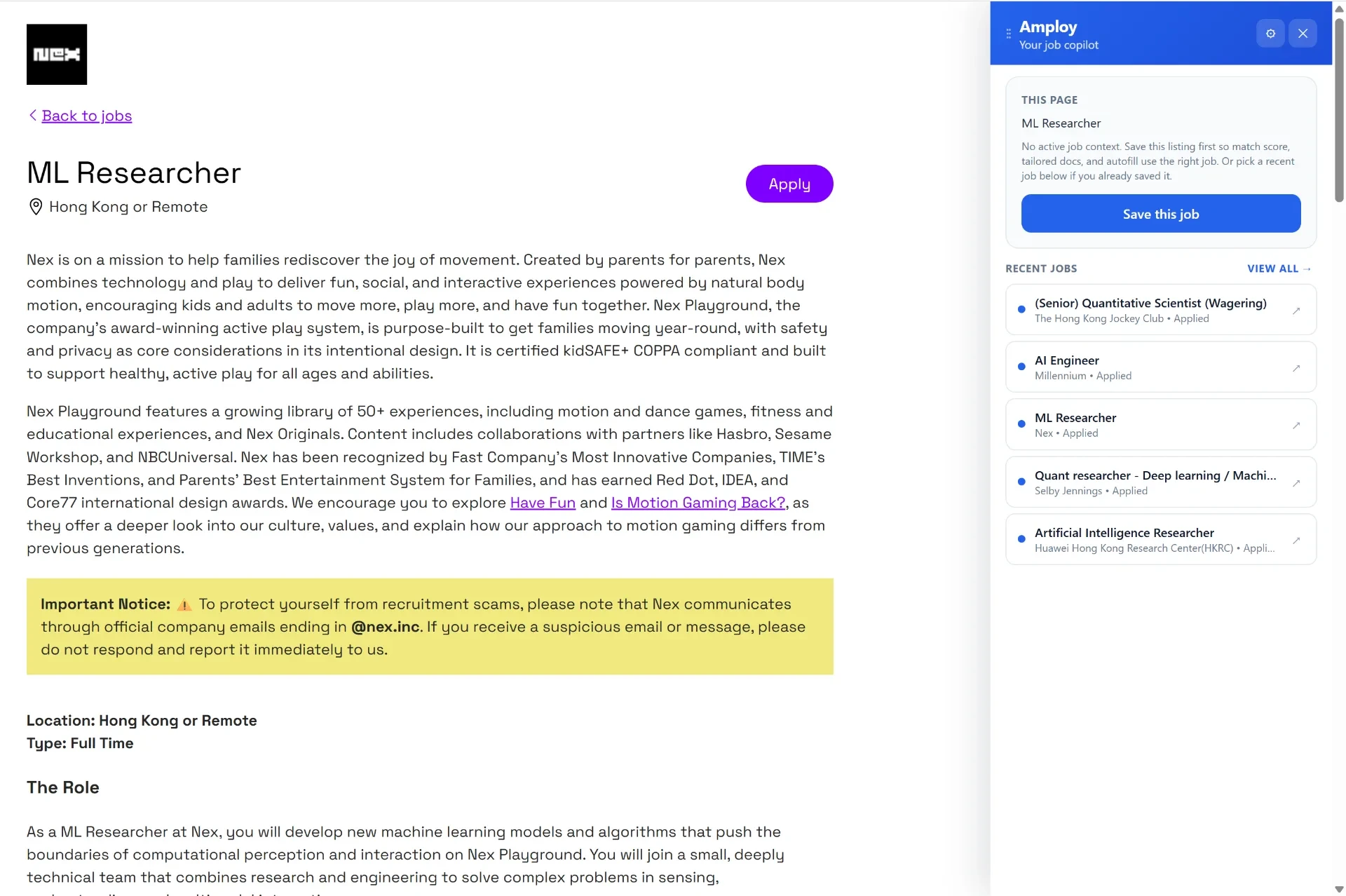
The single biggest time-saver is having your details ready to fill in one click — name, phone, work history, and the short essay questions that show up on almost every application.
Amploy's Chrome extension autofills application forms from your saved profile, so the same fields stop costing you minutes each time. You set it up once; after that you're confirming rather than typing.
Tailor the two things that get skimmed
Volume without tailoring gets you nowhere. But you only need to tailor the parts a recruiter actually reads:
- Your resume — rewritten so your real experience speaks to each specific job description, rather than one generic version sent everywhere.
- Your cover letter — a first draft that references the role and your actual experience, which you then edit so it sounds like you.
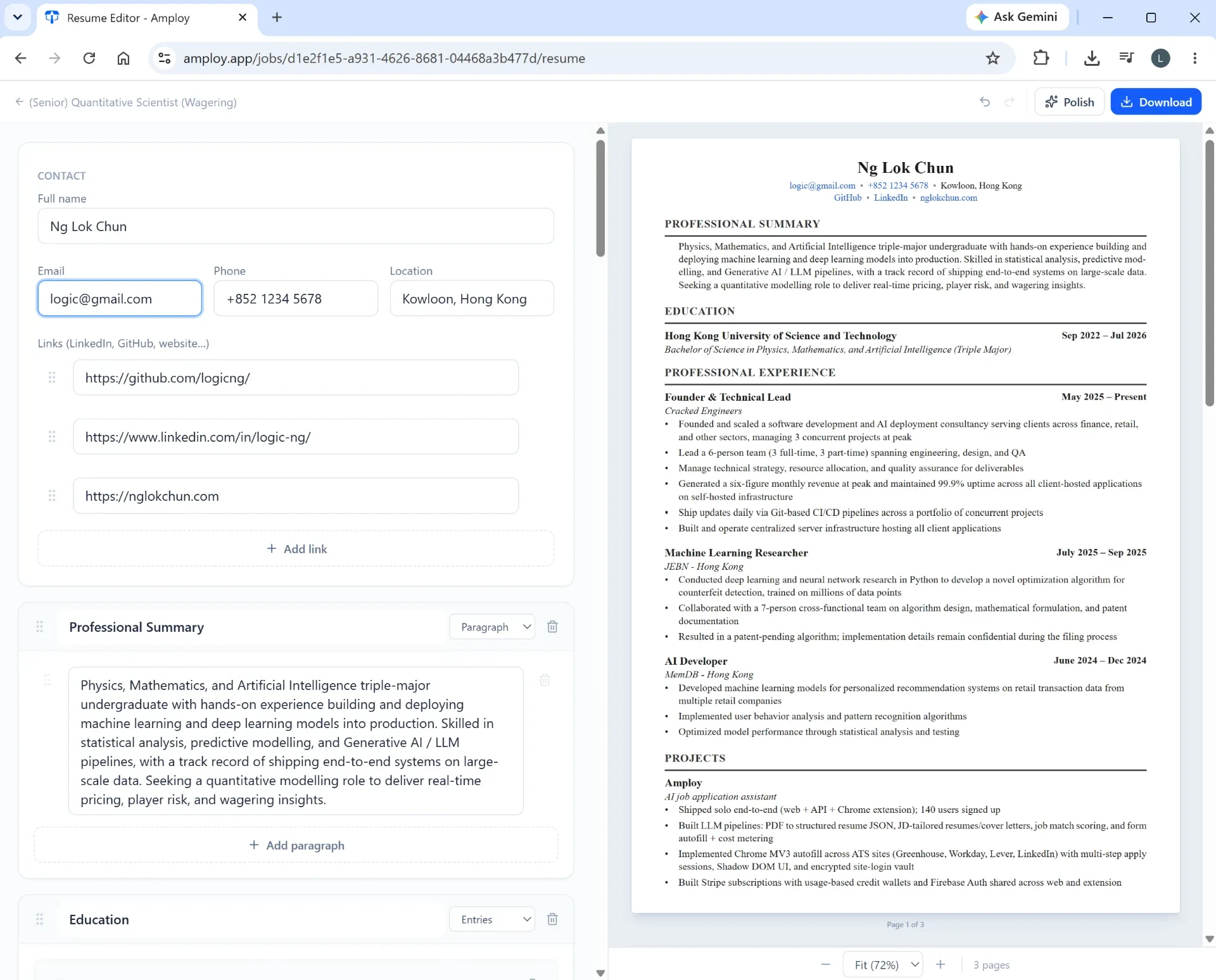
This is where most people either skip tailoring entirely or spend an hour per application. The middle path — a fast, editable draft you refine in minutes — is what makes applying at volume sustainable.
Keep track of what you've sent
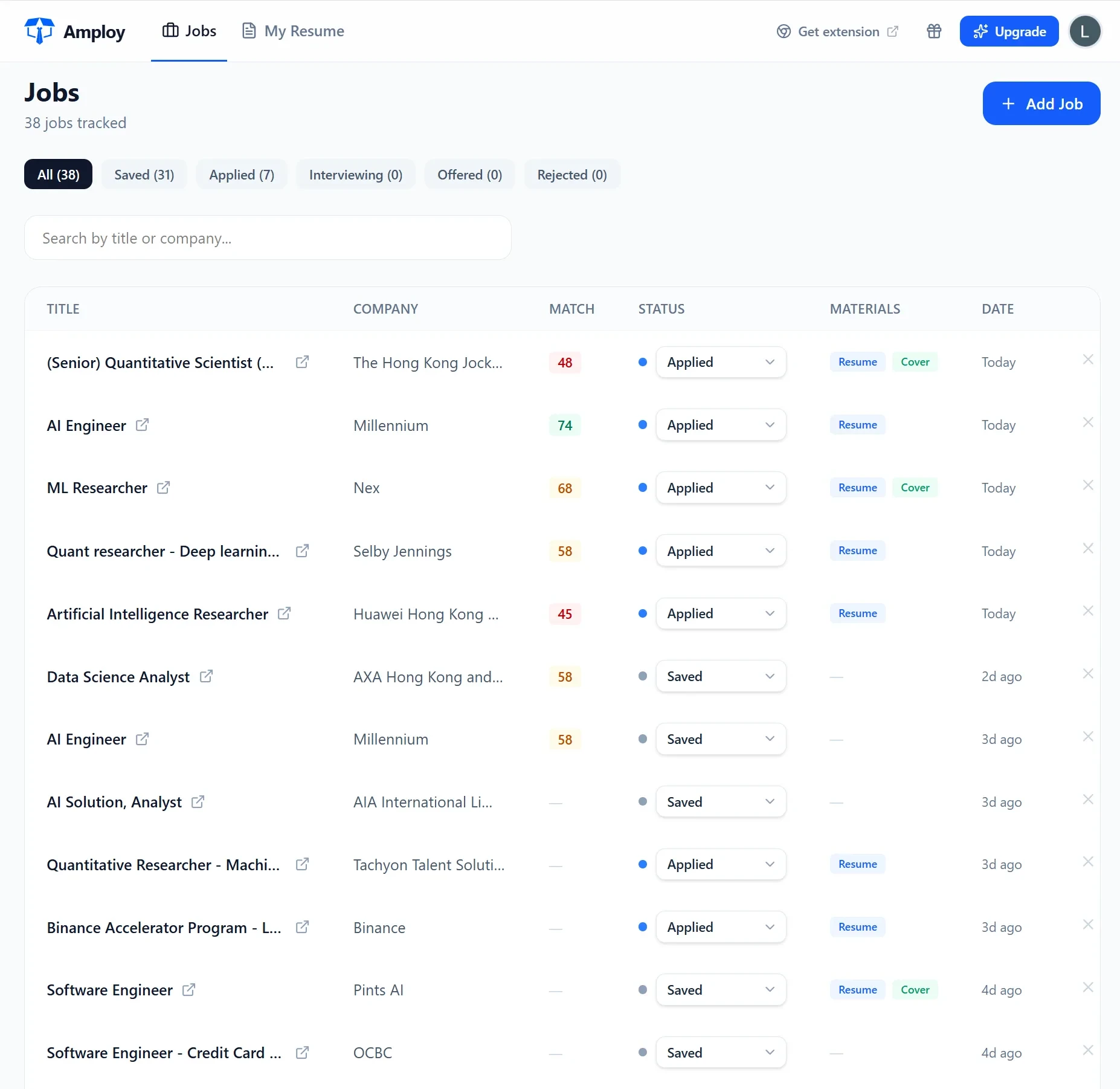
Apply to enough roles and the process gets messy. Which version of your resume went to which company? Who's replied? What's still pending?
A simple status pipeline — Saved → Applied → Interview → Offer — kept next to each tailored resume and letter means you never lose track of an application or send the wrong version.
Stop losing passwords to job sites
One small but real friction point in Hong Kong's market: applications spread across Jobsdb, LinkedIn, Indeed, and dozens of individual company portals, each with its own login. Forgetting a password mid-application breaks your flow.
A password saver that stores those site logins keeps you moving instead of resetting credentials for the fifth time this month.
The takeaway
Hiring is broken, and volume wins. In a market as competitive as Hong Kong's, the candidates who land interviews are the ones applying consistently and quickly across Jobsdb, LinkedIn, and Indeed — with a resume and cover letter tailored just enough to clear the first skim.
Build a reusable profile, automate the repetitive fields, tailor the two things recruiters read, and track what you send. That's how you play the numbers game without burning out.