
AI-Powered Job Search: A Practical Guide to Applying to More Roles Faster
The pitch for AI in job hunting usually sounds like magic: let a robot apply to jobs for you and watch the interviews roll in. The reality is more useful and less mysterious. AI is very good at a narrow set of repetitive tasks — retyping your work history, drafting a first pass at a cover letter, rewriting a bullet to match a job description — and very bad at deciding which jobs are worth your time.
This guide is about using AI for the part it's actually good at, so you can apply to more roles without the process eating your evenings. That's also the whole idea behind Amploy: not to apply for you, but to strip out the busywork between finding a role and getting the application in.
Start with the volume problem, honestly
Most openings that are worth applying to get a crowd of applicants. That's not a reason to despair — it's a reason to rethink your approach. If you're one of hundreds, the person who gets the interview usually isn't the one who wrote the single most perfect application. It's the one who applied to enough well-matched roles, quickly enough, with materials that actually line up with each posting.
That means two things change:
- Tailoring stops being optional. A generic resume that could describe anyone gets filtered out. Matching each application to the job description matters.
- Speed stops being optional. If tailoring one application takes ninety minutes, you'll apply to five roles a week and burn out. The people landing interviews are usually applying more, faster — not necessarily writing better prose.
AI helps most with the second problem. It compresses the tedious parts of tailoring so the volume becomes sustainable.
Use AI for the drafting, not the deciding
The single most common mistake is handing over the judgment calls. A model doesn't know which company culture will suit you, whether a "fast-paced environment" means growth or chaos, or which of your projects you actually want to talk about in an interview.
Keep those decisions. Delegate the rest:
- Retyping the same information into application forms, over and over.
- Drafting a first version of a cover letter that references the specific role and your real experience.
- Rewriting existing bullets so the language matches what the job description asks for.
- Keeping track of what you sent where, and what stage each application reached.
Everything else — which roles to chase, what to emphasize, how to sound like yourself — stays with you.
The four steps worth automating
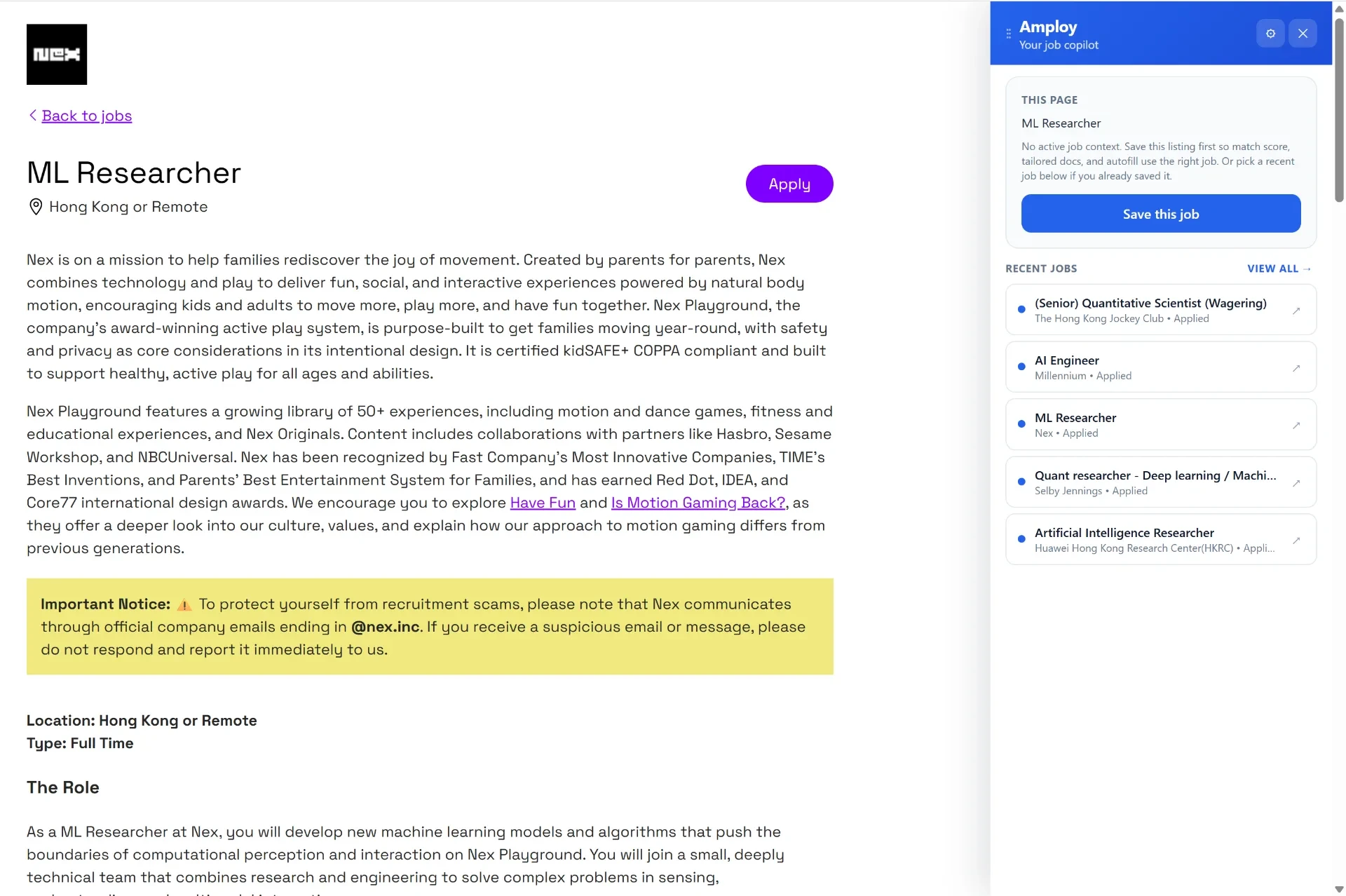
1. Filling in the form
Every application form asks the same questions: name, phone, work history, education, links, sometimes a free-text essay. Typing it out for the twentieth time is pure friction. One-click autofill from a saved profile removes it. What's left is reviewing the fields before you submit — which you should still do.
2. Drafting the cover letter
A blank page is the enemy of volume. Have AI generate a first draft that refers to the specific role and pulls from your actual experience, then edit it for voice. The draft is scaffolding; you're still the one who decides what the letter is trying to say.
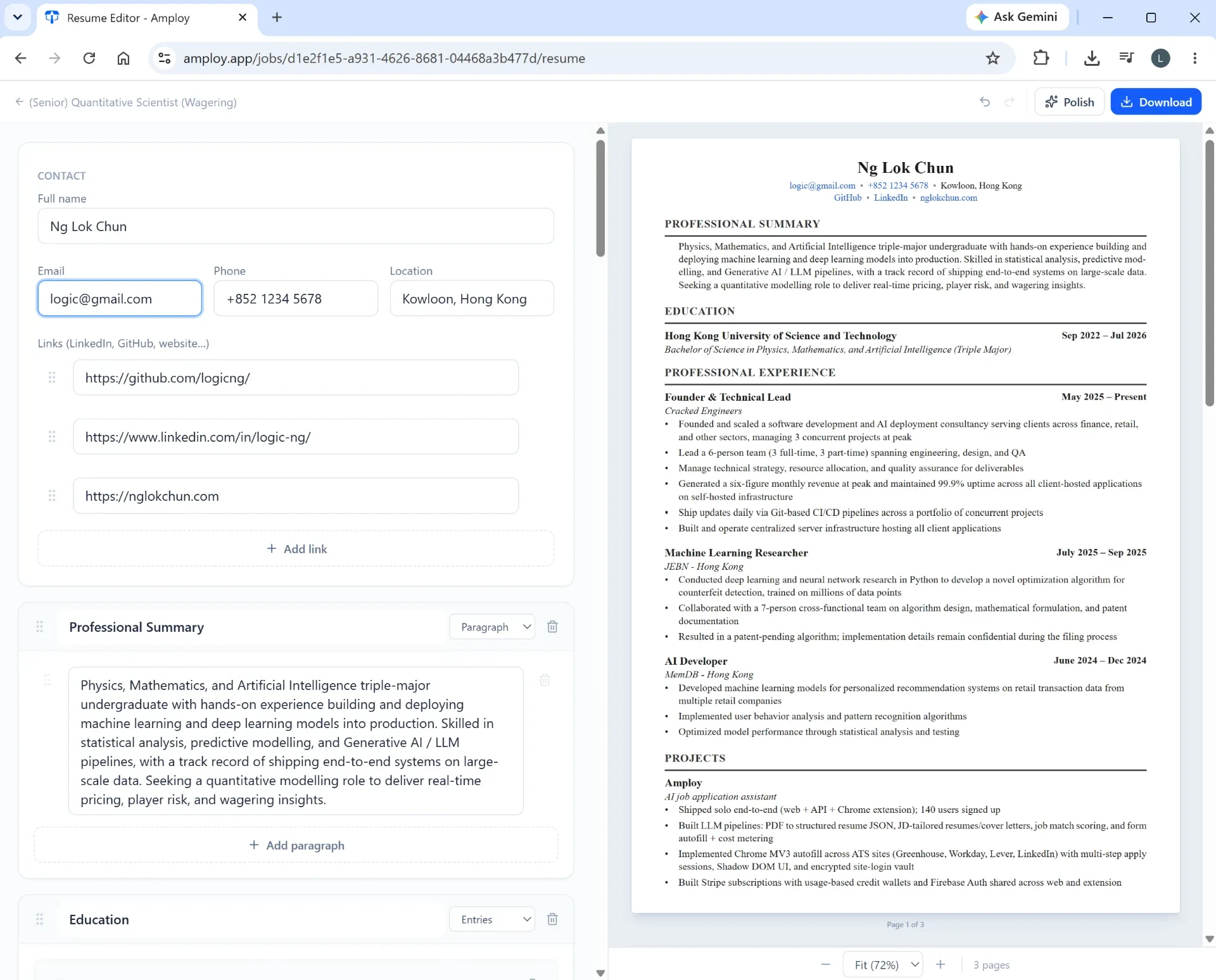
3. Rewriting the resume to match
This is where AI earns its keep. Given a job description and your real experience, it can rephrase your bullets around the language and priorities of the posting — the same work, framed for this reader. You review, correct, and approve.

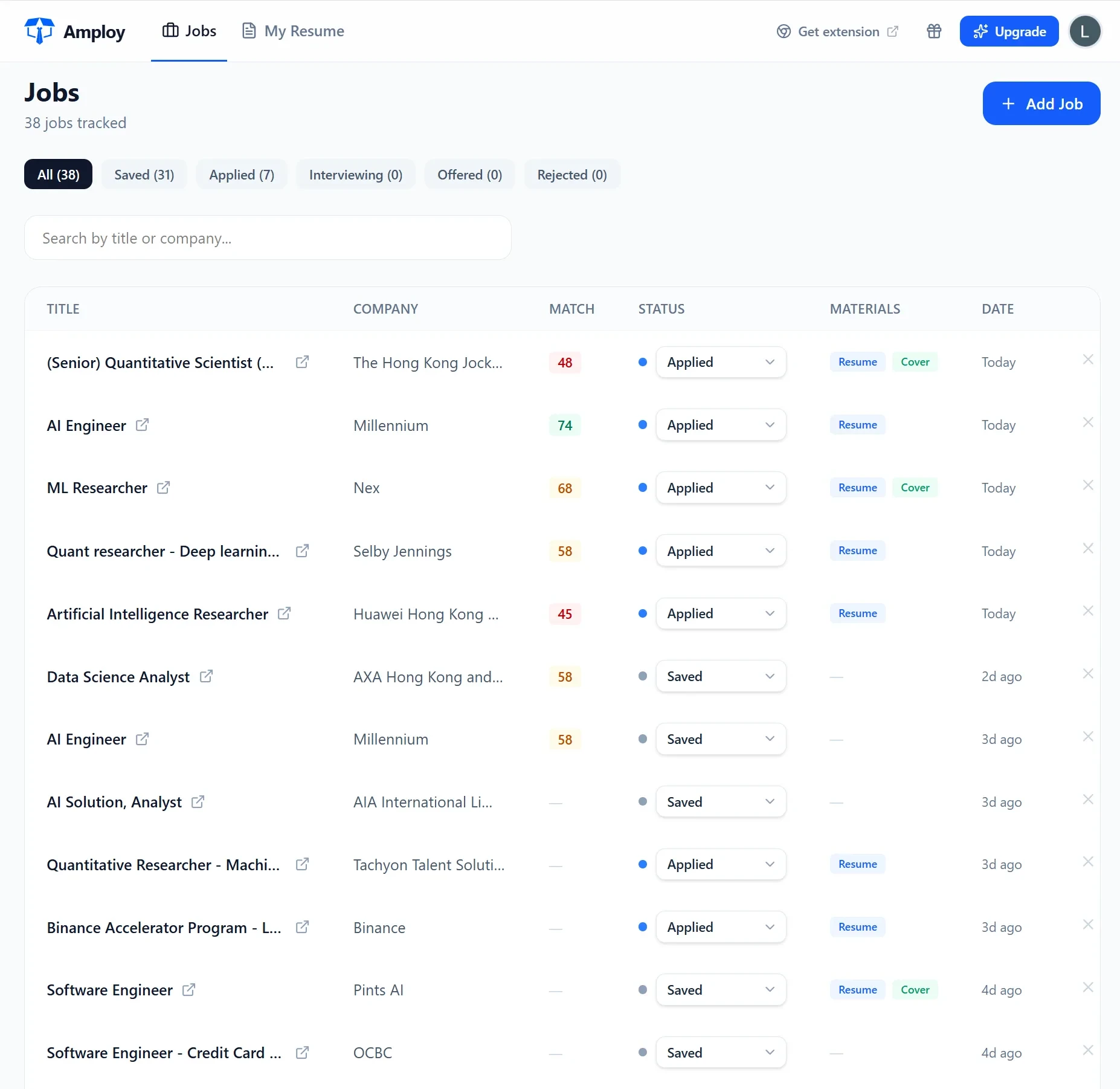
4. Tracking what you've sent
Volume only works if you can keep the threads straight. A simple pipeline — saved, applied, interview, offer — attached to each tailored resume and letter means you always know which version went where and what's still waiting.
Don't forget the small stuff that kills momentum
A surprising amount of job-search friction has nothing to do with writing. It's the password you can't remember for a company's career portal, the reset email that goes to an old inbox, the five minutes lost before every application. Store logins per career site once and that tax disappears.

How Amploy fits
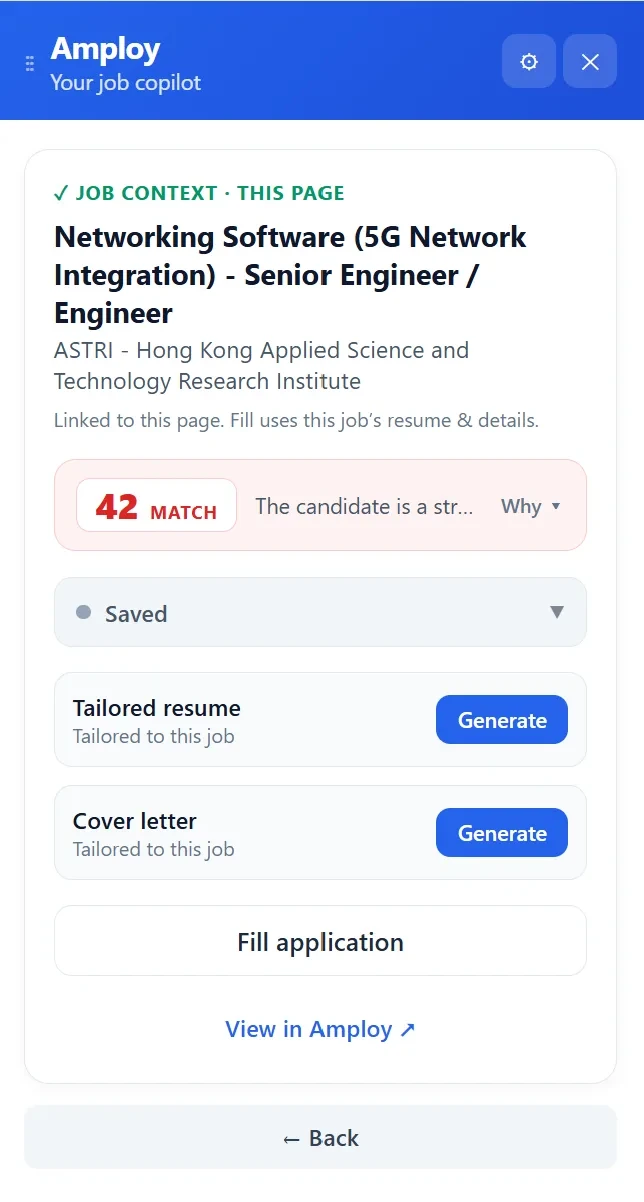
Amploy is built around this exact division of labor. The Chrome extension sits on the application page, reads the job context, and gives you buttons to generate a tailored resume, a cover letter draft, or fill the form — plus a match score so you can decide whether the role is worth the effort in the first place.
Everything it produces is editable and based on your real experience. You're still the editor, the strategist, and the person who shows up to the interview. Amploy just removes the hours of retyping and reformatting that stand between you and a higher application count.
A practical workflow to try this week
- Fill your profile once. Every autofill and draft after that pulls from it.
- Set a match threshold. Decide what score is worth applying to, and skip the rest. Volume doesn't mean applying to everything.
- Batch your applications. Find several roles, then work through them in one sitting with autofill and drafts doing the heavy lifting.
- Edit every draft. Read the cover letter and resume rewrite before sending. Fix anything that doesn't sound like you.
- Log the application immediately. Status, date, and which version you sent. Future you will be grateful.
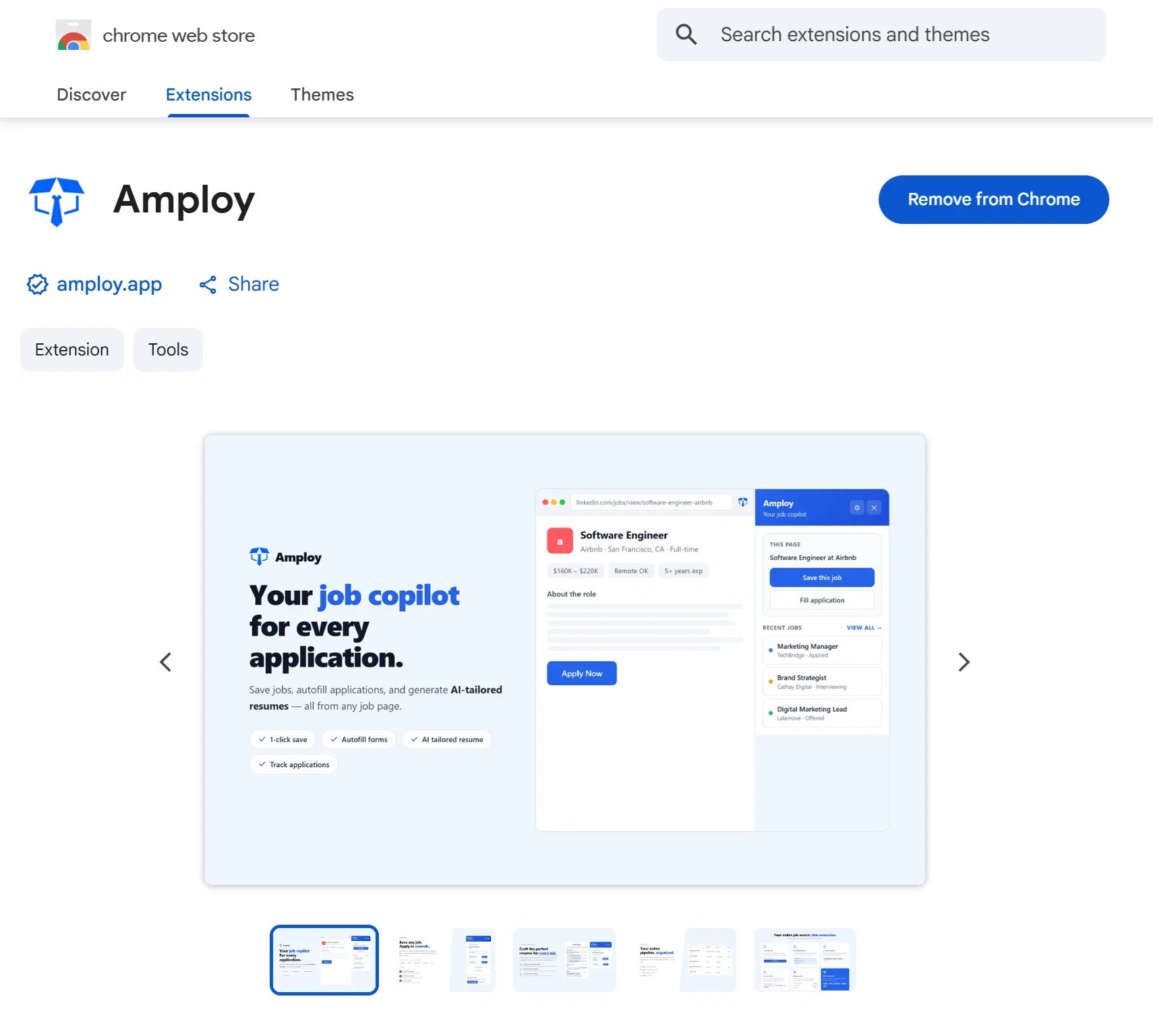
The goal isn't to spray applications at every posting on the internet. It's to make the good applications cheap enough — in time and energy — that you can send enough of them to actually move the odds. That's what AI is for here, and it's what Amploy is built to do.