
AI Job Search in Practice: From First Search to Tailored Application
The phrase "AI job search" gets used two ways, and it's worth separating them before you spend a weekend trying tools.
The first is using AI to find jobs — searching, filtering, spotting roles worth your time. The second is using AI to apply to them — the part where most candidates quietly lose their advantage, because it's slow, repetitive, and the reason people stop at ten applications instead of forty.
This piece walks the full loop: first search, deciding what to apply for, tailoring each application, and tracking what happens next. Along the way, we'll show where Amploy fits — not as a magic solution, but as the layer that makes the volume strategy actually survivable.
Step one: treat the first search as a funnel, not a wish list
Early searches tend to be restrictive. People type their current title into one or two job boards, look at the top ten results, and call it a search.
A better first pass is wide on purpose. Pull roles from multiple sources, keep a loose set of keywords, and let the list be too long before you cut it. The goal at this stage isn't a shortlist — it's a realistic picture of how many relevant roles exist and what they have in common.
Two things to notice as you scan:
- Repeating requirements. If five postings ask for the same tool, framework, or type of experience, that's your tailoring priority.
- Language patterns. The words companies use to describe the role are the words you should be echoing in your resume and cover letter.
Neither of these requires AI. What AI helps with is speed — summarizing a posting, flagging what's actually required versus nice-to-have, and helping you compare roles side by side instead of rereading each one from scratch.
Step two: decide where the effort goes
Not every posting deserves a tailored application. A useful split:
Apply fast: reasonable match, hiring actively, role you'd genuinely take. Fire these off with light tailoring — a tailored resume, a short letter, done.
Apply carefully: strong match but a competitive company or a stretch role. These get your best writing and your clearest evidence.
Skip: requirements you clearly can't meet, or a role you'd resent. Volume strategy doesn't mean spraying everywhere.
This is where the numbers matter. Most postings draw hundreds of applicants, and rejections are usually a volume problem, not a verdict on you. The people who get interviews are the ones who apply more, faster, without burning out. Sorting your list before you start writing is what makes that possible.
Step three: tailoring, in practice
Tailoring has a bad reputation because it sounds like rewriting your career for every job. It doesn't have to be. In practice, it's three moves:
- Rewrite the experience you already have to match the job description. Same roles, same facts — different emphasis. If a posting leads with stakeholder management and your resume buries it in bullet four, move it up and sharpen the wording.
- Draft a cover letter that references the role and your real experience. A first draft that names the company and connects your actual work to their actual needs is far better than a generic template — and it's editable, so it still sounds like you.
- Keep the two together. A tailored resume with a stale cover letter, or a great letter attached to the wrong resume version, is a self-inflicted wound.
Amploy handles the drafting end of this: it rewrites your real experience against each job description and generates a first cover letter draft referencing the role and your background — then you edit for voice.
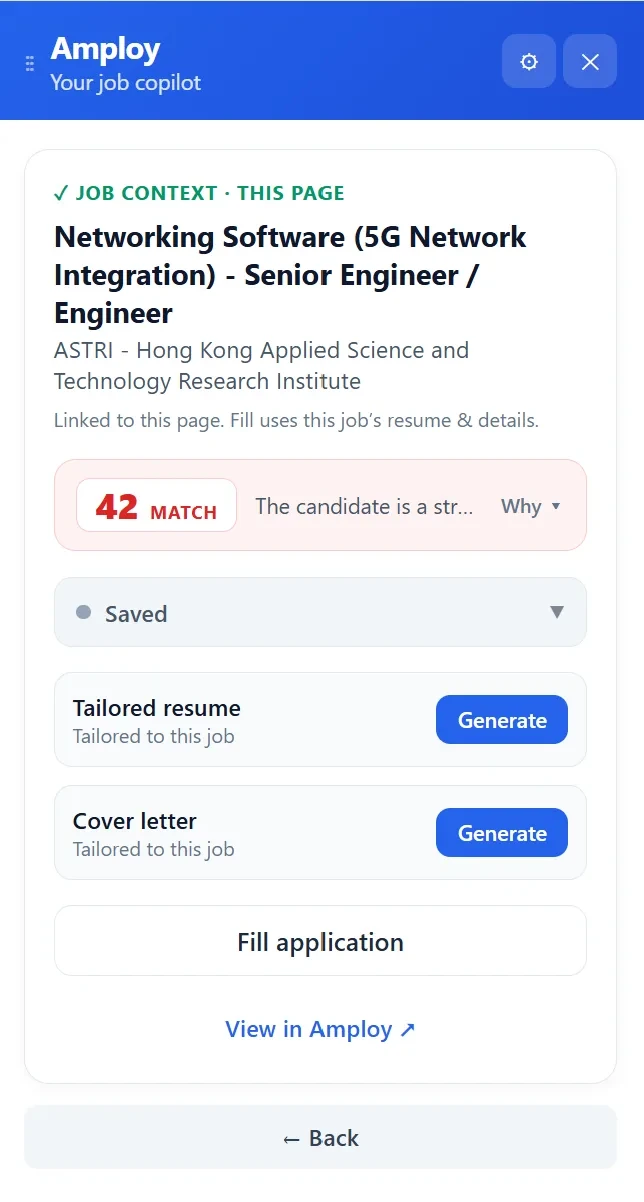
The point isn't to outsource your judgment. It's to remove the blank-page problem so tailoring takes minutes instead of an evening.
Step four: the parts of applying nobody talks about
Here's where job search guides get quiet. After you've found the role, tailored the documents, and decided to go — you still have to fill out the application form.
Name. Phone. Work history. Education. The same essay prompt slightly reworded. And then, on the next site, all of it again. Add a fresh account on every company's career portal, plus the password you swore you'd remember.
This is the busywork that makes volume unsustainable. The average candidate doesn't run out of interest; they run out of patience for the forms.
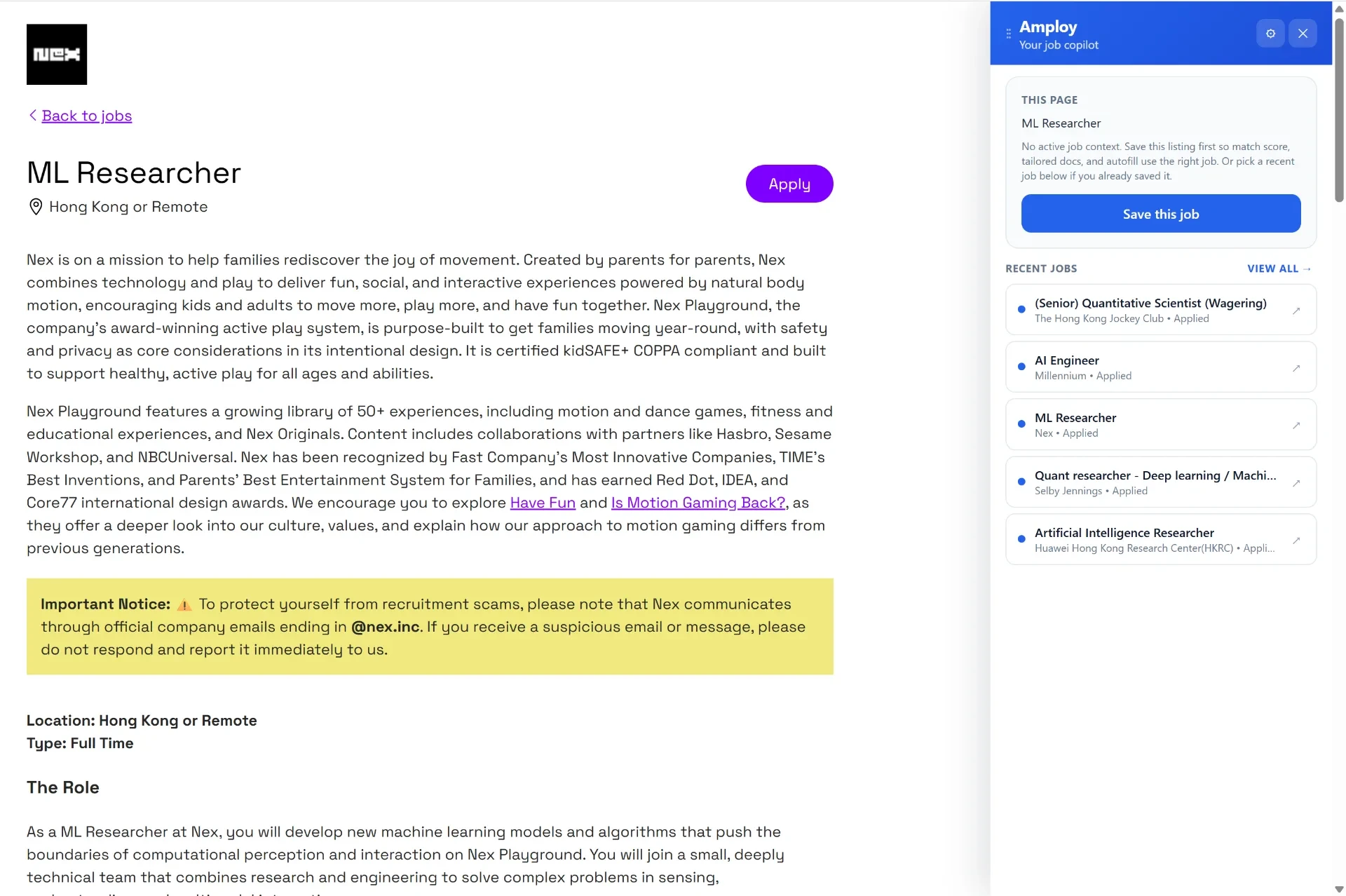
Amploy's autofill pulls your name, phone, work history, and saved essay answers from your profile and fills the form in one click. The password saver keeps one saved login per career site, so you're not resetting credentials every time you come back to check a status.
Step five: track the pipeline, not the rejection emails
Once applications are going out in real numbers, memory stops working. You need a record of what you sent, where, and what happened.
The useful structure is a simple pipeline: Saved → Applied → Interview → Offer. Attach each tailored resume and cover letter to the role it went out with, so when a recruiter calls three weeks later, you're not guessing which version they saw.
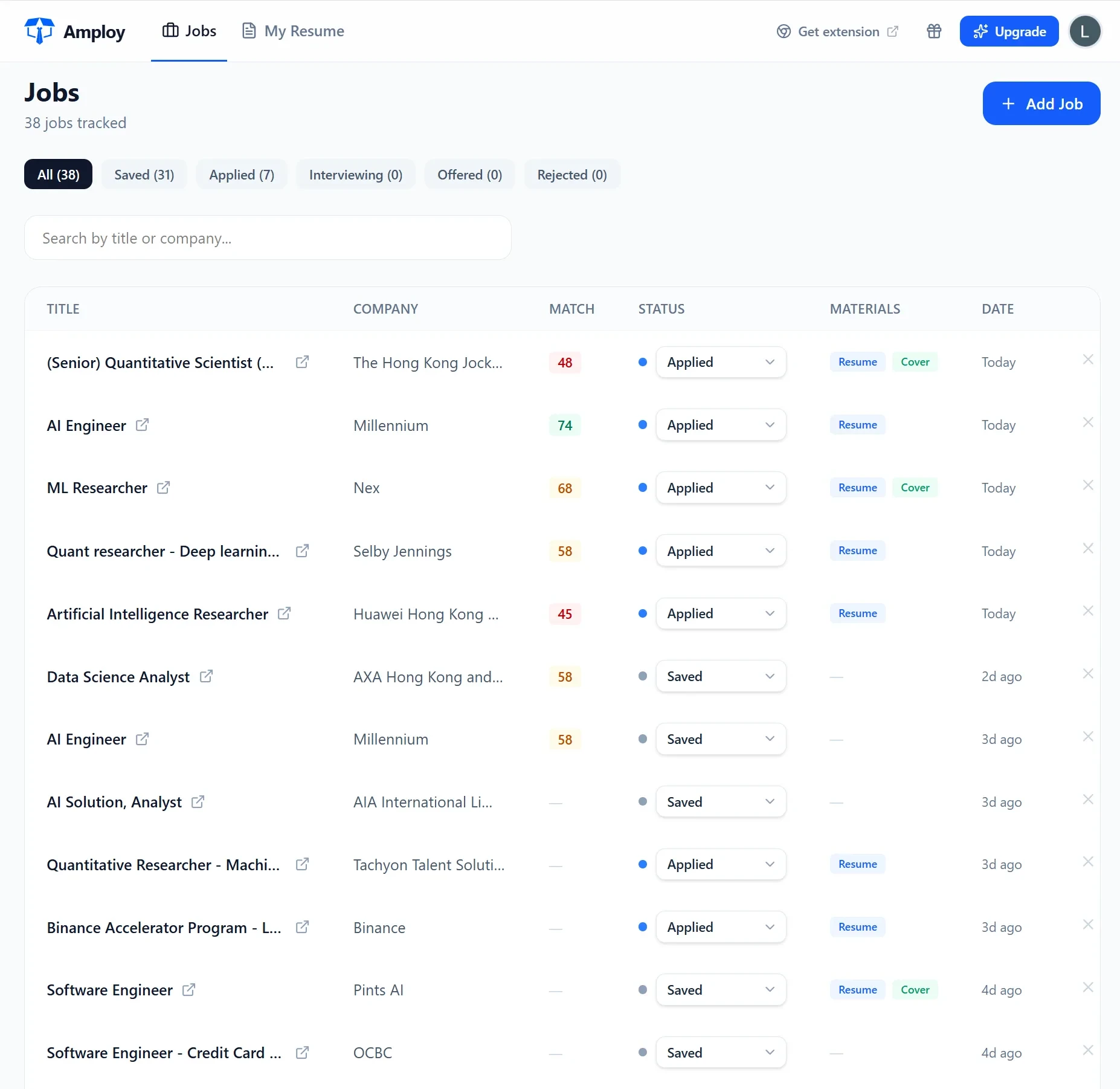
Keep the tracker honest, too. If a role has been in "Applied" for a month with no response, that's information — not a reason to keep waiting. Move on.
Putting the loop together
The AI job search workflow, end to end:
- Search wide and notice the patterns.
- Sort roles into fast apply, careful apply, and skip.
- Tailor the resume and the letter together, every time.
- Autofill the form instead of retyping your life history.
- Track each application against the documents you sent.
The AI does the drafting and the filling. You do the deciding and the editing. And because the repetitive parts take minutes rather than hours, you can apply to enough roles for the numbers to actually work for you — which is the whole game.
Start with one application
You don't need to rebuild your job search overnight. Pick the next role on your list, run it through the loop once, and see how long it takes.
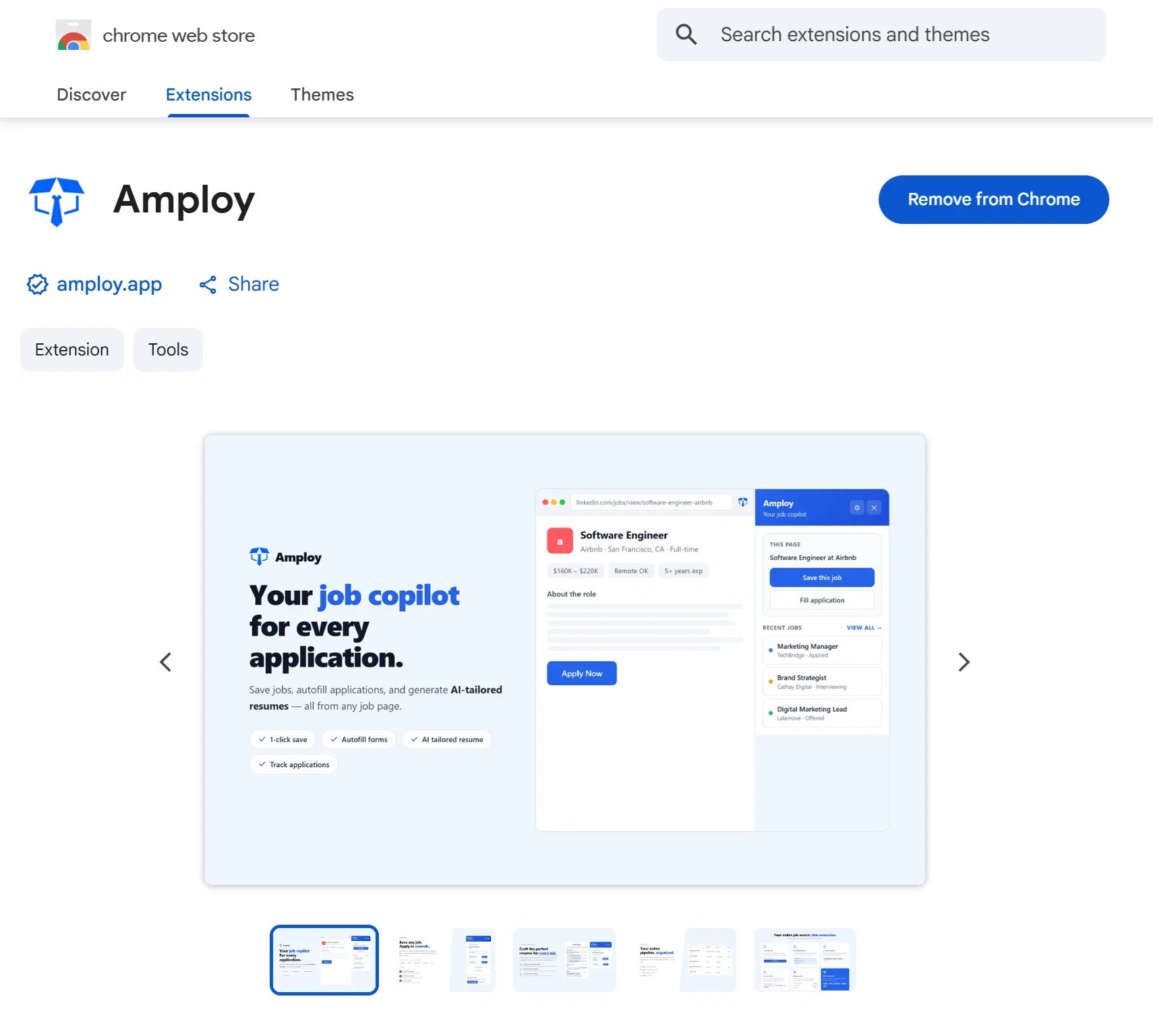
Amploy runs as a Chrome extension alongside the site, so the first test is cheap: install it, load your profile, and let it handle the next application form you hit. From there, the goal is simple — apply to more roles, faster, without the burnout that makes people quit at ten.
Stop wasting so much time applying to jobs. The volume is yours to control.