
AI Job Finder vs. Manual Job Hunting: Which Approach Lands More Interviews?
The honest answer to "AI job finder vs. manual job hunting" isn't a clean win for either side. It's about where your time goes. The candidates who land more interviews aren't necessarily the ones with the fanciest tools or the most grit — they're the ones who apply to more relevant roles without letting quality collapse. That's a volume-and-consistency problem, and it's exactly where the two approaches diverge.
Here's how each one actually plays out, and how to combine them so you stop losing hours to busywork.
What "manual job hunting" really costs you
Manual hunting sounds noble. You read every posting, tweak your resume by hand, write a fresh cover letter, copy your work history into yet another form field, and track it all in a spreadsheet. Do that for five applications and you feel productive. Do it for fifty and you're burned out before the first interview.
The hidden cost isn't the writing — it's the repetition. Every application portal wants the same name, phone, work history, and essay answers re-entered from scratch. Every job description nudges you to reword your resume. Every career site has its own login you'll forget. Individually these are small tasks. Stacked across a real search, they're the reason most people quietly drop from twenty applications a week to three.
What an AI job finder actually brings to the table
"AI job finder" gets used loosely, so let's be precise. A tool earns that label when it removes the repetitive work around applying — not just when it surfaces listings.
That means three things working together:
- Speed on the form. One-click autofill for your name, phone, work history, and essay questions, so you're not retyping your life story into every portal.
- Tailoring without starting from zero. A resume rewrite that fits your real experience to each job description, plus a cover letter first draft that references the role and what you've actually done. You edit for voice; you don't stare at a blank page.
- A record of what you did. A tracker that keeps each tailored resume and letter next to the role, with a status pipeline from Saved → Applied → Interview → Offer.
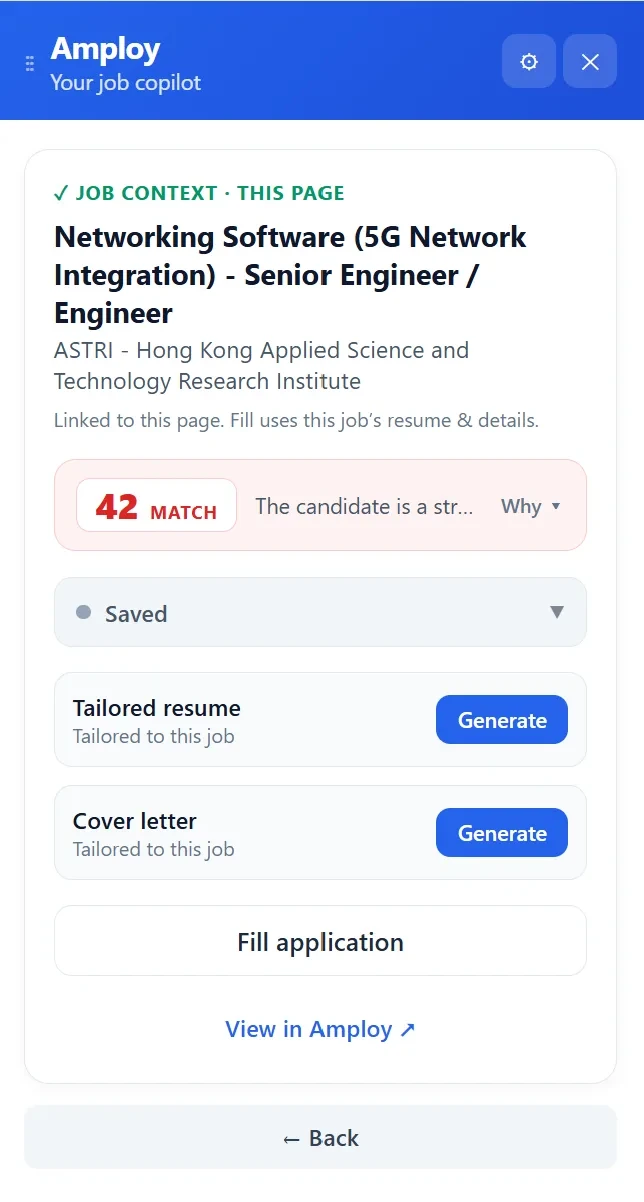
The point isn't that AI writes your application for you. It's that the drafting and data entry — the parts with no judgment in them — stop eating your evenings.
Where manual still wins (and where AI does)
Manual hunting has real advantages: you read postings closely, you catch nuances a generator might smooth over, and you build genuine familiarity with companies you care about. For a handful of dream roles, slow and deliberate is the right call.
But most searches aren't five dream roles. They're a broad field of relevant openings, and hiring being what it is — hundreds of applicants per role, rejections that usually aren't personal — volume matters. The people who get interviews tend to be the ones who apply more, faster, while keeping each application tailored enough to clear the first screen.
That's the split: use judgment on the roles that matter most; automate the repetitive layer underneath all of them. An AI job finder is strongest exactly where manual hunting is weakest — the tenth, twentieth, and fortieth application of the week.
The hybrid workflow that lands more interviews
You don't have to pick a side. A practical loop looks like this:
- Shortlist deliberately. Browse and choose roles yourself. This is your judgment, and no tool should replace it.
- Tailor fast. For each role, generate a first-draft resume rewrite and cover letter that reflect your real experience against that specific description — then edit for your voice.
- Fill in one click. Let autofill handle the name, phone, work history, and essay fields.
- Log it. Drop the tailored resume and letter into a tracker with a status, so nothing slips and you can see your pipeline at a glance.
- Save the login. Store the career-site password once so the next application on that portal doesn't start with a reset email.
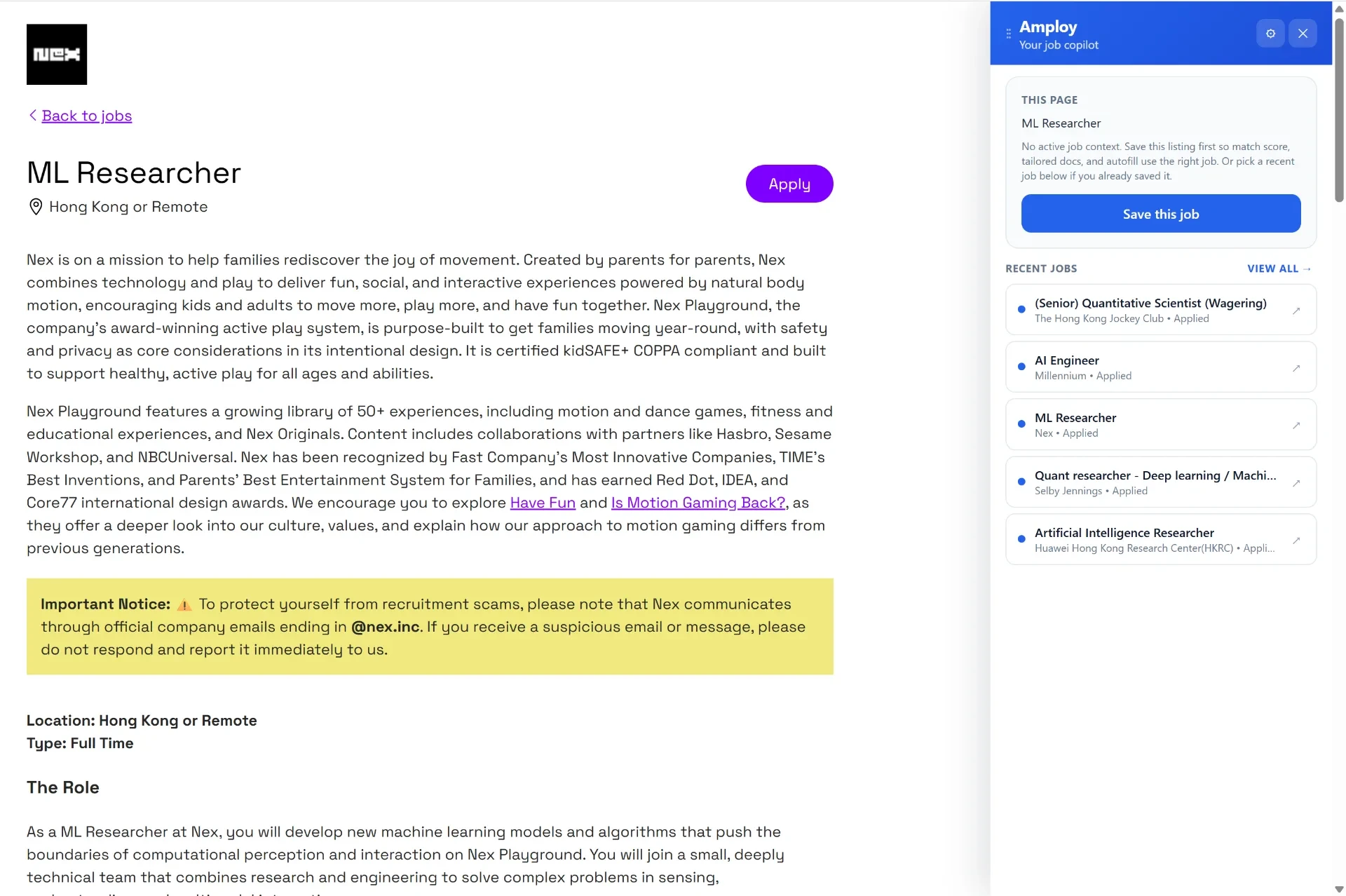
Do that consistently and the volume goes up without the quality falling off a cliff — which is the whole game.
How Amploy fits into this
Amploy is built for precisely this middle path. It's a Chrome extension plus a website that automates the repetitive parts of applying so you can play the numbers game without burning out. Autofill handles the forms, the cover letter and resume rewrite give you editable first drafts tied to each job description, the tracker keeps every tailored document next to its role, and the password saver means a forgotten login never costs you an application.
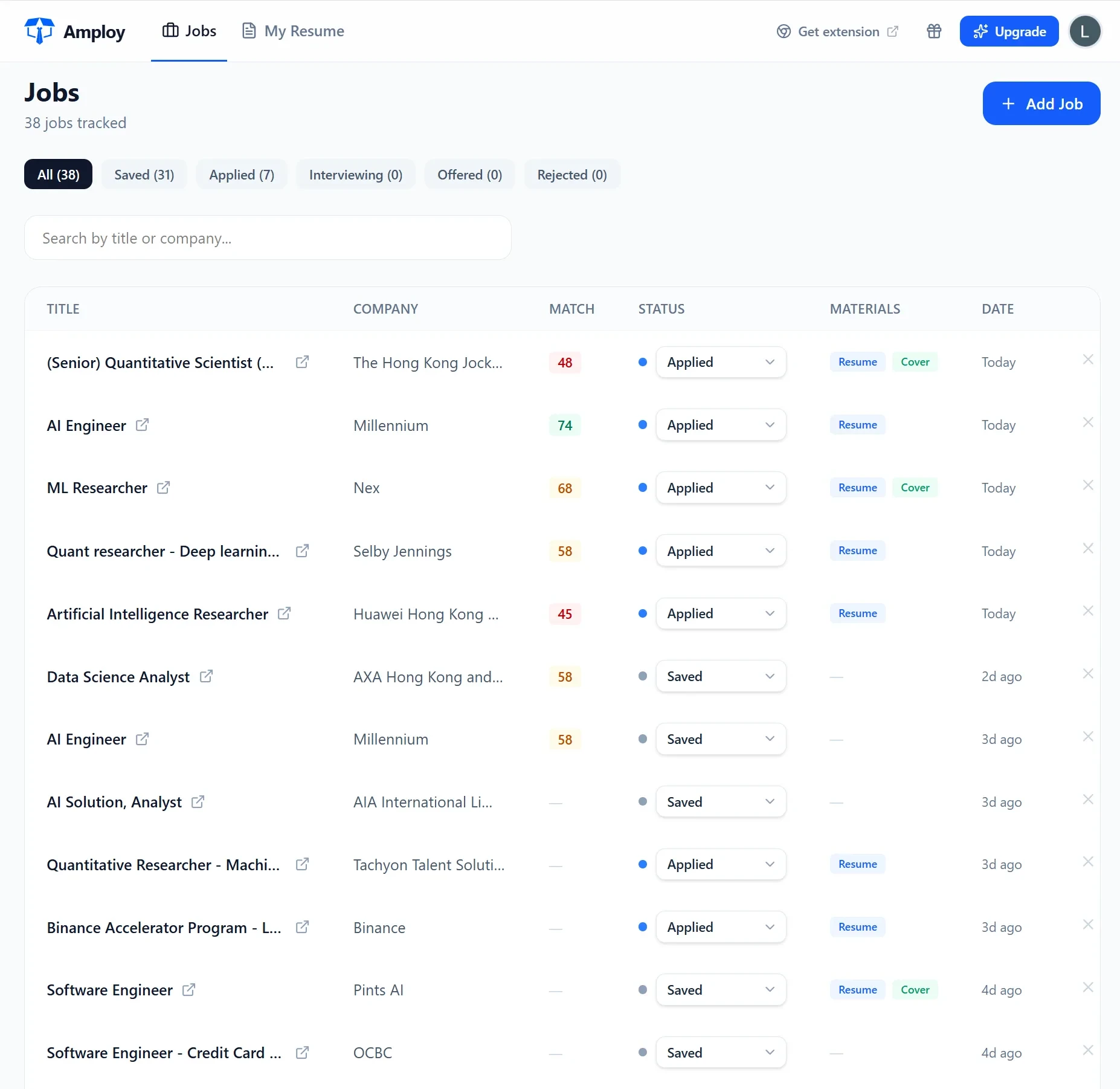
Think of it as the engine under the hybrid workflow above — you bring the judgment about which jobs to chase, and Amploy removes the busywork of chasing them.
The verdict
Manual job hunting wins on depth; an AI job finder wins on throughput. Interviews tend to go to candidates who combine both: careful choices about where to apply, and fast, tailored execution once they've decided. Stop treating it as either/or — automate the repetitive layer, keep your judgment for the roles that deserve it, and let the volume work in your favor.