AI-Based Job Search, Explained for People Who Are Tired of Applying
Applying to jobs has quietly become a second job. You tweak the resume, retype the same work history into another portal, write "I'm excited to apply" for the ninetieth time, and then refresh your inbox to nothing. If you're at the point of eyeing anything with "AI" in the name just to make it stop, this is a reasonable place to start.
Here's what an AI-based job search actually means in practice — and where it genuinely saves you time versus where it just adds another tab.
The problem AI is supposed to solve
Most job postings collect hundreds of applicants. That's not a sign you're doing something wrong; it's just arithmetic. When a role has a few hundred people in the pile, rejections stop being a signal about you and start being a signal about volume. The candidates who land interviews are usually the ones who apply to more roles, faster — not the ones who agonise over a single perfect cover letter.
"Apply more, faster" sounds simple until you try it. Every application drags you through the same busywork: the same fields, the same work history, the same questions about why you want to work there. That repetition is what AI-based job search tools exist to remove.
What "AI-based" actually means here
The term gets stretched to cover everything from a chatbot that rewrites your resume to a matching engine that surfaces jobs. For the day-to-day grind of applying, though, it tends to mean three concrete things:
- Parsing — reading a job description and pulling out what the employer actually cares about (skills, seniority, keywords).
- Generating — turning that into a first draft of a cover letter or a rewritten resume section, based on your real experience.
- Filling — putting your details into the application form so you're not copy-pasting your employment history for the tenth time this week.
Notice that none of these make hiring decisions for you. They compress the repetitive parts so you can spend your energy on the applications that matter — or simply get through more of them.
Where it helps, and where it doesn't
AI is genuinely good at the boring, repetitive, format-driven parts of job hunting: drafting, rewriting, filling fields, keeping track of what you've sent where. It's a productivity multiplier on tasks you already know how to do.
It's less good at the judgement calls. Whether a role is a good fit for you, whether a company's values match yours, whether the salary is worth it — those are yours. Think of AI as the assistant who handles the paperwork so you can make the decisions. A good tool should make that division of labour obvious rather than pretending the AI can do it all.
What this looks like inside Amploy
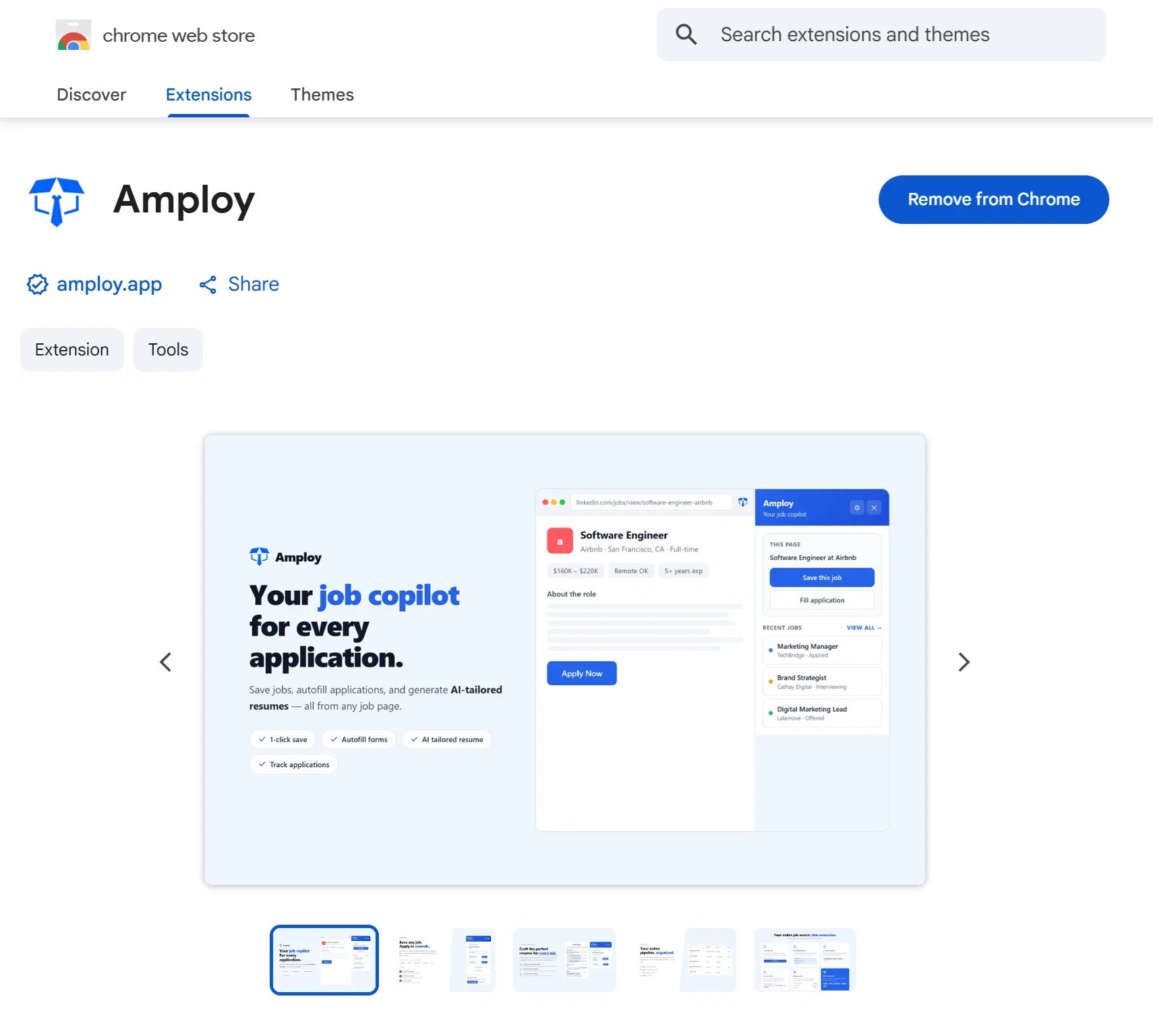
Amploy is built around that same arithmetic: stop wasting so much time applying to jobs. It's a Chrome extension plus a website that handles the repetitive parts of the process so you can play the numbers game without burning out.
You build one profile, and the tool reuses it across every application:
- Autofill fills in your name, phone, work history, and essay answers with one click, from your saved profile.
- Cover letter generates a first draft that references the actual role and your real experience — then you edit it into your own voice.
- Resume rewrite takes your real experience and rewrites it to match each job description, so you're not sending the same generic version everywhere.
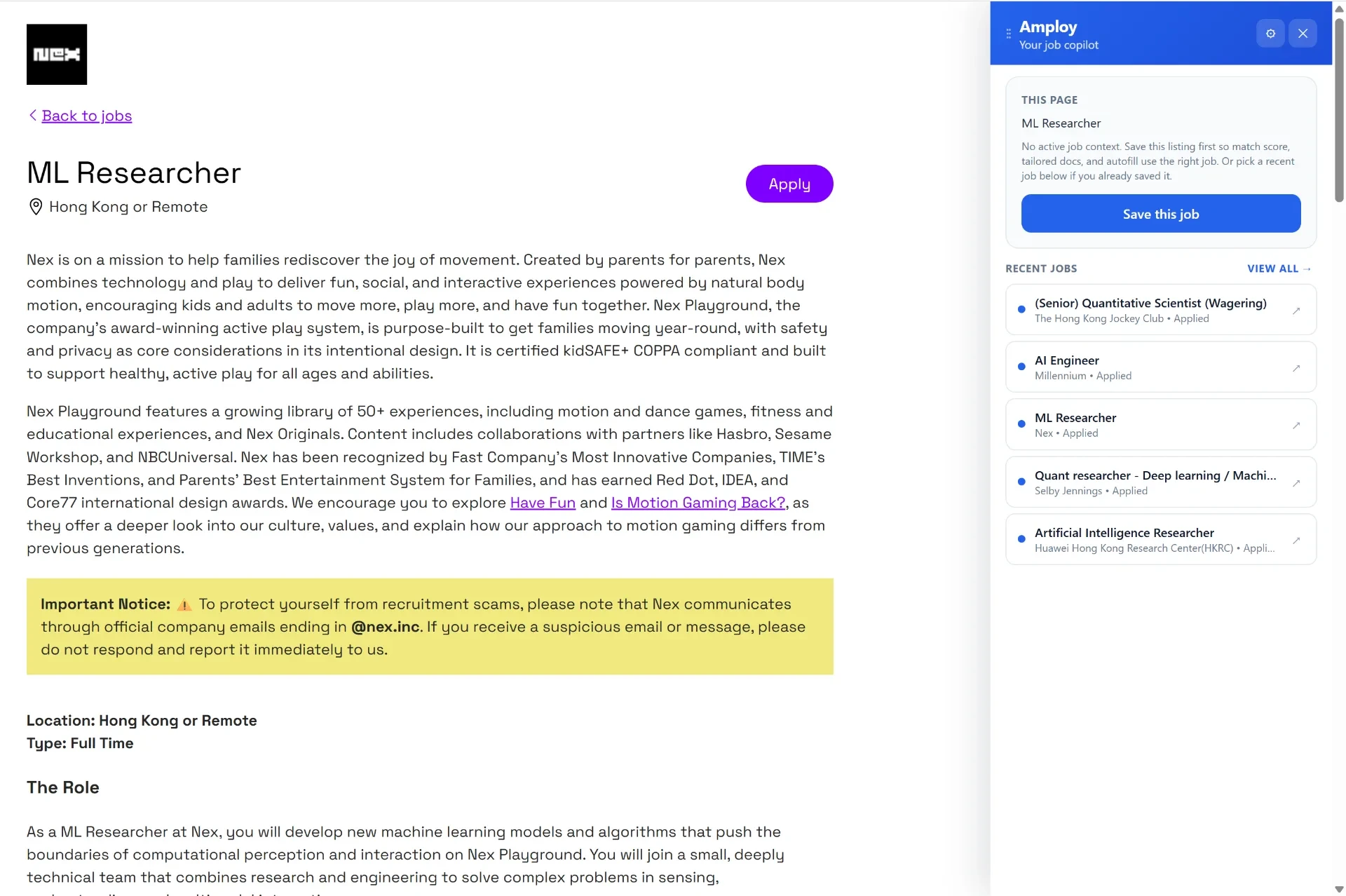
- Job tracker keeps a status pipeline (Saved → Applied → Interview → Offer) right next to each tailored resume and letter, so you always know what you sent where.
- Password saver stores your logins per career site — one per site, not per job — so you're not locked out of an application portal at the worst possible moment.
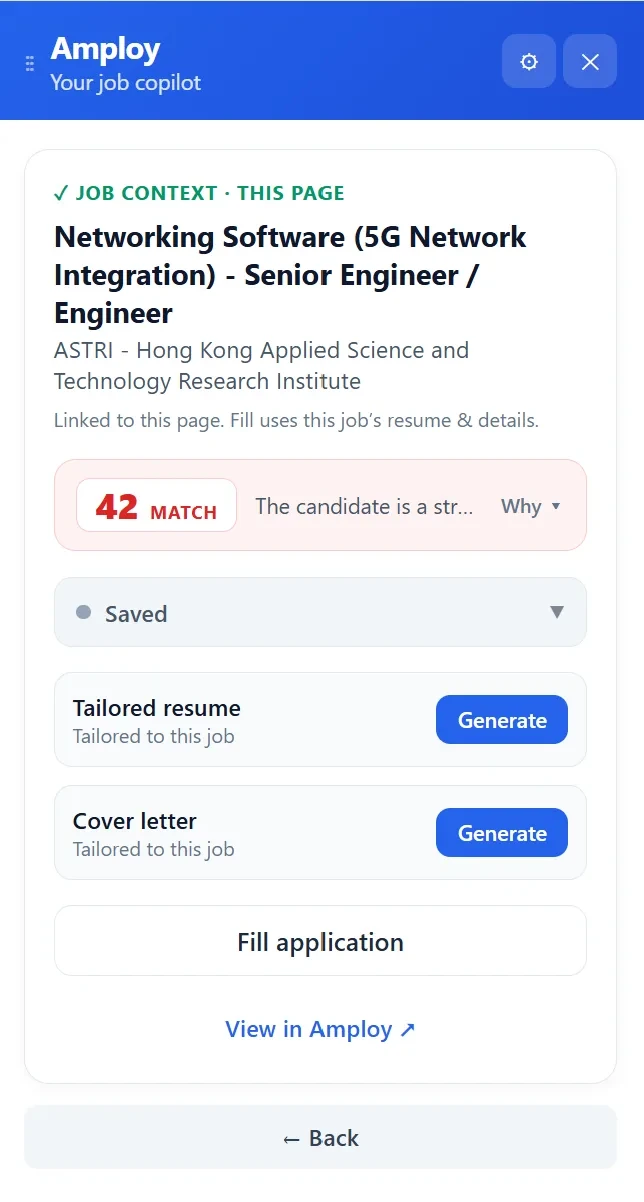
The extension works on the job page itself: it reads the posting, scores how well it matches your profile, and lets you generate a tailored resume, generate a cover letter, or fill the application directly from that panel. The point is that the whole loop — find a role, tailor, apply, track — happens without switching tools or retyping anything.
A realistic way to use it
You don't need to change how you job hunt overnight. A simple workflow looks like this:
- Build your profile once. Every work history entry, every project, every contact detail. This is the source of truth the rest of the tool draws from.
- Apply in batches when you have energy. Autofill handles the forms; draft the cover letter and edit it for the roles you actually care about.
- Tailor where it counts. Let the resume rewrite do the first pass on every application, then give the ones you're excited about a closer look.
- Track everything. The status pipeline is what stops you from losing track after a dozen applications — and from re-applying to somewhere you've already been.
- Reuse the logins. The password saver means the thirtieth application portal doesn't cost you ten minutes in password recovery.
Do that for a couple of weeks and the honest test is simple: are you applying to more roles, in less time, with less dread? If yes, the AI is doing its job.
The bottom line
AI-based job search isn't a magic interview button. It doesn't make hiring less broken, and it doesn't decide which roles are worth your time. What it does is strip out the busywork that stands between you and the next application — the repeated typing, the generic resumes, the forgotten passwords, the scattered tracking.
If you're tired of applying, that's usually the part you're tired of. Amploy is built to take it off your plate so you can get back to playing the numbers game — faster, and with far less burnout.